Alcohol inks in the art studio

watercolour

Using Alcohol Inks to Create Art!

What are alcohol inks?

Alcohol inks are highly concentrated acid-free and permanent medium inks that can create vibrant effects when mixed and blended together. Alcohol inks have a process of their very own; when you mix them together, they react and blend in different ways! Because it takes a while for the piece to dry, and the due to unpredictable nature of the medium itself, using alcohol inks are pretty exciting because you never know how your work is going to turn out!

How can you use alcohol inks?

Alcohol inks are often used in scrapbooking or book altering applications or on plastic, tile, glass or metal surfaces because they adhere well and are bright and clear. Applying them to surfaces like yupo paper (a smooth waterproof synthetic tree-free paper) and canvas also are used. You can apply the paint with droppers, by using pouring methods, using straws, and other hand-held tools to spread the ink. Rotating your surface offers even more ways to enhance your piece and creates interesting shapes and mixtures. The alcohol paint itself comes in all sorts of different brands. The most common ones that you can find are Adirondack Alcohol Inks.

Making your own alcohol inks

Since alcohol inks are a little pricy, you may want to make your own! There are several ways to do so; mixing alcohol with fabric dye, acrylic paint, or liquid watercolour. As you experiment with each medium, you will learn that each have their own advantages, react differently and produce fascinating outcomes!

alcohol inks

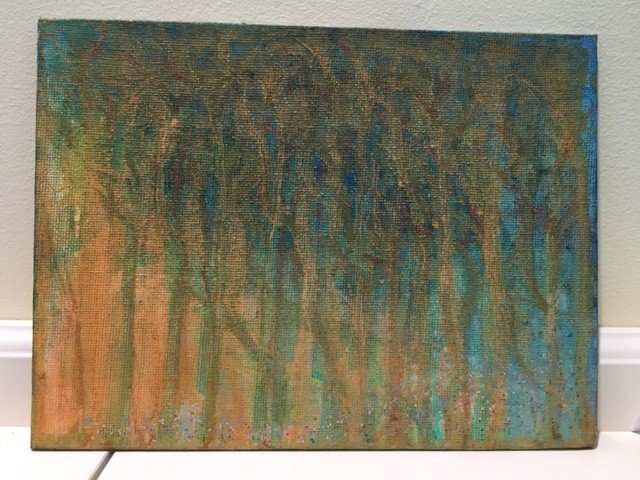
Alcohol inks, beginning stages of experimenting on glossy paper

Artists who use alcohol inks

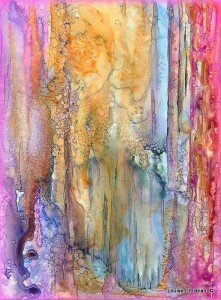
Louise Christian experiments with alcohol inks on yupo paper as seen in her piece, entitled Abstract Caverns (2014):

louise christian

Louise Christian Abstract Caverns (2014)

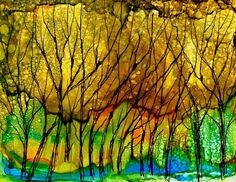
and in her other work in “ Alcohol ink and Quickie Tree Sketch in Pen” (2013):

louise christian

Louise Christian Alcohol ink and Quickie Tree Sketch in Pen (2013)

June Rollins is another artist that has mastered the art of using alcohol inks and creates pieces she calls “Dreamscapes.” In her piece, Dreamscape No. 167 (3×5), she uses multiple colours in layers then uses specks of alcohol over top to create a star-scape scene.

June Rollins

June Rollins Dreamscape No. 167 (3×5)

See more of her work by clicking here.

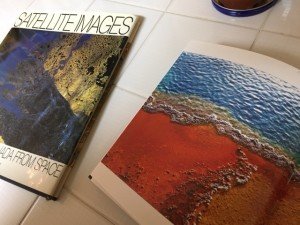
Using alcohol inks also has some familiarity with aerial landscape art

So many artists have depicted views of the world from above. Australian Aboriginal artists use visual representations to reflect culturally relevant topographic features in the landscape, like watering holes, ancestral paths, and sacred sites.

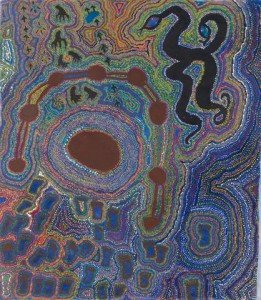
Estelle Hogan, an aboriginal artist from the Spinifex People in Western Australia shows rock holes and the seven sisters (from The Dreaming) coming to take a drink. For a more detailed description of the painting, click here.

estelle hogan

Estelle Hogan (2002)

Scottish landscape artist, Alison McGill, mixes oil paint and was to create visions of the land and sea that reflects geographical and aerial images, very much like the finishes that you get with alcohol ink.

In her pieces “Coastal Aerial View,” “Aqual Aerial View,” and she uses a blend oil and wax colours to create movement and flow, much like reactions in alcohol ink painting.
alison mcgill

Alison McGill Coastal Aerial View

alison mcgill

Alison McGill Aqua Aerial View


My work in the studio

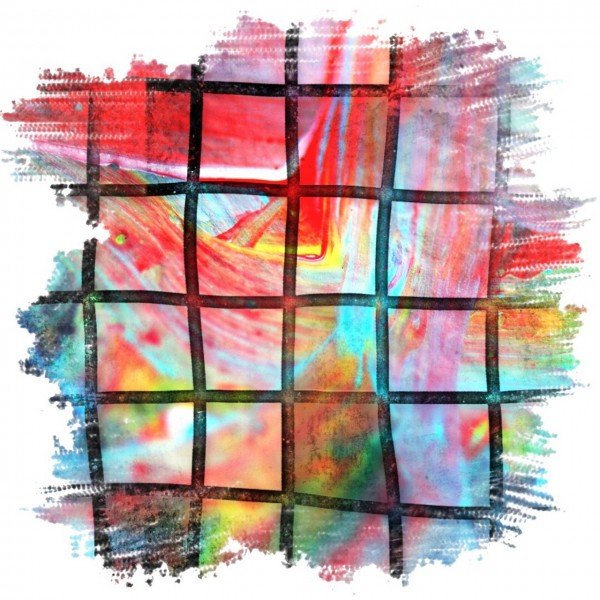
In my recent piece, “Coastal Waters,” I have used a mixture of Rite Dye and Isopropanol alcohol and also thinned acrylic paint and isopropanol alcohol (99%) to create a “view from above” much like geographical images.

alcohol ink

Meg Neufeld Coastal Waters (2016)

alcohol ink

Whether you want to create a few new journal pages using alcohol back splashes or create a cosmic/landscape inspired canvas, exploring with alcohol ink is a mesmerizing medium that is relaxing and fun! As you wait and watch its natural movement and reaction, it has a calming effect and is good for the soul! *Bring your own canvas or purchase one in our studio.

Watercolour in the Open Studio Sessions

watercolour

Doing Wonders With Watercolour!


The Different Types

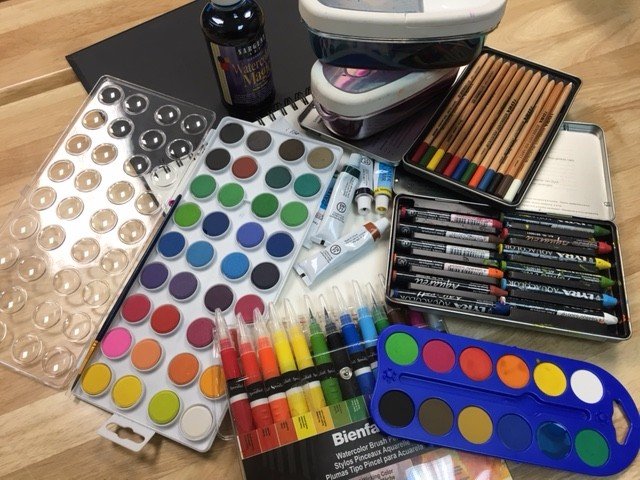
Did you know that there are different kinds of watercolour paints to choose from? There are several types:

  1. Pallets
  2. Traditional cream tubes
  3. Pencils
  4. Crayons
  5. Inks or liquids

Each type of medium can give your work a range of different outcomes, especially when you apply them using various techniques. You can change the look by the amount of diluting that occurs using colour, the use of different brushes, layering colours at different drying stages, and applying colour to a range of watercolour papers. Using a spray bottle with water can disperse the paint and even adding a pinch of salt over your piece can create snowflake droplets, adding texture to your piece.

Versitility

Using a medium like watercolours allows you to create motion and movement into your work and can be combined with other mediums such as oil pastels, ink, chalk, pen, and oil paint to create amazing multi-media art pieces!

Paul Klee: Watercolour and Multi-Medium Artist

Swiss-born Paul Klee is an artist who has used watercolour to create abstract explorations in Expressionism and Cubism. His travels to Tunisia and his background as a violinist no doubt influenced his work in pattern and colour exploration. You can read more about his biography here on this website.

In Emerging From the Gray of Night (1918), he uses ink and watercolours:

Here, Klee applies watercolour using a spatula in The Future Man (1933):

In Fish Magic (1925), Klee mixes two mediums – oil and watercolour – and covers it in varnish:

Klee uses watercolour on a chalk background in Hermitage (1918):

Klee deliberately layers shades of watercolour as it dries to create degrees of colours in his work Crystal Gradation (1921):


In the Studio This Week

Whether you want to come and explore the multimedia or layering techniques of Paul Klee, the vibrant inks for art journaling pages or prefer to experiment with more muted tones of pallets for composing a landscaping painting, we welcome you to try our vast array of watercolour materials in our art studio! Gentile guidance is available: how to add colour to your page, how to set up a sky, how to paint trees, or even learn how to start calligraphy or adding salt to your pages. Come and join us this week!

Spring Break Camp For Kids

spring break camp

Spring Break Camp

Be Inspired! – An Art Camp For Kids!

Dates: March 21-24, 2016 (4 Sessions) – $75+GST

9:00am-12:00pm

Ages: 6-12

Our spring break camp helps fill your child’s spring break with creative and engaging activities at Alongside You’s Be Inspired – Spring Break Art Camp for Kids!

Children enrolled in our camp will create art pieces and projects inspired by nature, rhythm and music, texture, shape, and literature. We will create two-and three-dimensional pieces such as multimedia collages; pencil and pen sketches from studio objects; paint to different genres of music using a variety of unconventional objects and methods; use geometry tools to create our own mandalas; and use clay to depict an aspect of a favourite book! Children will take home a different project each day!

Special bonus: For every registered child, you will receive a $10 coupon for South Delta Heels! Thanks to Carole and the team for partnering with us on this!

Note: All art materials are provided. Please pack your child a snack for the morning.

For more information, please contact Meg Neufeld, MA at 604-283-7827 or meg@alongsideyou.ca

Food Habits – Craving Change April 2016

food habits

Craving Change Workshop – April 2016

Dates: Every Thursday night from April 21 – May 12 (4 sessions)

7:00pm-8:30pm

Join our Registered Dietitian for a four part workshop to help you learn more about your food habits and cravings and learn how to manage them in your daily life! Often we know what we should be eating, but implementing these changes can be the most challenging part. This workshop will help you identify your personal eating triggers and what strategies will work for you to be more in control of your cravings and change your food habits.

For more information, please contact Katie Huston, RD at 604-283-7827 or katie@alongsideyou.ca

Friday Night Knitting Club Returns!

friday night knitting club

Friday Night Knitting Club Returns to Ladner!

Friday, February 19th, 2016 from 7:00 pm to 10:00 pm

You asked for it, we’re responding! Due to popular demand, we’re holding our second Friday Night Knitting Club event at our offices! If you’re not sure what the Friday Night Knitting Club is, you’re missing out! You’re invited to a casual evening of knitting and socializing in the heart of Ladner Village! If you have always wanted to try knitting, want to hang out while working on one of your pieces, or would like to share your stories and skills with others, this is the place for you! Bring your own yarn and needles or purchase yarn for $6 and needles for $1. Guidance for beginners will be available.

Admission is by donation. Coffee and tea will be provided, bring a treat to share if you like! Hope to see you there!

If you’d like to read the book that started it all, you can get a copy at Black Bond Books and mention this event to receive 10% off. Or, click here to buy your Kindle edition online in time for the event!

Please note: Tickets are free, but you must purchase a ticket to register as space is limited.

All proceeds go toward our Step Forward Program, providing financial assistance to clients who may need some additional help subsidizing our services.

Friday Night Knitting Club - February 19, 2016 - 7pm-10pm

Painting Pictures With Paper – Open Studio Sessions

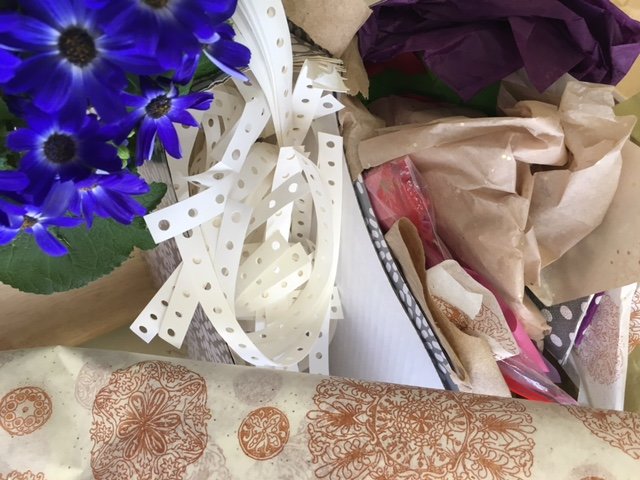
painting pictures supplies
painting pictures paper sheets

It’s all about Painting Pictures with Paper!

We’re painting pictures in the studio this week by exploring images and creating them using paper. Paper is extremely versatile and comes in different colours, textures, thicknesses, finishes, and weights. From simple to elaborate, a paper collage can be a really fun way to experiment creatively and try something different for a change.

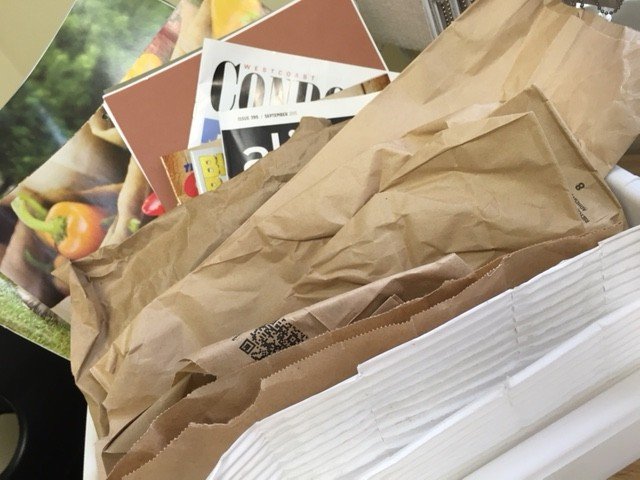
Choose from our variety of papers: magazines, sheets of music, origami paper, scrapbooking paper, wax paper, coffee filters, tissue paper, wall paper, corrugated paper, cardboard, foil, dress making paper patterns and even good old tractor feed computer paper! Use these to create a vast array of finished collage projects. Come with your own ideas, or be inspired by some of our in-studio examples. Here are some neat artists who are known for their paper arts and a few examples of paper pictures to get you started!

Artist and activist Sandhi Schimmel Gold uses 100% hand-cut recycled paper waste material, such as magazines, newsprint, greeting cards, and flyers and transforms them into paper portraits with a strong message:

“My work reflects society’s obsession with beauty in advertising. My junk-mail mosaic portraits are a purposeful intermix of thousands of pieces — images and text — hand cut and manipulated to assemble a newly envisioned portrayal of beauty, utilizing materials that would otherwise go to waste.”
– Sandhi Schimmel Gold

Schimmel Art

For amazing collage sculptures that are made by layering paper cuttings and applying gauche for detail, check out local Victoria artist Morgana Wallace!

Morgana M Wallace

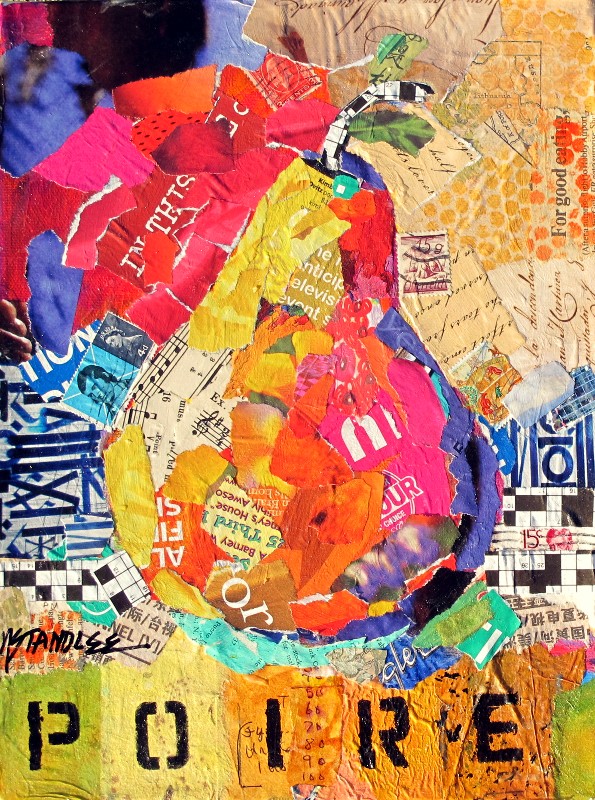
Here are a few neat paper collage images!

collage

Nancy Standlee

Painting pictures using paper is a great way to expand your repertoire of techniques, and also to get out of a creative rut. As painters, sometimes we feel stuck in a medium, or like we end up painting the same thing over and over again. Using a different medium forces our brain to exercise another part of itself, and often creativity pours out because we’ve uncorked a blockage. We’d love for you to join us at our Open Studio Sessions this week on Monday from 6-9pm or Wednesday from 10am-1pm. See you there!

painting pictures using recycling
painting pictures using odds and ends
painting pictures in a basket

Picasso and Cubism – Open Studio Sessions this week

picasso rooster

I begin with an idea and then it becomes something else.” -Pablo Picasso

Picasso and Cubism – Our Inspiration at Open Studio Sessions this week

Welcome your week with a little bit of whimsy and fun! Homage to Cubism and Picasso’s Rooster!

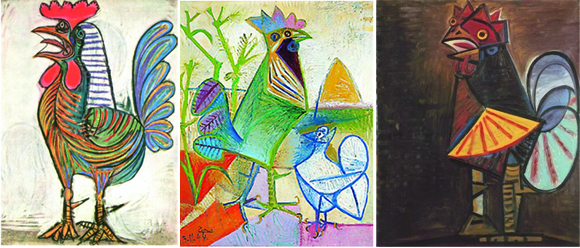
Spanish artist, Pablo Picasso (1881-1973), is well known for introducing the principles of cubism in artwork, where classical ways of depicting the natural world are deconstructed and reassembled, highlighting abstract shapes and their multiple and simultaneous viewpoints. Picasso is perhaps most well-known for his two cubism pieces “Les Demoiselles d”Avignon (1907)” and “Three Musicians (1921)”. Picasso’s rooster, suitably named,“The Rooster (Le Coq, 1938)” is a work of art that lingers in between a classical depiction of the bird itself and a cubist reconstruction of it. Here, Picasso uses line both in a mix of fluidity of form, juxtaposed with representations of only the basic elements of a rooster (eyes, beak, wings, tail feathers, legs, feet), omitting naturalistic details.

This provides us with an example of how Picasso embarked on creating a cubist style. This week come and learn more about Pablo Picasso, his work, and try your hand at learning the principles of cubism for yourself. You can use our lovely countryside bird as your inspiration to create a rooster, or you can deconstruct objects of your choosing by bringing something from home or selecting something from our in-studio still-life collection. As always, we have a vast array of watercolour mediums, chalk pastels, acrylic paints, oil pastels, air drying clay, a selection of mixed paper at your disposal. Those who would prefer working on independent projects are welcome to do so and have full access to the art studio as always!

Let your inner Picasso come to life! A great project for all ages. Have a look at a few of these examples!

Picasso Roosters Examples

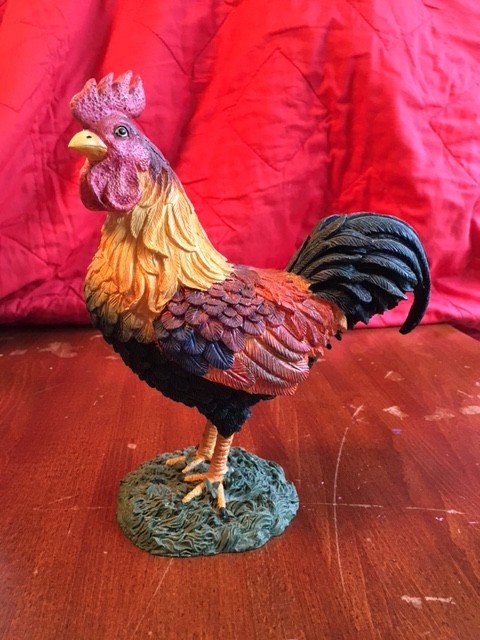
Here is my rendition of Picasso’s Rooster (clay), that will be in the studio as inspiration:

picasso's rooster

Step Forward Program launches in South Delta

step forward program launches in South Delta at Alongside You

Step Forward Program Launches at Alongside You

Today is a great day. To say that we are excited about The Step Forward Program would be an understatement. Since our inception, our goal has been to make integrated health care services accessible to as many people as possible. The Step Forward Program is another way we’re trying to make this a reality. We’ve always believed that our community is the backbone of support systems for us all, and South Delta is such a supportive, close knit community we have no doubt this program will be a success, so we thank you in advance for your involvement. Now, you probably are still wondering what this program is all about so let us share that with you!

What is the Step Forward Program?

The Step Forward Program at Alongside You offers financial assistance to clients who may need some additional help subsidizing our services. Alongside You operates using a sliding scale for fees in an effort to keep our services accessible to as many people as possible. Our hope is that this program will enable even more people to be able to receive care.

In addition to receiving donations, Alongside You will be holding events to benefit this program starting in January 2016. Individual community members, local businesses, organizations, and Alongside You clients are given the opportunity to donate to this program to help provide access to our services for those who may not otherwise be able to afford it. All funds are held in a separate account, audited by our accounting firm and will be dispensed based on need at the discretion of our Directors.

This is an initiative for South Delta because we are fortunate to live and work in the community we do, and because we believe this program can make a difference in many lives. Donations can be made through our online store via credit card, or in person at our clinic using cash, cheque, or credit card payment.

100% of donations will go straight to the Step Forward Program. Alongside You will absorb all banking and/or credit card processing fees incurred in the administration of this program.

Please note: We are not a non-profit agency and unfortunately, are unable to provide tax receipts for donations.

How Can South Delta Help?

By now we hope you’re excited about this new program! You may be wondering, “How can I help?” We’re glad you asked! Here’s a few ideas of how you can help, and if you have other ideas, we’d love to hear them! You can help by:

  • Donating through our online store, or in person at our clinic
  • Come to our events that benefit the Step Forward Program
  • Hold an event and take donations to benefit the program
  • Corporate sponsorship opportunities (details to come, let us know if you’re interested!)
  • Spread the word about who we are, and what we’re trying to do. Word of mouth in South Delta is key

If you have any questions or concerns about this program, or if you would like to get involved, please contact the Directors, Andrew and Meg Neufeld at 604-283-7827.

Start helping the Step Forward Program today!

Only a few spots remain, but we’d love to have you at our Friday Night Knitting Club Event tomorrow night! All donations received go straight to the Foot Forward Program!

Objects As Art: zooming in

objects as art
objects as art
objects as art

Zooming In!

“I often painted fragments of things because it seemed to make my statement as well as or better than the whole could.”

– Georgia O’Keeffe

Objects As Art

This week we are going to examine objects in great detail and from every angle. By capturing their texture and shape, we will begin to see an object’s natural and simplistic beauty. Early twentieth century American artist Georgia O’Keeffe explored flowers in this way, zooming on botanicals as if viewing them through a magnifying lens. She is best known for her paintings such as her oil on canvas, Oriental Poppies (1928). O’Keeffe used vivid colours to create amplified and abstract botanical representation on a large scale. Choose from our collection of still life objects and botanicals and try a detailed study for yourself!

For more information on Geogia O’Keeffe and her career as an artist, visit: Georgia O’Keeffe on the web

“I decided that if I could paint that flower in a huge scale, you could not ignore its beauty.”

– Georgia O’Keeffe

objects as art
objects as art
objects as art
objects as art

Caregiver Burnout – 3 ways to avoid it

caregiver burnout

Caregiver Burnout

Taking care of your loved one can be a rewarding experience, but the demands of caregiving can also be overwhelming.  If the stress of caregiving is left unchecked, it can take a toll on your own health, relationships, and state of mind — eventually leading to caregiver burnout. Some signs that you may be getting close to burnout include:
  • You find yourself withdrawing from your friends and family.
  • You lose interest in activities you used to enjoy.
  • You feel blue, irritable, or hopeless.
  • You notice you’re losing or gaining weight.
  • Your sleep patterns are changing.
  • You get sick more often.

When you’re burned out, it’s difficult to do anything, let alone look after someone else’s needs.  Here are some tips on how to take care of yourself in the midst of taking care of another.

1. Take time for yourself 

Taking time for yourself every day — even just a few minutes — is one way to help you recharge. Some examples to try:  do some gentle stretching or yoga before breakfast, go for a 20-minute walk or nap, see a movie with a friend, or pursue any hobby you love.  Taking time for yourself will help reduce your stress, recharge your batteries, and ultimately make you a better caregiver.

2. Know your limits 

You cannot provide good care if you are exhausted and stressed out. Learn when to say no to others (and to yourself!) Practice limit setting on small things. It’s OK to say no to contributing to the school bake sale or dog-sitting for your neighbour. Listen to your body and pay attention to the physical messages it sends you (e.g. difficulty sleeping, weakened immune system, changes in appetite, etc.)

3. Develop your own support network and don’t be afraid to ask for help

Find someone you can trust – whether it’s a friend, co-worker or neighbor – and talk to them about your feelings and frustrations.  Make a list of people you can call when you need a break or help with day-to-day needs.  Joining a caregiver support group can help you manage stress, locate helpful resources and stay connected with others.  Look into different resources that are covered by MSP or your own extended health care. There are a variety of resources and organizations in place to support caregivers that may include:

  • Private care aides
  • Home Health services (Fraser Health)
  • Adult day care
  • Respite care
  • Support groups

Remember, taking care of yourself is not a luxury, it’s a necessity! Avoiding caregiver burnout depends on it!

Some Local Resources: 

Delta Caregivers’ Education and Support Network 

The Centre for Supportive Care
4631 Clarence Taylor Cres.,
Ladner, BC V4K 4L8
Contact: 604-948-0660 or info@deltahospice.org

Adult Day Centres

Adult Day Centres

Deltaview Adult Day Care

Fraser Health – Home and Community Care 

Fraser Health Home and Community Care

Fraser Health Caregiver Support

Home Health Service Line: 1-855-412-2121

Let us help!

If you’re experiencing any of the above symptoms, or just need a helping hand, we’d love to talk to you. Kristin Beare, our Occupational Therapist and the author of this post is available to meet with you to assess the situation and help you find ways to manage your stress and continue your caring!

Give Kristin a call at 604-283-7827 or send her a message using our contact form!

Want more information on Occupational Therapy?