by Rebecca Farnell | Jun 13, 2019 | Counselling, Health, Tips
I was speaking with a friend on the phone a few weeks ago. She was curious about what I do as a Registered Clinical Counsellor and what happens in a session. As we continued to talk, I mentioned that I was going to see a counsellor myself. She gasped and said: “You have issues too?” I chuckled and said, “Yes, we all have issues, even counsellors.”
I mentioned to a few colleagues that I was going to see a counsellor and they encouraged me to write about my experience as a way to share with others and ultimately normalize going to seek professional help. As a counsellor myself, it is so important to understand the perspective of what it is like to be a client. This post will try and shed some light on my experience as a counsellor, and being a client.
I have been thinking about seeing a counsellor for a while now: over a year. However, it always seemed like it was never the right time. I was too busy, juggling different jobs, other commitments, financial constraints: all these things seemed to vie for my attention and appeared to be good reasons to once again push down counselling on the list of “things to do.” May I offer my perspective for a moment? There are always going to be things that seem more important and seem like they must take priority, yet, my mental health and overall well being should also be a priority. It is my deepest desire to be the best counsellor that I can be, to show up and be the right support for each of my clients. Therefore, I need to make myself a priority. I need to make the time to work on areas of my life that will ultimately help me in my career helping others. I struggle with the idea that this sounds selfish, but as the old airplane analogy goes, I need to put on my oxygen mask first before I help others with their masks.
So, I put on my mask, so to speak, and made my first appointment. I left a message. I was brief and gave my contact information. Julie (this is not her real name) called me back promptly and we set up a time to meet in 2 weeks time. I had done it. I was proud of this first initial step. I filled out the intake form, sharing contact information and reasons for counselling. It was personal. I was reminded of the initial vulnerability that all clients must experience as they complete the forms; from a counselling perspective, it is crucial for liability and legality sake, yet there is also a piece that asks the client to try to put into words the areas they want to work on. In my experience, this process allowed me to think about the areas that I wanted to concentrate on and helped organize some of my thoughts a bit more.
Seemingly small, making that first phone call was the first step towards reaching out and asking for help, acknowledging the importance of having someone to listen to my story. As I tell all my clients on our first meeting, coming for counselling is brave. It is trusting a stranger with pieces of your story and there I was asking for a stranger to listen to mine. The tables have been turned, or perhaps another way, this time I get to sit on the couch instead of the armchair.
The day arrived. I saw some clients of my own. As the day progressed, I continued to check in with myself and see how I was feeling. My stomach felt a bit “off.” I named this feeling and voiced that I was nervous. This seemed like a natural reaction to me as I was preparing to meet with Julie. I left myself enough leeway in my schedule to arrive on time, as I tend to be late and did not want to arrive flustered.
Disclaimer: It is May, and I still have my snow tires on my car. Again, this is something that is on the “to do list,” not really a priority, but important nonetheless. Sometimes, there is a misconception about counsellors that they have it all together and have reached new levels of perfection. May I say, this is not the case. At. All. I share this with you, because as I sat in my car waiting to go into the office, I saw Julie getting out of her car, and to my delight, she too had her snow tires on. At that moment, I felt a sense of connection and validation that counsellors are people too, people that care deeply, they are human just like everyone else and perhaps have left car maintenance slide a bit as well.
I got myself comfortable on the couch, Julie has a few couches in her office, and so she chose the couch opposite to where I was sitting. She went over the limits to confidentiality and said that although I was a counsellor myself, she would treat me like any other client. I appreciated that. She mentioned that as she asked me questions if there was anything that I did not want to answer, then that was fine; in addition, if there was something that I wanted to talk about more in-depth for another session, I was free to do that as well.
Julie explained the importance of finding the right fit with a counsellor. This is so important. Just like in life, you are not going to click with everyone. Sometimes I like finding a counsellor to that of eating ice cream. There are many flavours and while some folks might enjoy more daring flavours of Bubblegum, Tiger or Moose Tracks, others enjoy the classic Vanilla, Neapolitan and Chocolate Chip Mint. It is a preference, and like ice cream, finding the right fit is crucial in a relationship with a Registered Clinical Counsellor.
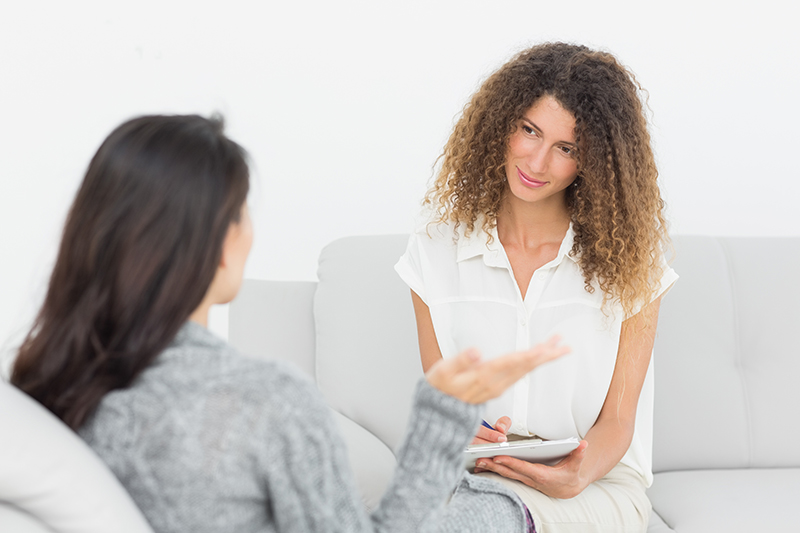
My first session was basically me providing background. I gave a brief summary of what my childhood was like and highlighted some major events that have happened throughout my life. My counsellor listened intently, she provided encouraging nods and asked questions when more insight or clarification was needed. Her approach was gentle and genuine. As I shared about a situation that is particularly meaningful to me, I started to cry. I am not saying that crying in mandatory in counselling sessions, but as I share with my clients, “tears are welcome,” while ensuring a box of tissues is close by. When I cried, my counsellor sat with me. She shared the space. She acknowledged this was important to me and therefore she took the time to understand it more from my perspective. This was a beautiful gift for me to receive from her. It validated my experience and allowed me to know that she understood the importance for me.
At the end of the session, I felt like I was in a bit of a fog. Sometimes I have referred to this with my own clients as a “vulnerability hangover.” It is the sense of having shared meaningful information with someone and trusting them enough to hold the information. Did I share too much? Not enough? My life cannot be condensed to 50 minutes. Nor can the lives of the clients that I see. Counselling takes time to unpack, learn and discover. As I tell my clients, after my own session, I took some time to breathe and think and be calm. I booked another session to see Julie again in 2 weeks.
In summary, the session went well. I felt safe, heard and validated. For me, this is a sign of a positive therapeutic rapport. Moving forward, I anticipate more tears, more questions, more wrestling with the reasons why I do the things I do; but I know that what I learn and discover as a client will help me tremendously as a Registered Clinical Counsellor. My second session with Julie is in a few days. I am excited to see her again and see where the conversation takes us. And I must say, I still have my snow tires on my car. Perhaps I will have them taken off before my third counselling session, and maybe Julie will too?
If you have been thinking about going to counselling, can I give you that little nudge and say to do it? Find a Registered Clinical Counsellor who is a good fit for you. Can I be so bold as to suggest looking at Alongside You to find a one? Like ice cream, we have some daring counsellors as well as classics and everything in between. There is no shame to ask for help. There are counsellors who want to help. Put on your oxygen mask. Be Brave. Contact Us.

by Marcia Moitoso | Apr 11, 2019 | Emotional, Health, Stress
The Stress-Response Cycle: How to Move Through Stress
To follow up on my last post, it’s time to get practical! What do we do with stress? We’re often told to reduce our stress by taking on fewer responsibilities when we’re feeling overwhelmed. That certainly can help, but what’s more important is to learn to move through the stress response cycle so that when we are faced with stressors our bodies have the capacity to handle them. This requires learning to listen to our bodies and our emotions.
Don’t Confuse the Stressor with the Stress
A stressor is something that causes stress, such as a semester of school. Stress is that feeling of fight, flight or freeze. Often, we believe that we’ll feel less stressed once we’ve dealt with the stressor. I often tell myself that when the next term at school is over, I’ll feel energized and happy again. Then, the end of term comes and after a week I notice I’m still feeling exhausted and irritable. This is because I was confusing the stressor with the stress. The stressor may be long gone and successfully conquered, but the reason I still feel irritable and exhausted is that my body hasn’t moved through the stress response cycle and come out the other side.1 Can you relate? Let me explain.
Stress-Response Cycle: Listening to our Bodies
Our body’s natural tendency in times of stress is to move through the beginning, middle and end of our response to stress. When we are in fight, flight or freeze, a lot of adrenaline is pumping through our bodies. Our body’s natural tendency is to find a way to expend that energy. With fight, it would be throwing punches, flight would be to run, and even in freeze, our natural tendency when we come out of freeze is to shake. Once we’ve expended that energy, our natural tendency is to find safety and to rest. This is the full cycle: trigger (beginning); energy expending (middle); safety and rest (end).1
Unfortunately, in our culture we’ve been taught to suppress the messages we get from our bodies. Our culture is uncomfortable with feelings and so we’re told to suck it up; we’re told that everyone is stressed and that’s just what life is. We override our body’s messages because they’re not always compatible with work or with the social context at hand. When we keep overriding the messages our bodies send us, our bodies become stuck in a state of stress. When we never feel like we can escape the feeling of stress, we start to cope in ways that are less healthy, such as developing addictions or lashing out at people when we don’t mean to. This is because there’s so much pent up energy and it hasn’t had a chance to move through us.1
How to Complete the Cycle
We probably don’t want to be fighting people when we’re stuck in traffic or running out of our cars after a car veers into our lane. Thankfully, there are more practical ways to complete the stress-response cycle.
The Middle Part of the Cycle: (The part where you let the energy out)
- Physical activity: This helps to re-calibrate the nervous system. It lets your body complete the middle part of the cycle and expend all of that adrenaline that was secreted from the various stress-related triggers in your life. Any kind of physical activity will do, as long as it gets you moving and gets your heart-rate up.
- Allow yourself to have a good cry or a primal scream. The kind of cry where you sob for 10 minutes and then have a big sigh of relief. This lets the emotion move through you instead of getting trapped in your body.
- Journaling: Writing your thoughts down can sometimes offer a feeling of release and relief. You can keep an ongoing journal of your thoughts and feelings and/or you can write them down and then rip them up. The act of ripping up the pages can also be relieving.
- Art: Finding creative ways to express emotion and dispel stress. You might think you’re not particularly artsy, so maybe you want to try coming to something like our Open Studio Sessions to start where you can get some gentle guidance and try some new things out?
The End of the Cycle: (The part where you rest)
- Seeking affection from someone you trust. This is proven to be a very effective way to calm the nervous system.
- Identify people and places that you can trust to provide space for you to feel your feels.
- Sleep: Do what you can to prioritize it, and seek help from a doctor and/or counsellor when you’re having consistent trouble sleeping.
- Grooming: For some, it can be meditative and give a feeling of self-care.
- Engaging in anything you find
Throughout the Cycle:
- Mindfulness: Start cultivating a mindfulness practice, even if you start out with just one minute per day.
- Mindfulness allows us to notice what we’re focusing on, notice what we’re feeling and then have control in deciding what we want to focus on and how we want to express that feeling.
- Headspace is an app that offers a free mindfulness series to get you started, and the app allows you to start with mindfulness exercises as short, or as long as you want.
- Counselling: A counsellor can help you learn to move through your stress response cycle in a way that feels right for you. They can also help you to make sense of stress responses and emotions that feel confusing and stuck.
Remember, this can be very difficult, especially if you’ve grown up in a culture that teaches you to suppress your feelings and your body’s signals.
The most important part of moving through the stress response cycle is to be patient and kind to yourself. You’re learning something new, it takes time and you don’t need to do it alone.
References
Nagoski, E. (2015). Come as you are: The surprising new science that will transform your sex life. Simon & Schuster: New York, NY
Van Der Kolk, B. (2015). The body keeps the score: Brain, mind, and body in the healing of trauma. Penguin Books: New York, NY

by Meg Neufeld | Feb 7, 2019 | Health, In The Community, Mental Health, Workshops
“Properly practiced, knitting soothes the troubled spirit, and it doesn’t hurt the untroubled spirit either.”
― Elizabeth Zimmerman
For the past few years, we’ve hosted a Friday Night Knitting Club at Alongside You. Held once a month at our art studio from September to June, we’ve had people of different ages, stages and abilities gathered together to share in a common interest. The idea grew out of community interest and was borne out of a reading of the novel The Friday Night Knitting Club by Kate Jacobs. What’s been fascinating about knitting groups is that everyone has a story of how they came to knit. Some of us have been knitting from a young age, taught by a family member or friend; others have taken up knitting to cope with chronic pain or illness, or have used it as a way to help those less fortunate. Some knit more regularly while others pick it up after long periods of rest.
I fit somewhere in the middle. Knitting has always been in and out of my life. My twin sister and I learned how to knit from a family friend in our neighbourhood when we around 6 or 7 years old. Because of my sisters’ short stature, a lady from my parent’s church handmade and measured custom knitted outfits for her to wear. Though both of us began knitting at the same time, my sister has kept it up more consistently. She is a little more skilled and comes to my rescue. Though I liked the idea of knitting my first-born a blanket, I had a difficult time finishing it. During the early stages of labour, I thought it was a good idea to attempted to knit. I put so many holes in it that my sister took all the stitches out and refinished the blanket just in time to wrap our daughter in the blanket. She has made both of our girls’ blankets that they cannot, I repeat, cannot live without. That’s the beauty of a knitted item. So much time and effort are laced into a piece that is well treasured. Since then, we have been the happy recipients of well-loved knitted baby clothes, children’s sweaters and blankets by friends and family that are true keepsakes.
How Can Knitting Help Us?
Here are a few things I have learned about knitting over the years.
1. Knitting has a long history all over the world.
Whether the piece is from England, Ireland, Scotland, Latvia, Japan, Australia or Peru, only to name a few possibilities, each is derived with their own styles and techniques. The history behind each garment and each stitch made makes my head swirl!
2. Knitting has major health benefits.
Because of its repetitive nature, knitting keeps your hands busy, produces relaxation, and teaches mindfulness as you tune into each stitch. It can also provide tangible results and garner a sense of accomplishment. It is these very attributes that have increased the use of knitting as therapy in addictions and recovery programs, and dealing with things such as eating disorders, drug and alcohol addictions, and chronic pain and illness management. Knitting is not simply a creative activity, it is constructive as well; activities using both your body and brain, like knitting or crocheting, actually promote the development of neuropathways that aid in memory retention and stave off symptoms of Dementia, strengthen hand-eye coordination, and offer exercise in joint movement, decreasing symptoms of arthritis. Knitting may as well be known as the “new super craft” just as cauliflower is known for being the “new superfood!”
3. Knitting requires skill.
Because knitting requires a certain amount of knowledge on everything from how to make yarn, dye it and craft it into something using an array of colours, yarn types, stitches and patterns, you need to learn it from an experienced teacher, relative, friend, or nowadays, YouTube! Knitting is truly a skilled art form that embraces the efforts of knitters with a variety of skill levels. I’m still at the square dishcloth, or scarf stage and hope to move into creating large blankets or shawls! Though historically a woman’s craft, knitting is now being accepted as an activity suitable to all.
4. Knitting for others in need has been and continues to be a huge part of knitting.
Knitting, for the most part, is made to be functional. Knitted items such as socks, sweaters, scarves and even undergarments are made for regular use and warmth. Historically, hand knitted socks, scarves, sweaters, hats and mitts have warmed soldiers, farmers, the elderly, children, and even those in hospital.
For instance, last year, our Friday Night Knitting Club received over 70 knitted scarves to be distributed at the Union Gospel Mission’s Women’s Shelter. This year, we received over 60 knitted items (hat, scarves, socks, mitts) and over $300 of grocery cards to be donated to Azure House, Delta’s new transition for women and children seeking refuge from domestic violence. This is run by W.I.N.G.S. (Women in Need of Gaining Strength). Similarly, The Knitting Sisters, a local group made up from women in both South Delta and Richmond, have made it their mission to support local and international charities with their knitting. Whether it is knitting items for a friend or family member, infants in the Neonatal Care Unit, the homeless, or even women’s shelters, many knitters carry on that sense of purpose.
Want to infuse knitting into your life?
Here are some ideas on where you can start:
- Alongside You hosts a Friday Night Knitting Club once a month for those of any age and ability. We share stories, skills, knitting projects and refreshments. Basic instruction is available. The evening is by donation to raise funds for our Step Forward Program, that helps subsidize our services for those needing financial assistance. Everyone brings their own supplies but we also sell a selection of yarn and needles on site. So far, donations and yarn sales have raised over $2000 for the Step Forward Program and have donated numerous items to women’s shelters. The next one is February 22nd from 7 – 9:30 pm. To register, please visit our Facebook Page.
- Knit and Stitch is a knitting group that meets at the Ladner and Tsawwassen Libraries. Bring your own projects and share ideas. For more details, contact your local library.
- The Knitting Sisters are a group that meets at McKee House. They also focus on knitting for others. Here’s a great story about them.
- Check out Meetup, a popular site devoted to connecting people with similar hobbies and interests. Look by location or by craft.
Where can I find knitting supplies and inspiration?
There are shops all over the Lower Mainland that have beautifully crafted fibre arts for sale. Fibre Art Studio on Granville Island offers classes and have an extensive collection of yarn in vibrant colours and textures. You can also visit stores in Vancouver such as Three Bags Full, Wet Coast Wools, and in Delta, Crafty Fibre.
Want more inspiration? Check out Etsy for knitted items and patterns.
What Is The Takeaway?
Knitting is fun. It’s good for your health. It can be used to help others.
Meet the new take on graffiti or street art…YARN BOMBING! Public spaces are adorned with knitted and crocket items: Trees, statues, lamp posts, and even fire hydrants. You never know where you’ll see knitting coming into your life…it may be just around the corner!

by Susan Le | Dec 3, 2018 | Dietitian, Food, Health, Recipes
Here’s the truth – I love chocolate! It’s my go-to sweet snack. So, naturally, I wanted to create something chocolatey but delicious at the same time. I used this recipe in a nutrition workshop I taught to teens, and they loved it. So, if teens approve of this then we can all love it too.
Here’s what’s in the recipe:
Medjool dates are the perfect natural sweetener and also known as “nature’s candy.” Unlike their processed sweetener counterparts, they are rich in polyphenols which are powerful antioxidants that help protect against free radical damage and cancers.
Hemp seeds are a great vegan source of protein that contains all nine essential amino acids. They are a great source of omega-3 fatty acids, vitamin E, magnesium, phosphorus, potassium, and iron.
Rolled oats are a great source of fibre. In one cup, there is 9.6 grams of fibre, 39% of the recommended daily intake. It contains loads of iron, manganese, selenium, phosphorus, and magnesium.
Cacao powder is the raw form of chocolate and is not processed like cocoa powder. Cacao powder is rich in nutrients including magnesium, iron, potassium, calcium, zinc, copper, and manganese.
Ceylon cinnamon is also known as true cinnamon. Most of the cinnamon in the supermarket available is cassia cinnamon. One of the biggest benefits of Ceylon cinnamon is its ability to regulate blood sugar.
Sea salt is not processed like table salt. Depending on the salt you have, it’ll have a different nutrient panel as well.
Raw Hemp Chocolate Energy Bites
1 cup (12-15) of packed, pitted Medjool dates
½ cup of hemp seeds
½ cup of rolled oats
⅓-½ cup of raw cacao powder
¼ teaspoon of Ceylon cinnamon
Pinch of salt (optional)
Cacao powder for rolling (optional)
1. Combine all the ingredients in a food processor and process on high speed until a dough forms.
2. Take the dough out of the food processor and place in freezer for 15 minutes to harden.
3. After 15 minutes, take the dough out of the freezer. Form into small one-inch balls and roll the energy bites in cacao powder if desired.
4. Put your energy bites in the fridge in an air-tight container. Enjoy 1-2 at a time!
Did you try the recipe? I’d love to hear your feedback. If you made any adjustments, please share as well!
by Sarah Vaughan-Jones | Jul 25, 2018 | Health, Relationships
“This week’s blog is written by one of our volunteers, Sarah Vaughan-Jones. Sarah is entering her last year of her Psychology degree at UBC this fall and is helping out around the clinic as she learns more about the field of psychology.”
Relationships can be challenging. They don’t come along easily and require constant attention to sustain them. At different stages in our lives, they can be more difficult with the other challenges that life throws at you. Being in a relationship, and having a romantic partner can play an especially large role in our health outcomes. Whether it is a budding relationship in high school, or a 30-year marriage, having a partner can certainly impact our health. Let’s take a look at a few of the ways this can happen throughout our lifespan.
Late adolescence
As we reach our later teens, major changes happen in our day to day lives. Many of you are heading off to college or joining the workforce. It is probably the first time many of you have lived on your own, with less direct guidance or support from your parents. You may find that you are ripped out of your comfort zone and put in a new environment, where you may not know anyone! This can be lonely and stressful!
With your newfound freedom, you might explore new things such as drugs and alcohol, experimenting with sex, and others. Often, these are in an effort to develop and form relationships with others, including romantic partners. How might relationships affect this? Research has found that young adults in a relationship may have less mental and physical health problems when compared to single college students, as they may engage in less risky behaviour (Braithwaite et. al, 2010). Sometimes we experiment with risky behaviours as we look to expand our social network. Alternately, being in a relationship might encourage us to be healthier. In the people studies, exercise, smoking habits and eating habits were more likely to improve due to being in a relationship with a partner (Nichols, 2017). Couples can receive the emotional support and comfort that they may be missing from home, benefiting their wellbeing.
Early Adulthood
Life continues to change once we’re in early adulthood. Relationships can quickly become a more important part of our lives. Many feel stress and pressure from society to find a relationship, as it’s a common time for marriage, moving in together or having children. Whereas a few years ago it was all new and experimentation, now the pressure is on – people may be expecting you to be in a relationship as you get older. It can be tricky to balance; you’re trying to find security in a job and search for a partner at the same time as dealing with whatever other life challenges come your way!
In this stage of life, research suggests that women will have better mental health outcomes, while men will have better physical health, when in a happy, committed relationship (Nichols, 2017). A married man’s health was similar to that of a non-smoker, with regular blood pressure and BMI levels (Loving & Slatcher 2013, p.8). Happy couples also have a decreased mortality risk, decreased the risk of cardiovascular disease, and decreased cancer-related mortality.
On the other hand, when in a relationship, conflict can arise between career and love. With a common goal of being financially stable, this can mean more time at work, which can strain and cause stress in relationships. This kind of stress has been linked to future cardiovascular problems (Nichols, 2017). Research suggests that adults who are able to maintain a good balance between many demanding situations have the ability to adapt to demanding environments better than others, which helps form a greater identity (Cao, 2013, p.7).
If this is you, you might feel trapped in a cycle of doubt, as it can be hard to find a solution and how to balance a relationship with work and other commitments. What you might find interesting is that being in a relationship can help with coping; that is, the relationship becomes a strength in coping. They call this “dyadic coping” and it can be beneficial for many couples. Dyadic coping focuses on how couples can cope together to decrease their stress. They can prepare for future stressors, and plan on how to deal with them together. This can increase an individual’s support for their partner, and improve trust and intimacy with one another, improving each other’s mental health (Landis et. al 2014, as cited in Umberson & Montez, 2010).
Adulthood
Long-term marriages and relationships can also have a significant impact on our health. Whether you are new parents or retiring, relationships still have a substantial influence on your health.
Research is finding that that long-term relationship satisfaction is different between men and women. Men that engage in problem-solving and stress management, are predicted to have the healthiest relationships (Pietromonaco et. al, 2013). It seems as though focusing on problem-solving and stress management in relationships may allow men to be rational and calm under stress, which may place less of a negative stress on their body.
Some of the research highlights that health outcomes for women improved when they were intentional about paying attention to their personal satisfaction and this led to better relationship happiness overall (Pietromonaco et. al, 2013).
What about children? Having a child can be an important part of a relationship. Research has found that during pregnancy, women that receive support from their partner had reduced anxiety during and after pregnancy. It can be a stressful time for many couples, and having support can be not only healthy for the mother, but also the child. Reducing parental anxiety levels can also improve the infant’s behaviour and development for the better (Pietromonaco et. al, 2013). Parents who are calm and less stressed during, and after pregnancy may have less distressed children.
Later on in life, as we age, more and more health problems may arise, including chronic diseases. Having a partner as a support system can have great effects on health outcomes. Cancer patients reported feeling more intimacy in the days in which their spouses supported them. What’s interesting is that giving support, not just receiving support can also be beneficial to our health. Supporting a spouse showed lower mortality rates for the supporting partner (Brown et. al, 2009, as cited in Pietromonaco et. al, 2013).
What can we take from this? Although relationships require effort to find, grow and maintain, they may be very beneficial to our health in the long run. With the curve balls life can throw in your direction, it can be very beneficial to have the support of a partner, at any time in your life. But of course, there is always an alternative to this. Others in your life such as close friends and family can also provide a similar support for you in times of need, or anytime at all! For any question, feel free to contact us!