by Katrina Per | Feb 25, 2021 | COVID19, Encouragement, Massage Therapy, Mental Health, Pain, Registered Massage Therapy, Self Care, Stress
Persistent pain that doesn’t go away is a pain in the ____________. Here’s an idea from a Registered Massage Therapist: you have permission to relax and enjoy sitting, standing and moving in any way you feel comfortable and happy.
Pains in the neck, low back and shoulders are a common complaint for massage therapists and all too often our clients come in worried and tell us they have poor posture and that this must be the reason for their pain. These people are often hyper-vigilant and compliant patients – the kinds of people who do all the necessary work to help alleviate their symptoms but unfortunately these symptoms often don’t go away despite the many gadgets, tricks, and ergonomic changes to their desks at work.
Why Do These Pains Persist?
Unfortunately, pain is a complex concept. Pain cannot be reduced to such ideas as head-forward posture or weak “core” muscles or “bad” habits at work. The way we perceive and feel pain is entirely dependent on a multitude of factors including biological predispositions and sensitivities, stress levels at work and at home, and your own past experiences. We call this model of pain a Biopsychosocial Model, and it is currently the most scientifically supported model for pain. The biopsychosocial model plays an incredible role in pain – we have now learned that stress is the single most important factor in determining how much pain a person is in, regardless of past injury history, health history and posture. When stress is high, pain centres in your brain (cerebral cortex and limbic systems) become more sensitive to signals coming from your body. When stress is reduced, and you feel calm and relaxed, pain centres in the brain are less sensitive.
Stop Working On Your Posture
Hold on a minute – did a Registered Massage Therapist just say I don’t need to work on my posture?
YEP!
A recent article published in Psychology Today by a leading pain expert states that “Pain is commonly triggered, and amplified, by negative emotions like stress, anxiety, anger and depression.” The reality that your pain can be amplified by emotions and that your emotions can amplify your physical pains means that living through a pandemic has likely increased your physical discomfort and sensations of pain. Adding to this more stress about posture and you can see where this is leading.
Stress is a significant reason for persistent pain that doesn’t go away. If stress is a better indicator of how badly people hurt than your posture is, one might see how it could be counterproductive to tell you to add yet another thing to your plate – particularly given the global pandemic. So instead, I offer you this – if you’re feeling discomfort or pain in your back, neck and shoulders and you’ve got some stress in your life, give yourself permission to move freely and to sit in any position you feel comfortable in. You are not going to cause yourself injury. You are resilient and your body was designed to move you.
Yes, you have permission for even the slouchiest, baddest posture you’ve ever had.
There’s never anything wrong with working on core strengthening or posture improvements, but don’t be discouraged if they do not instantly solve your persistent pains (but if they help, keep on keeping on!). Please don’t feel pressured to add yet another thing to your already too-full cup if you’re feeling overwhelmed and uncomfortable.
This registered massage therapist gives you permission to just slouch more.
Need help with your persistent pain or just reducing your stress that is leading to the persistent pain that does not go away? We’re here for you. Give us a shout, we’d love to work with you on how to best help your body to relax, reduce stress, and deal with your discomfort!

by John Bablitz | Feb 18, 2021 | Anxiety, COVID19, Encouragement, Mental Health, Self Care, Stress
Many people come to therapy with the belief that something is amiss, broken, or “wrong” with them. Sometimes I wish it were easier to convince people this isn’t true – most of the time, the people that come to sit in my office are “working” just fine. Have they been thrown an unfair number of lemons by life? Sure, maybe. Have they responded to those experiences creatively and adaptively, in a way that has both helped and hindered them? In every case, yes. That said, you’re not broken, you’re adapting.
How Does Adaptation Happen?
Genetics is one element that explains our wonderful human diversity, and another is environment and experience – we all have a rich tapestry of experiences, and no two tapestries are anything close to alike. Those tapestries, I believe, are all quite beautiful.1, I’ve noticed people generally prefer movies that end happily, but when it comes to art and music, it can be the mournful, the bleak, the dark, the unsettling and unresolved, that has more power and meaning for us.2 The darker shades in those tapestries are worth sitting back and soaking in, they touch us deeply. This is one of the many reasons I love my job so much. Another is that sometimes, one of my coworkers brings in muffins.
Ok, back to the thing. Neuroscience has known for many years now about the incredible plasticity of the brain, an organ that readily and creatively adapts to its environment. Most of us have heard that people who experience blindness have a more heightened sense of hearing and smell. One reason for this is that the brain takes unused real estate – certain areas devoted to visual processing – and The Man Who Mistook His Wife For a Hat, the neurologist Oliver Sacks shares stories of brain-damaged patients who have responded with unbelievable neurological adaptations. Sacks comments “…there is always a reaction, on the part of the affected organism or individual, to restore, to replace, to compensate for and to preserve its identity, however strange the means may be…” (p.6). Brains find a way to preserve and reinvent themselves in the face of damage, and people find a way to preserve themselves in the face of challenge. Trauma and anxiety are prime examples: a dog bite when you are three years old might give you a paralyzing fear of dogs for the rest of your life. Your three-year-old brain saw that your life was in danger and it made a high priority, instantly accessible file labeled DOGS = DEATH -> AVOID that pumps you full of anxiety and adrenaline when a dog might be nearby.
Many of our adaptations are not all that dramatic and some are more complex. Maybe our dad told us not to be a baby when we cried, and so to preserve that relationship (our brain knew this was more important) we created a file that evokes anxiety when something might feel sad. Now, we are an expert at avoiding not only physical sadness, but things that even might make us feel sad based on our experiences.
What Do We Do About Our Adaptations?
Your adaptations are there for a reason, and that’s ok. They might not be as helpful as they once were – you’re an adult now, and dogs aren’t all that dangerous most of the time – they’re actually awesome. Avoiding sadness was functional before, but now you find yourself feeling depressed more often than not. In your last relationship, it made sense to be angry with your partner, because it felt like the only way to get through to them – but in your other relationships, that anger is less useful.
Adaptations in our life are unavoidable and necessary, and this is a good thing. If you lacked the ability to adapt, then I might agree that something is wrong with you. But I’ve never met anyone for whom that was true. You see, blind folks don’t tell their brains to reuse that real estate for hearing, brains just do it, which is so cool. And our brains, as wonderful as they are, don’t always make the best long-term choices. They find a way to stop us from driving after we have a bad accident, terrified that we might die, convinced that losing our job is better than death. When we are frustrated at ourselves and sad about the loss of that job, they talk us into pouring a drink, and when it works, they think “Perfect!” and they keep doing it. When people close to us start to bother us, they might solve the problem by helping us avoid relationships altogether (great idea for a week, but not for a year, or a lifetime). When our coworker brings in muffins, they talk us into stress-eating four of them, because the first one was oh. so. good. I think you get the point.
Working With Our Adaptations
We can get to know our adaptations, and be brave enough to set aside those we no longer need (and adjust the ones we do). We can come to see that our adaptations are actually strengths – the lengths that we go to in order to avoid something can spark incredible creativity. These are some things we might do in therapy. But first, we might work on the belief that there is something wrong with you in the first place – and, wouldn’t you know it, our brains are fantastic at holding onto those beliefs. So, if you take nothing else out of this article, make it the belief that you – whoever you are – are mostly just fine, and you are weaving a meaningful and worthwhile tapestry with the threads you are being given.
If you’re struggling with some of your adaptations, give us a shout. We’re here to help. Remember, you’re not broken; you’re adapting.
Notes
1. You’ll have to let me have this one – I’m an incredible, unabashed sap, for better and worse.
2. I have a client who is a fantastic artist, and I sometimes have the privilege of seeing some of what she’s made – it reflects her experiences, and it also connects me to some of my own. Art in many forms has that effect, and those who do it well are a real gift to the world. Meg, who runs the therapeutic art program here at Alongside You, often uses a wide range of colours and tones to create pieces that seem able to capture any mood under the sun – a few seconds soaking these in are seconds well spent.
3. On the tapestry metaphor note, his op-ed in the Times on his terminal cancer diagnosis is a worthwhile read along with this blog post – here’s a link to it.

by Nikita Bhatty-Avdic | Jan 12, 2021 | ADHD, Anxiety, Encouragement, Executive Function, Mental Health
ADHD and the Role Parents Play
Many parents wonder what role they should play in the lives of their child with ADHD. When answering an important question like this one, we like to start with the experts. In my professional readings, I often turn to the literature of Dr. Russell A. Barkley, PhD., a leading expert in the management of ADHD in children. He has a great perspective to start with when searching for insightful, research-based information around the struggles of children with attention problems and the challenges faced by their parents.
In his book, Taking Charge of ADHD: The Complete, Authoritative Guide For Parents, Dr. Barkley describes the role of the parent of a child with ADHD as that of a skilled executive, who acts as a team leader on behalf of the child, treating the child’s teachers, therapists, coaches or physicians as personal advisors. To assume this role fully, parents learn how to take on the headspace of a high-functioning executive, one who uses planning, prioritizing, problem solving and goal-setting skills to get the job done and ensure success for their child. In doing so, these parents (nicknamed “executive parents” by Dr. Barkely) develop their own confidence and fortify their roles as true case managers; ones who are in charge and ones who determine, to a great extent, how the care for their child takes shape.
Why Parents Need to Become Executive Parents
“Wait a second,” you might think, “Why this is role necessary when many children with learning and behavior problems already have case managers in the school system who consult with teachers, develop IEP goals and carry out recommendations? Isn’t that enough?” Ultimately, we find it is still the parents themselves who tend to be the best case managers of their children’s supports, as they are the ones who know the child best and can best advocate for their needs.
Parents who take on this executive role eventually learn to be proactive and are prepared to lead the way for other people involved in supporting their child over the long haul. Executive Parents understand that even though other individual children may be maturing faster and becoming more independent, children with learning and behavior challenges like Attention Deficit Hyperactivity Disorder (ADHD), Autism Spectrum Disorder (ASD) and Specific Learning Disability (SLD) may struggle more than others their age, needing longer periods of parental support and management. These Executive Parents learn how to act as advocates, working with others to provide the resources that the child needs over time.
The Executive Parent that Dr. Barkley envisions also understands that only they can make their child’s success their number one priority. Of course, school personnel can provide special education services, physicians can provide medical consultations, tutors can provide academic support and coaches can assist with athletics – but in the end, it’s ideal if a parent can coordinate these services in a way that works for their child. That’s not to say that specialized and skilled professionals aren’t valuable, but they cannot replace the wisdom and dedication that parents bring to the table.
It’s important to note that while the image of a highly functioning executive may bring the image of a task master to mind, parents should instead aim to operate as a decision-maker and problem-solver on behalf of their child. The child is still viewed as a complete person, with skills, competencies, feelings and preferences of their own, and above all, the potential to succeed!
It’s Okay That You’re Still Learning
Learning these “Executive Parent” skills won’t come all at once, and that’s okay. The more you learn to take this role on, the more you will develop your voice, learn how to get the information you need, ask helpful questions, and make your feelings heard. Learning these skills over time will help create more clarity around which choices to make for your child, too. And over time, you can take your place walking alongside them, clearing the way for their best interests and taking your rightful place as their biggest fan.
I know that doing all of this as a parent is difficult. It can be overwhelming to take on this role with your child sometimes, and it can also be hard to understand the systems that your child is having to operate within through school and other activities. I’d love to be a help to you and your child as you navigate this together. If I can be of any help, please don’t hesitate to contact me.

by John Bablitz | Oct 7, 2020 | Anxiety, COVID19, Encouragement, Mental Health, Self Care, Stress
My Best Pandemic Tips For Teens
I see a lot of clients in the high-school-or-close-to-it age bracket, who I tend to think are getting hit worse than anyone right now by this pandemic. Teens, this article is for you. Some of you love that you spend less time in school now, others hate it; some of you are going insane being cooped up inside, and some of you relish not having to deal with people quite as much. Whatever the case, a lot of us want tools (this is probably the thing I am asked most commonly for). While I love talking to people, if it’s just tools you want (and most commonly it isn’t), here are some of my best pandemic tips for teens!
Your Brain and Your Emotions Play Tricks on You
In the 13-22 or so age range, you feel feelings more intensely than your 25+ year old counterparts. It’s just how the brain works. This has both advantages and disadvantages: your lows are lower, and your highs are higher. Your lows will suck, and it’s likely that the adults in your life will struggle to relate to that, try as they might.
What To Do With The Lows
Unfortunately, we are a culture that tends to discourage negative feelings, especially strong ones. Many teens I see believe that there is something wrong with them, or that they are mentally unwell, both which are quite often untrue. While it is taboo to say, a good many of our minds will travel to a place that says we would be better off dead, and the world would be better off not having us. I really hope you’re not there, but if you are sometimes, come talk to us about it. Or to someone else – anyone you trust. It’s surprisingly normal. Please trust me when I say that difficult feelings are important, and worth experiencing (though they are best experienced alongside someone we trust). If you want someone to talk to but don’t want anyone else to know about it, send us an email and we will see if we can help, or point you to someone that can.
Managing Your Highs
Since your highs will be higher, that’s a good thing to take advantage of. You can enjoy a movie or YouTube clip way more than most of us can, you can get more joy from spending time with friends (please do this), you can laugh harder and longer, your runner’s highs will be higher. You can feel closer to your pet than we can, which I’m a little jealous of – pets are awesome (at the risk of making a few enemies, especially dogs). Use that – when you’re up, relish it and use the energy it brings.
If there was a pill that would cost nothing, that you could take that would help you sleep better, improve your mood, boost your immune system, help your brain and memory function better, reduce anxiety and depression, reduce stress, and generally make you feel better about yourself, would you take it? I think everyone probably would. Surprise, there is. Bet you didn’t see that coming in an article on the best pandemic tips for teens, did you?
The Magic Pill That’s Free
There is indeed a mysterious, free pill. Most people get really excited about this until they hear what it is. It’s exercise. I know that trickery was the last thing you probably wanted to hear, but exercise is literally one of the best things anyone can do for themselves, period. Doesn’t matter what it is, just get moving, and if you can, get your heart rate up. It might be hard at first, but the more of it you do, the better you’ll feel. I should also tell you that you should be sleeping more, but you know that already, and you probably aren’t going to. If you want help in that department, talk to your doctor. In addition to exercise, you can also try cutting out screens in favour of books in the couple hours before bed, or at the very least get yourself a pair of extremely trendy blue light blocking glasses.
You Already Have Skills That You Don’t Realize
Because you’re a human being, you have a whole bunch of adaptations the you’ve obtained over the course of a long life. These are great at getting you through tough times. One of my adaptations I used when I was younger was daydreaming, and another was making a joke out of everything. Some other common ones are overthinking/rationalizing, using alcohol or drugs, playing too many video games, or gluing oneself to TikTok.
Some of these are better than others, and they are mostly OK if used sparingly. Though we don’t want to overuse our adaptations, you have them for a reason – they’ve worked before, and they’ll work again. Don’t be too hard on yourself for using them, and I would probably recommend expanding your repertoire to include some more healthy ones.
Exercise (again), art, writing, music, hobbies, gardening, spelunking – the list goes on. If you’re feeling angry or stressed and are already not going to do your homework anyway, you could split your time between something mindless like video games, and something a little more mindful like going outside and collecting a bunch of bugs, or baking some cookies. If your parents hassle you about it, tell them a counsellor said you were allowed to. Probably do the bugs and cookies first – video games are hard to stop once you start. Healthier time-wasters will also give you a little mental boost in case you do decide you want to actually do some homework.
Make Good Use of Your Energy
Try to notice where your energy is going. Maybe you’re worrying a ton about your grades, and it’s exhausting. Maybe you don’t care at all about grades, but your parents do, and a lot of your energy goes to fighting with them. Maybe someone at school is really bothering you and it is eating you up inside. Maybe you’re in love and can’t think of anything else but that person you want so badly to be with. Maybe you’re putting everything you have into YouTube or Fortnite, hoping to make some money off streaming someday.
There is nothing wrong with any of these, but anything can be a drain on your mental and emotional resources. Make a list of the things that are the most draining: your biggest worries, the things you are committed to (sports, etc.), tough relationships. Divide this list into things you might be able to change, and those you can’t. The things you have a little more control over are great targets, and even the things you feel totally helpless about may not be as impossible as they seem. If you have a counsellor, talk to them about these things – it is likely you are burning more fuel in a given area than you have to be. These are also the things that can take you into dark places, or towards less healthy coping strategies.
Be Kind To Yourself
Above all, be kind to yourself. So far, I haven’t spent time with someone I didn’t end up liking, and this is because all of us are likeable. Seriously – I know that sounds stupid, but it’s true. You can’t be perfect, and you’re going to come out on the other side of this ok. As I’ve said already, come talk to us if you would like to – even if we can’t help, we can likely direct you to someone who can.

by Meg Neufeld | Sep 29, 2020 | Art, Connection, COVID19, Creative Arts Programs, Creativity, Mental Health, Self Care, Stress, Trauma
We live in strange and difficult times. When the Covid-19 pandemic made its debut, our world was rocked by devastating loss of life. Our schools, businesses, and essential services were shut-down. Even still, both travel and the distribution of goods has been disrupted. Our medical system is being inundated with those fighting COVID-19 along with other illnesses. Though we are in the process of re-opening some of these things, the reality is setting in; Covid-19 has radically changed every fiber of our society. I wonder, how can art inspire us, and be a force for resilience in the time of COVID-19?
While social distancing requirements have forced the cancellation and suspension of many social, cultural, and artistic events and services, the arts have always been and continue to be a way to illustrate the resilience in our society, foster self-reflection and connection with others in profound ways. The role of artists and the arts is not just to record, commemorate, or comment on socio-cultural events, but to uplift, encourage and give hope to all those who see experience it.
It’s no surprise, then, that this health crisis has inspired artists to create. At this time in history, artists are illuminating the world around us. All around us, we can see a wide range of COVID-19 inspired artistic endeavours.
Examples of Art Emerging During COVID-19
Painted Posters and Rocks
Early on in this pandemic, many participated in the communal effort to cheer on frontline and essential service works with posters and scripted messages of hope and love to isolated populations, such as seniors in care facilities. With children home from school, painted rocks also became one way for youngsters to express their gratitude and connect with a seemingly intangible concept of a pandemic and quarantine. Placed discretely around town, happening upon these gems still reminds us that we are all in this together.
Street Murals
Across the Lower Mainland, street murals have been springing up everywhere. Murals adorn exterior walls of elementary and high-schools, under over-passes, downtown buildings, and malls. Locally, a mural was recently completed at Tsawwassen Mills Mall by artists Jan Rankin and a Natalie Way. Its beach scene reminds us of the connection we have to the nature around us. In downtown Ladner Village, a recently-completed mural done by artist Gary Nay helps depict the vibrancy of Ladner and the region.
What do these murals do? They help to create a sense of community, offer messages of hope, and add cheer, all of which we need during this time!
Across the Lower Mainland, “Open Air” art galleries are expanding. There is a new-found vigour as artists respond to the issues of today and the fight against COVID-19. Over 200 public art pieces in and around Vancouver are part of The Vancouver Mural Festival and range in subject matter, but they provide overall messages of love, community, strength and resilience. All art pieces are accessible online if you can’t get out to see them.
Online and Social Media Platforms
From the comfort of our homes, we can tour the world’s greatest museums, historical sites, and have access to online exhibitions. The University of British Columbia’s Museum of Anthropology, for instance, gives you digital access to their collections, and a range of podcasts, stories, and research.
Instagram and Facebook have some interesting links to innovative and timely art. On Instagram, the account @covidartmuseum consists of themes and art work related to Covid-19 and shows how, in tough times, art can be used for serious contemplation but also offer comic relief. On Facebook, “Dr. Bonnie Henry Fan Club” tells us of a tribute art show at the Ministry of Health showcasing artwork, such as paintings, signs, mosaics and fibre arts, sent to Dr. Bonnie Henry from people all over the province and world.
We can also peek inside the life of an ER nurse, Anna Trowbridge, who sketches the scenes at work and posts them to her Instagram account. Her drawings show us how things really are on the front lines. Though this may be hard for some to take in, it captures the human side of the pandemic and highlights the heroic nature of our health care workers.
The Importance of Art Through COVID-19
Making art is one way we can practice self-care and learn positive coping strategies, both of which builds resilience
Viewing, and even more so, making art can be an important part of your self-care routine. Setting aside time to do something creative has been shown to reduce stress, protect against depression and anxiety, and can improve self-confidence and problem solving skills. Enjoying the mindful process of creating can help in pain-management, and it offers positive distraction tools and healing. Whether it is journaling, painting, singing, dancing, or knitting, our chosen activities helps to shore up our defences and learn healthy habits that we can use to sustain us during tough times. As we head into Fall, with the possibility of further shut-downs, we need the arts now more than ever. Its times like these where art can make all the different to keep our spirits up.
Making art together feeds our needs as social beings
Making art with others brings with it social benefits; it allows a space for relationships to be built, fosters a sense of belonging, and provides an outlet for self-expression. As we face COVID-19 fatigue and social distancing measures, doing something together with others is becoming more and more important for our mental health. It is not the art itself that has true value, it’s the ideas, conversations, choices, and connections we have made with ourselves and with others as we create that matters. Whether it’s connecting with a small group of people in person or online, the social nature of art helps us to not only to share our stories or voice our own opinions, but to listen to others with a compassionate ear.
Self-expression through mindful making helps us make sense of the uncertain world around us
This pandemic has compelled us to look at what matters to us, what we deem as essential, and to reflect on our lifestyle. Tuning into the present moment with self-compassion allows us to stop, breathe, observe, acknowledge, contemplate, and respond to our current state. Approaching the art making process in a mindful way can be very relaxing as well as restorative. Thoughtful experimentation can help us cope with the chaos around us and help us to express our beliefs and opinions and be open to new ways of thinking and doing. Giving yourself permission to question your own thoughts carefully, and without judgment, is an effective way to learn more about yourself and to rest and regroup.
How Can We Infuse Art Into Our Lives During COVID-19?
Art can be a major benefit for all of us as we head into the the Fall season, and into further unknowns. With school starting up, work shifting, and all that comes with this, we need now more than ever to take care of ourselves. Here are a few ideas on how we can use art to manage through this challenging time:
- Check in with your local community centres, artists’ guild, or private classes in the arts. There are so many wonderful artists in our communities and many are offering classes or experiences you can take part in.
- Create or buy art for your loved ones. Whether you make something yourself, or buy from a local artist, your gift can show others you are thinking of them. Supporting local businesses and donating to local causes also creates a stronger community! At Alongside You, sales of our jewelry, cards, and art help to fund our Step Forward Program, a program that has become increasingly important in subsidizing services for those in need of financial assistance.
- Learn a new skill online. How we do art has changed, and with many programs facing shut downs, artists and organizations are finding ways to adapt their art making offerings. Online learning tools and YouTube videos are a great way to try something new. Finding a live class can also help connect those who may feel isolated. Learning to dance, paint, draw, sing, knit, write poetry, or play an instrument with the help of online tools is a great way to pass the time as we stay home!
What we’ve learned over time is that the creative arts are essential. They enrich our lives, they help us practice self-care, encourage connection, embrace challenges, share our stories and knit our community together. Creative connection is crucial, especially now. May you be safe, be calm, and be kind.
EXCITING ANNOUNCEMENT! Open Studios are Back! COVID-Style.
After long last, we are excited to announce the opening of Open Studio Sessions, COVID-Style. We’ve made some changes to our operations and programming to keep people safe and healthy while being able to open the studio back up! We can not express how excited we are to welcome you into the studio again!
Click here to read about some of the changes and how to register for Open Studios again. We look forward to seeing you!
- Herring, Daniel. Mindfulness-Based Expressive Therapy for People with Severe and Persistent Mental Ilness. P.171. In In Mindfulness and the Arts Therapies: Theory and Practice. Laury Rappaport ed. Jessica Kingsley Publishers. 2014: 168-179.
- Kabat-Zinn, J., Lipworth, L. & Burney, R. J The clinical use of mindfulness meditation for the self-regulation of chronic pain. Behave Med (1985) 8: 163.
- McNiff, Shaun. Chapter 2: The Role of Witnessing and Immersion in the Moment of Arts Therapy Experience. P. 40-41. In In Mindfulness and the Arts Therapies: Theory and Practice. Laury Rappaport ed. Jessica Kingsley Publishers. 2014: 38-50.
by Nik Stimpson | Sep 23, 2020 | Anxiety, COVID19, Encouragement, Mental Health, Self Care, Stress
My name is Nik, and it’s a pleasure to be joining the team at Alongside You for my counselling internship! I will write a little about myself here. In short: I am a highly motivated counselling psychology student and science graduate with hands-on experience supporting people with autism, ADHD, anxiety, and other needs. I am committed to inclusion, mental well-being, and care of the highest possible standard. Please do get in touch if you think I or anyone else at Alongside You may be able to assist you!
Life Growing Up
I grew up in a diverse neighbourhood in Port Coquitlam. I was a quirky kid who did not have many close friends, much preferring the library to the soccer field. My bedroom was full of microscopes, telescopes, and amateur electronics. My love of science was matched only by my love of helping others; I came to be known as a calming and compassionate shoulder for others to lean on in times of need.
After graduating from high school, I had an urge for a change of scenery from Greater Vancouver. My British heritage and innate curiosity about the world helped me decide to study Natural Sciences in the United Kingdom at University College London. This interdisciplinary programme explored many different scientific fields, but I ended up focussing on neuroscience. I was fascinated by how little we knew about the human brain and the magic of consciousness. The brain is still very much “uncharted territory” with many new and intriguing discoveries made each year. However, as I progressed through my integrated master’s degree, I realized that these discoveries come at the cost of long and tedious hours in dark and lonely laboratories. Many of my peers who were a few years ahead in their careers found the work unfulfilling. It is valuable work, and I have much respect for those who do it. Still, towards my fourth year of university I realized I found greater meaning in working directly with real people. I started taking psychology electives and shifted from learning about the physical brain to understanding the mind and the soul.
After completing my M.Sci., degree and researching the presence and impact of autistic personality traits in the general population, I spent several years working in the non-profit social services sector. I primarily supported adults with autism, developmental disabilities, bipolar disorder, depression, and other concerns in various residential and community settings. In 2017, missing my family and the beautiful scenery in British Columbia (and also put off by the rapidly rising financial cost of living in London), I moved back to Vancouver. I started working for Family Services of Greater Vancouver to help children and adolescents with autism, ADHD, and anxiety build life skills and independence.
Finally, in September 2019 I started my M.A. in counselling psychology at Adler University. Now entering my second year of graduate studies, I can say I feel absolutely confident that this is the right path for me. My sincere gratitude to those who join me on this journey!
How I Approach Counselling
My approach to counselling is still very much in development, but right now I find myself oriented towards narrative therapy. This approach helps us unpack the story of our lives, read between the lines to gain new insights, consider alternative interpretations, and regain our sense of authorship to write the next chapter as we wish it to be.
That said, I do not draw exclusively on narrative techniques: the right style of counselling is whatever works best for the client! I also incorporate humanistic, person-centered values, meaning I have absolute respect for your choices, autonomy, and independence. It is not my job to make decisions for you or lead you in any particular direction. We will collaboratively explore options together, but you have the final say in any work we do.
Finally, it is important to me that my work includes well-researched, tried-and-true methods for effective and long-lasting change. Therefore, I aim to offer evidence-based exercises from practices such as cognitive-behavioural therapy (CBT), motivational interviewing (a style of discussion which helps you prepare for change), and dialectical behaviour therapy (DBT). I also aim to resource my clients (only if they wish) with proven strategies for building resiliency such as mindfulness, grounding techniques, and self-reflection skills.
My interest in research
As an aspiring scholar-practitioner, I believe it is essential to always work towards better understandings of the human mind. I think that this work should be substantiated by reliable data and evidence (although there is undoubtedly a place for intuition too). I am actively engaged in psychology research, keeping up to date on the latest peer-reviewed discoveries worldwide. I regularly collaborate with experienced clinicians and scientists on my own projects.
My current research interests include:
- The impact of exercise on cognitive abilities
- Relationship between personality traits and mental well-being
- Improving the counselling experience for people in alternative relationship structures
- Psychosocial development outcomes of using digital technology (e.g. apps, video games, robotics) versus physical toys and in-person interaction for children with autism in educational settings
- Mechanisms underlying the transmission of intergenerational trauma
- How social media and concerns (or ambivalence) about mass surveillance impact mental health, particularly in young people
Let me emphasize that my counselling clients are not research participants nor the subjects of experiments. I provide the above information just to give a better sense of who I am and what I engage in.
How I practice self-care through hobbies and interests
My energy, my fire, most certainly comes from music. I enjoy listening to most genres and have played various instruments since I was five years old (primarily guitar nowadays, and saxophone on occasion). I’ve found song-writing and composition to be personally therapeutic.
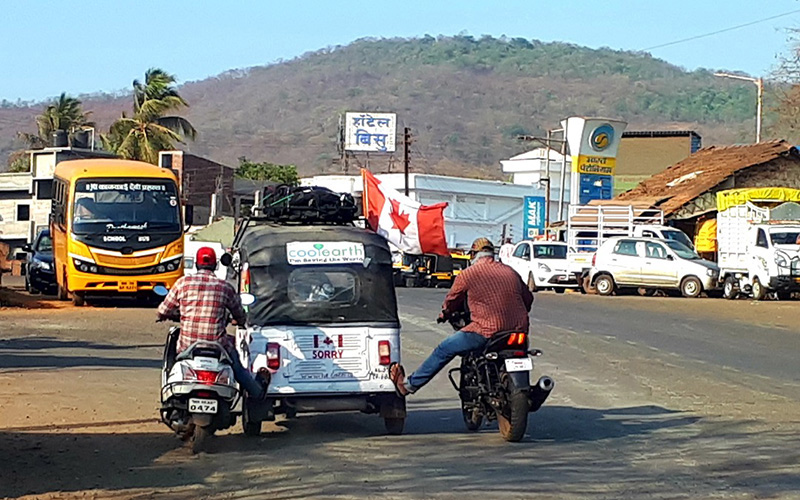
Travel is a large part of my life, and I also enjoy photography, which fortunately go quite well together! I prefer a more adventurous travel style, intentionally making myself uncomfortable to see what I discover about the world and about myself. In August 2017 I completed a challenging but incredibly rewarding 800km bicycle trek from London to Glasgow in five days. In April 2019 I participated in a charity event called The Rickshaw Run, driving 3,000km across India in a motorized tuk-tuk (essentially a 7-horsepower glorified lawnmower) while raising over $3,000 for cancer research. This past summer, my plans to backpack around eastern Europe were thwarted by the covid-19 pandemic. Instead, I took the opportunity to go on a 9,000km socially-distanced camping road trip to the Arctic Circle and back. I am incredibly grateful to have experienced how vast and beautiful this part of the world is! (Gratitude, I believe, is an important and too often neglected value nowadays)
I am also a big fan of fitness — or at least the idea of it! There are certainly many days when it’s challenging to muster the energy or find the time to exercise. Nonetheless, I’ve come to appreciate how vital physical activity is and that a healthy body yields a healthy mind.
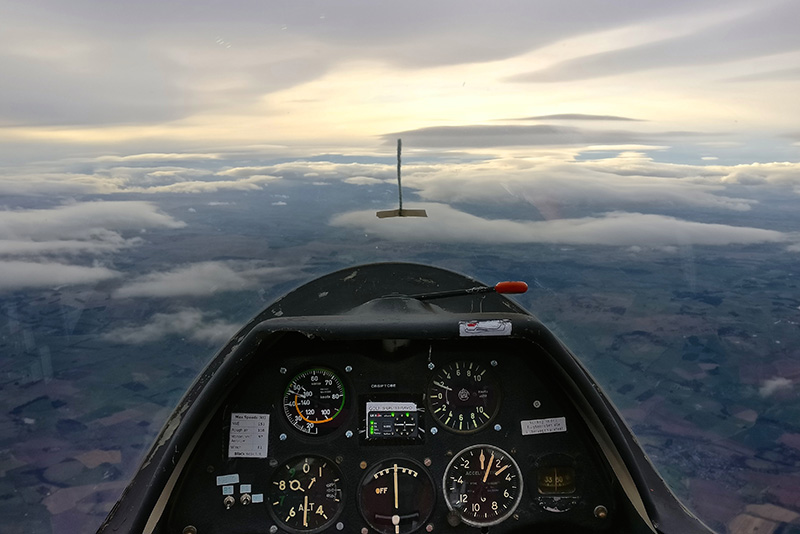
Another significant hobby of mine is aviation. When I lived in the UK I learned to fly glider planes with long wings and no engines. We would launch ourselves into the sky and hunt like the birds for warm air currents to provide lift. It was a continuous fight against gravity, but there was something simply magical about the experience of quietly soaring among the clouds. I’ve not had an opportunity to fly since moving back to Canada, but I hope to resume gliding someday.

That’s all I have to say about that
My commendations if you’ve read this far! When I started writing this introduction, I did not think I would have so much to say about myself! Yet, in some ways, this has barely scratched the surface of who I am; we are all incredibly complex beings with indescribable depth. I know I still have plenty of self-discovery and personal development to do. But I hope this gives you some sense of myself, and if we do end up working together, I look forward to learning more about who you are and who you are becoming. I’d love to be a part of your journey.

by Clayton Andres | Sep 17, 2020 | Anxiety, COVID19, Encouragement, Mental Health, Self Care, Stress
Self-Care Was Not Part Of My Vocabulary
I never expected to end up working as a counsellor. For a while, I thought I’d be a teacher, then I thought I’d be a journalist. I’ve worked as a custodian, a camp counsellor, in cramped offices and construction sites. None of these jobs promoted the idea of self-care.
The point is, my life has taken quite a few twists and turns, and it’s been very difficult at a lot of times to find a direction and a sense of purpose to what I was doing. And one major thing I’ve learned through that experience is just how important it is to take care of yourself.
When I was studying in journalism school, I very quickly realized being a reporter wasn’t the career for me. But instead of changing gears, I got mad at myself for not being good enough as a journalist and pushed myself towards a job I had no interest in doing. I was very hard on myself back then, and I blamed myself and my own inadequacies and I figured the only way to move was forward, even though I didn’t like the direction I was going.
I felt like I was trapped in this path I had chosen for myself. It was terrible. I pushed and pushed myself until I completely burned out at the end of my first year.
I took my whole body—mentally, physically, and emotionally—to the breaking point because I didn’t know how to take care of myself; I only knew how to continue doing things and never tell anyone how I really felt.
My Need For Self-Care
It turns out, I suffered from depression, anxiety, and a few other mental health issues that made it all the more difficult for me to take care of and go easier on myself. From a very early age, I felt lonely and sad a lot of the time. Even when I was spending time with friends or family, I would still feel a sense of sadness at not fitting in and not being accepted.
One of the ways I coped with experiencing all these negative feelings all the time was to hold myself to an impossible standard, criticize myself all the time, and blame myself for anything that went wrong in my life. I got used to the idea of being miserable and alone enough that I assumed I’d still feel that way no matter what career path I took, which is why I stayed in school and in jobs I didn’t like for so long.
But over time, my depression, anxiety, and negative self-talk became too much and I couldn’t function at work, home, or in social situations. Faced with inescapable feelings of sadness, loneliness, and self-loathing, I could barely get myself up in the morning and do daily tasks, let alone take care of myself.
It was only after I started going to counselling myself that I learned how hard on myself I was being and that it was actually OK to look after myself, take care of my body, and pursue my own interests instead of forcing myself into a career I didn’t fit into.
Counselling Can Help You Take Care Of Yourself
Counselling was so incredibly helpful for me as I began to better understand myself and make positive changes in my own life. I learned that I had a passion for the entire idea of counselling; of someone who is willing to join you when you’re at your lowest and help you find your own path towards understanding yourself, accepting yourself, and thriving as your best self.
I love being a counselling intern, even though it’s the last place I figured my life would take me. I’m excited to be learning these valuable skills as a counselling intern in an effort to help others. Having experienced mental health struggles myself, I know the value and life-changing power of therapy. It’s so important that we all learn to better understand our own mental health needs so we can take care of ourselves and each other.
When Will You Start Your Journey With Self-Care?
If you’re resonating with anything I’m saying in this article, I’d love to sit down with you. I’d love to be a part of helping you see that you’re not alone in your struggles, and that it’s okay to not be okay. We’ve all be there, and it doesn’t have to stay this way. Contact the office if you’d like to sit down together, I’d be happy to meet with you!
by Ava Neufeld | Sep 3, 2020 | Anxiety, Children, Connection, Education, Encouragement, Tips
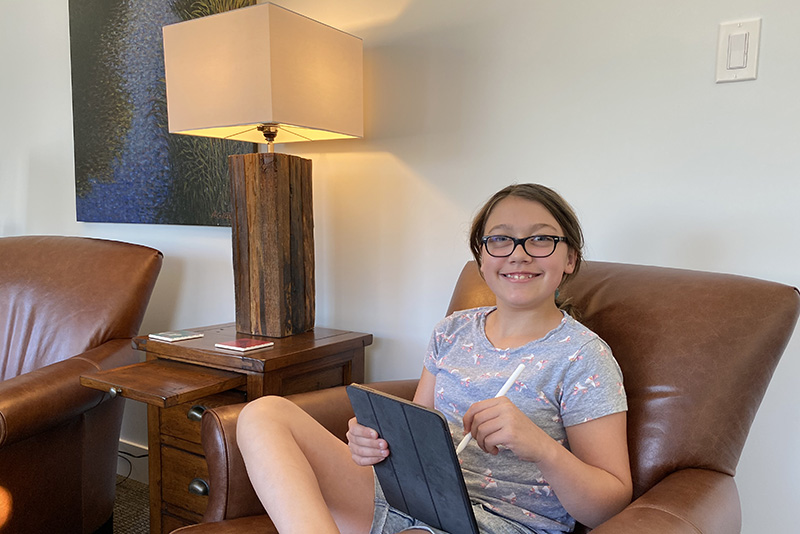
From The Directors: Today on the blog, we’re starting a new series. Our daughter, Ava is going to be writing for our blog from time to time. She’ll be talking about some of the issues she experiences and comes across with her friends, in school, and in life, to offer a perspective from a kid. We professionals can be helpful, but sometimes kids need to hear from kids. We hope this is something that some of your kids can benefit from and see that they’re not the only kid thinking of these things or struggling with things in life. We also hope that some of Ava’s tips will help them too!
Hello!
My name is Ava. I am a tween, and I have a sister and I have a dog named Buttercup – she is 10 years old. I love to do gymnastics and play with my beautiful dog. I love to bake, ride my bike, read, go skateboarding and last but not least, I LOVE TO PLAY WITH SLIME!!!!!!!!
You may be wondering why I love to play with slime, so here are a few reasons why:
- I have anxiety and learning disabilities. Playing with slime helps calm me down when I am nervous. I love the feeling of it in my hands and how the texture changes by what I put in it. It can be really smooth, soft, fluffy, wet or stretchy! Just having it in my hands helps me concentrate better.
- It helps me be creative and lets me experiment with ingredients such as, white glue or clear glue (optional), hand cream, glitter, clay (but add in after you activate), foam beads and shaving cream. For activator you can use borax, contact solution and tide, but only use one activator for one slime. Don’t use two activators in one slime.
- You can do this on your own or while social distancing with a friend. Or, you can make it online in FaceTime or Zoom – I like to do this with my cousins. It is a very soothing activity but it can get a little bit messy! It doesn’t take long to clean up! If it gets on your clothes just put the clothing in a bucket and put it in hot water to soak for 30 minutes to an hour and it will come right out.
Have fun!!!
I hope you enjoyed my blog today! Every once in a while, I’m going to write a blog that I hope will help some people. I know that I have a hard time with school and with anxiety sometimes, and I hope some kids out there will hear that it’s ok if things are hard. Life can be hard sometimes! I hope that some of my experiences and ideas might help you!
See you next time!
Ava
 Ava Neufeld is the newest author on our blog. She is a 12 year old student in the Delta School District and wants to share her perspective on life and challenges in the hopes that it helps others.

by Rebecca Farnell | Aug 28, 2020 | Anxiety, Children, Connection, COVID19, Education, Encouragement, Mental Health, Stress
I feel tired. I wonder if you are too? I am feeling anxious. I wonder if you can relate? I am feeling discouraged. Are you as well? I could use some self-compassion.
There seems to be increased tension if you are brave enough to venture into public spaces. Do I wear a mask? What if I can’t and people judge me? It feels like we are on hyper alert, the slightest cough, sniffle or tickle causes panic and uncertainty. Not to mention the larger conversations around the legitimacy of the pandemic and differing views of safety and the infusion of fear.
We made it through the spring and now the last weeks of summer linger in the air. Fall is approaching and with it comes questions. So. Many. Questions.
- What is school going to look like?
- Should my kids return to school?
- When will this end?
- Will things ever return to how they used to be?
- Will there be a second wave?
- How do I keep myself and my loved ones safe?
There seems to be a collective ‘heaviness.’ We could call it COVID fatigue? I feel it too.
Let’s all just stop.
Whatever you are doing this very moment – breathe.
Take a nice deep breath from your belly. In through your nose and out through your mouth. Notice your shoulders and lower them, try to ease some of the tension. Try to find a moment of calm.
Contrary to what some may think, Registered Clinical Counsellors are not immune to feelings of overwhelm and uncertainty. I wanted to share a few things that have been helping me lately. I hope that you will find some of them helpful too.
Do The Things That Keep You Well
Many people are feeling tired, sad and even depressed. I have been noticing that motivation is dwindling for many. The things that we know help us and we enjoy doing, are the very things that are falling away. We cannot simply sit around waiting for the motivation to return. We need to do the very things that we so quickly dismiss. May I gently ask you to dust them off and try them again?
- Go for a walk. Enjoy the fresh air and sunshine.
- Pick up that instrument you love to play.
- Paint, draw, sculpt.
- Read a book.
- Go for a run.
- Putter in your garden.
- Call a friend
- Take a nap
These are difficult times. Our hearts can feel weary. There are pressure and demands coming at us from all sides. It is vital to take care of yourself first in order for you to show up the best you can for those you love and are looking to you for support and care. I know that I feel the joy returning when I put on my helmet and take my bike for a ride; I have too many excuses as to why I don’t, but the moment I do…there it is – joy and lightness come trickling back.
What can you do today to help some lightness return?
Engage In Mindful Self-Compassion
I often say “Be kind to yourself,” when I am speaking with my clients. It is a nice sentiment, but what exactly does it mean? A few months ago, I had the privilege of taking an online course on Mindful Self-Compassion with Kristin Neff and Chris Germer. I would love to offer a few helpful points that encouraged me.
Let’s face it, often the way we treat ourselves is terrible. The thoughts and comments rolling around our mind are not kind, in fact they can be downright cruel. The crux of Self-Compassion is this: Treating yourself the same way you would treat a good friend. Typically, we tend to be more understanding and empathetic to others and not as much to ourselves.
There are 3 main components of self-compassion:
Kindness – giving yourself compassion and empathy
Mindfulness – allowing yourself to be with the painful feelings
Common Humanity – understanding that you are not alone in your suffering
Self-Compassion fosters connection and togetherness as we hold our suffering and realise that we are not alone. Self-Compassion allows us to pause and realise the present experience without judgement. The paradox of self-compassion is that we give ourselves compassion not to feel better but because we feel bad.
When we feel different emotions, we can learn to notice the emotion, feel the emotion, and label the emotion. Offer compassion to yourself as you experience this emotion. Try placing your hand on your chest and offer yourself some kind words, just like you would a good friend. For example: “This is hard.” “This hurts.” “I am sorry.”
Focus on Being Mindful In Everyday Life
Introduce the practice of mindfulness into your daily life. This can look different for each person. From guided meditation, to breath work, to savoring experiences, cultivating gratitude and self-appreciation.
I’d encourage you to check out more suggestions and ideas at Dr. Kristen Neff’s website. She has some great resources that make the introduction to mindful self-compassion much easier to grasp.
Please remember that you are not alone in your pain. It is true that no one know exactly what it is like to experience your pain, yet, we have a collective humanity in that we all go through suffering. There are folks who experience more pain than you do and there are folks who experience less pain than you; it is not a competition. Let’s remember to use suffering as a way to cultivate empathy and connection.
Start Your Journey With Self-Compassion Right Now With Me
Self-Compassion is about taking a moment to check in with yourself – to stop and listen; to feel and to ask, “What do I need right now?” And if possible, to be kind enough to give it to yourself.
- Make your mental health a priority. I cannot stress the importance of counselling right now. As physical health and safety is taking a front seat in the news, it is imperative to keep your mental health on check as well. Personally, I have been making my counselling sessions a priority. They are a lifeline during this time of uncertainty. Please know that Alongside You is here to help. We have appointments available 6 days a week – morning, afternoon and evenings. We provide face to face sessions as well as secure video sessions. Please reach out and talk to someone. We are here for you.
- Practice Gratitude. There is much to be discouraged about – cases of COVID 19 are rising, there is political unrest in the United States, tensions are high about going back to school, natural disasters surge, and innocent lives are being taken at a sobering rate. I have found myself feeling overwhelmed and struggling to know how to respond. I acknowledge that I am but one person and the need is great. I was asked by my counsellor in our last session, “Where is gratitude in all of this?” I smiled. I can still practice gratitude when there is injustice all around. I can delight in my flowering geraniums on my patio, despite my not-so-green thumb. I can be thankful for my family, for my weekly handwritten cards in the mail from my mom. I can savour a delicious meal cooked at home and delight in the technology that allows me to stay connected with loved ones around the world.
We can hold more than one feeling at the same time. We can acknowledge the pain, suffering, uncertainty and fear we feel. And we can appreciate the beauty, the simplicity, the kindness, the compassion and love that still exists.
Sadly, I do not have a magic wand to make everything better. If only I did. But what I do know is that we can step steps to help ourselves through this time. You are braver than you know. Do the things that bring you joy. You are not alone. Reach out for help. Remember to breathe. And finally – know that you matter. The world needs you.

by Nikita Bhatty-Avdic | Jul 22, 2020 | ADHD, Anxiety, Children, Connection, Education, Stress
One of my favourite things to do during my time as a teacher was to set up schedules for my classroom, plan out lessons and units, and help students stay on track with their learning and with their assignments. As a young mom back then, I thought it would be a good idea to use the same kind of set up at home with my own kids around scheduled feeding, sleep time, and play time. As my own kids grew and my role as a teacher of teens continued, I realized more and more that kids of all kinds thrive from structure, routine and predictability. All of these things help our kids with their executive function.
In school, teachers provide schedules, structures and routines to kids that, over time, become a way of life. The benefits of this kind of structured functioning became clear to me as my students and my own children entered the teenage years. In my roles as a mom and a teacher I was able to witness the advantages of good planning skills in teens firsthand, and the troubles that can arise for kids when organizational skills fall apart.
These kinds of planning skills are known as executive function skills (meaning the skills you need to execute tasks). What most parents and teachers don’t realize is that the full scope of executive function doesn’t just include planning and organizing, but also includes:
- Getting started
- Following through on tasks
- Goal-directed persistence
- Performance monitoring
- Emotional regulation
With the latest research in neuropsychology, we’re discovering that it can take up to 25 years for executive skills to fully develop! In other words, executive skills are dependent on brain development over time. This development happens in the prefrontal cortex – the part of the brain just behind the forehead.
Once I started to learn more about executive skill development in kids and teens, I became particularly concerned about kids who had challenges with executive skills. These are the kids who underachieve because of weak skills in organization and time management, which in turn prevents them from working to their potential or achieving their goals. In many cases these kids have had chronic problems throughout school and may have developed a negative history there. Sometimes these kids have been labelled as lazy, irresponsible and not caring about their own success and achievement. These children are largely misunderstood. For kids with attentional disorders and learning challenges, these skills develop even more slowly and are more sensitive to disruption.
Stress and Executive Function Skills: Getting Through School Closure And Online Learning In The Time of A Pandemic
At the time of our school closures when typical schedules and routines disappeared, and teacher support for project completion, time management and organizational skills was unavailable, many students with weak or immature executive skills floundered. In fact, many students of all abilities, including high achieving students, struggled without the day-in, day-out support that teachers typically provide through face to face connections and organizational supports in classrooms.
Even more importantly, in times of stress (such as during the current pandemic), everyone’s executive skills are taxed. From a survival point of view, right now is the time when our brains are hard-wired to focus on the immediate needs in our environment and whatever is causing our stress. This in turn decreases the resources that usually get directed to executive skills, leading to reductions in working memory, emotional regulation, sustained attention and goal-related persistence – just to name a few!
When Kids Are Stretched And Stressed
During the pandemic, many parents are struggling to contain their own worries about jobs, lost income and health conditions related to the COVID-19 virus. When kids begin to understand what their parents are worrying about, they start to worry too. To add to the strain, the familiarity and routine of school as well as the many supports at school that provide security to students have disappeared. This support often includes nutrition breaks, feelings of love and belonging, and connections with teachers and peers who care for them.
Finally, increased expectations that kids manage their school work on their own when daily routines disappeared tended to overload many students and contributed to a significant amount stress and difficulty completing work. This stress can result in reduced mental resources that are normally devoted to executive function, causing significant difficulties for kids in coping emotionally and keeping up with learning at home.
How Can I Help As An Executive Skills Coach?
Moving forward, as we all wait to hear from our Education Minister regarding school opening plans, we can be thinking about how to best support kids in this upcoming school year, no matter what it brings. The best approach (at any time, but especially at a time like this) is to view executive functioning difficulties as obstacles, rather than character flaws or poor choices. If we approach kids using problem-solving strategies that include a sympathetic ear, trauma-informed practice (relationships matter!) and some open-ended questions and discussions, kids are more likely to work with us, do better and feel better.
Many parents regularly use coaching as an option when teens push back against attempts to teach new skills to help them manage the details of life. Coaching is a process that keeps the pressure and the meltdowns away from parents, preserves family relationships at a time when they matter most, and helps kids develop the skills they need to adapt to new realities with resilience.
Through coaching, kids can become the independent, self-sufficient individuals they want to be (and that their parents want to see), even during a pandemic.
As a coach, I work with kids to support their emotional health and well-being, help them identify their goals, and make daily plans to achieve them. This might include keeping up with assignments, advocating for accommodations at school, improving grades or even getting a job. I work hard to help kids feel autonomous and make important decisions about the goals that they want to work towards. At a time like this, our kids need a helping hand to navigate their way through very unsettling times, all the while keeping their eye on the prize – there is a way through this!
As a consultant, I offer advice and strategies to kids, leaving the final decisions in their hands! In this way, a pre-teen or teen’s success building small goals will build a base for achieving bigger goals over time. I firmly believe that with help, kids can overcome the hardships that have suddenly landed on them and feel proud of themselves for prevailing.
My role in the life of your child and your family in my practice at Alongside You is to offer support to help kids build executive function skills and feel successful, help your kids survive the pandemic and the continued upcoming changes in school life, and to help all of you stay connected and learn to rise above the current schooling challenges due to the pandemic.
If you would like to meet with me for a consultation regarding your child’s progress, please contact us and we will be in touch with you soon. Secure video appointments are a safe, kid-friendly space to meet virtually and shake-off the anxiety, despair and overwhelm and gain some ground as we approach our new normal at school.
Reach out for help, relieve worry and remember that a helping hand is what is most needed for kids at this time in order to feeling better, learn better and do better. I look forward to working with you and your kids!