Creative Arts And Health

creative arts and health

“Art washes from the soul the dust of everyday life.” 

— Pablo Picasso

Creative Arts and Health

We are starting a new blog series called the impact of creative arts and health. The posts in this series will talk about a range of health topics and give you some ideas on how to incorporate more creative activities into your daily life!  We are also going to highlight some of the resources we offer in our art studio.

What are the real benefits of the creative arts and health?

Listening to music, writing in a journal, painting or sketching, or being part of a social group such as a drama group or book club is an effective way to stimulate the brain, and anyone can do it. We know it’s good for us, but in what ways?

Mental Health Benefits

Participating in creative activity can reduce stress, strengthen the immune system and protect against depression and anxiety. Doing something creative gives your brain a break from usual stresses and thoughts. It can improve self-confidence, self-esteem and positive identity. People who create art are more likely to practice self-reflection, self-care, and are more likely to be open to positive perceptions of their own health and their goals about their own health.

Social Health Benefits

People who engage in creative activities are more likely to have wider social networks, have a sense of belonging and purpose, engage in volunteering and are less likely to feel isolate and marginalized. Art provides an increased opportunity for multi-generational interactions and reduces discrimination between ages. All of this combines to provide a greater chance at a satisfying quality of life!

Brain Health

Challenging ourselves creatively can improve our memory, problem solving, maintain neuro-spactial functions as we age, and improve our ability to recall information and recognize and be aware of the world around us. Art gives our brains a workout!

Path to Healing

Creative engagement can provide an outlet for healing for those who have suffered abuse or trauma, and provides an avenue that may help us cope with a transitional event or stressful change in life. Artistic activities can be used as ways to explore emotions or a path to healing and can even be used to express ideas and solutions to larger social issues (addiction, bullying or domestic violence as an example).

Chronic Pain

Doing something creative can help us manage persistent pain and other chronic illnesses. It can be used as a distraction tool to keep the focus off the pain or illness and can aid in calming the mind and body.

Practical Strategies for Using Art To Improve Health At Home

Here are three quick exercises you can do at home to relax, de-stress, and get those creative juices flowing:

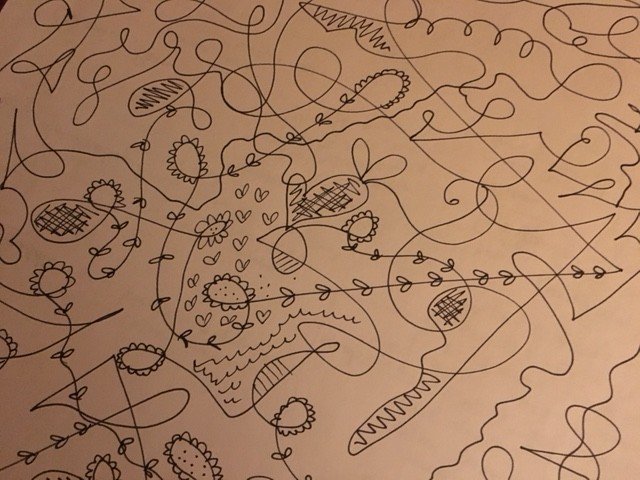
  1. Get your doodle on! Doodling is a great way to loosen up the mind and start to relax the body. Take a break and let your hand start moving and your imagination flow. Experiment with different lines, shapes, textures, swirls, and before you know it, you will have covered a whole page! Begin with a sheet of plain paper and start with a dot or line in the middle, the next step is up to you!
  2. Play dough is not just for kids! Pick some up from the store, use your own recipe, ask a friend or search online. Squash, stretch, and roll your stress away. Add essential oils for an extra boost of therapeutic benefit! Great to do with kids or on your own!
  3. Kinetic Sand or fine-grain sand!  If you haven’t yet tried any of these, they’re awesome! Kinetic Sand is a great sensory product that moves and melts in your hand is relaxing to play with. Fine grain sand also has Zen-like properties. Whether you choose to go to the beach or write your name in a sand tray using a rake or your finger, the act of moving sand in different directions and making different patterns is another great way to release tension.

Creative Arts and Health at the Alongside You Open Studio Sessions

Join us for coffee and tea in our Open Studio Sessions to unwind

We have a huge selection of gel pens, pencil crayons, markers, and more for all your doodling needs! We stock play dough for those of all ages, and have both kinetic and fine-grain sand if you are curious and want to give them both a try!

  1. Get your Zentangle on. Zentangle is a drawing activity invented by Rick Roberts and Maria Thomas, designed to make drawing meditative and accessible to all. Patterns and shapes are drawn inside a 3.5″ square piece of paper. It’s very mesmerizing and there is no erasing allowed! We have Zendoodle Kits, pre-cut papers ready for use, a wide variety of ink pens, Zendoodle books full of pattern ideas, and books on how to incorporate colour into your designs.
  2. Make prayer bead projects (necklaces and bracelets).  Many different groups of people, cultures and faiths have used beads in a variety of ways for reflection and contemplation. We have a variety of beads, charms, string, hemp, and jewellery-making tools and supplies at your disposal. Try something new and add it to your day as a reminder to take a moment yourself to breathe!
  3. Take up Knitting! We have a wide variety of knitting needles and yarn at your disposal! We even have a monthly Friday Night Knitting Club if that is of interest to you! The repetitive nature of activities such as knitting helps to quiet the nervous system, releasing dopamine, a natural anti-depressant!

Resources On The Impact of Creative Arts and Health

For a more detailed study on the benefits of Creative Arts and Health, check out the following resources! We hope they’re helpful for you and if you have questions we’re more than happy to sit down over a cup of coffee or tea and chat about it with you!

The Benefits of Crafting on Mental Health

CNN Article and Video Segment

Health and Art: An Overview

The art of being healthy: a qualitative study to develop a thematic framework for understanding the relationship between health and the arts. Davies, C. R., Knuiman, M., Wright, P., & Rosenberg, M. (2014). BMJ Open, 4(4), e004790–e004790.  Guided by the biopsychosocial model of health and theories of social epidemiology, the aim of this study was to develop a framework pertaining to the relationship between arts engagement and population health that included outcomes, confounders and effect modifiers.

Types of Creative Arts and Health

The connection between art, healing, and public health: a review of current literature. Stuckey, H. L., & Nobel, J. (2010). American Journal of Public Health, 100(2), 254–63.This review explores the relationship between engagement with the creative arts and health outcomes, specifically the health effects of music engagement, visual arts therapy, movement-based creative expression, and expressive writing. 


creative arts and health

Watercolour in the Open Studio Sessions

watercolour

Doing Wonders With Watercolour!


The Different Types

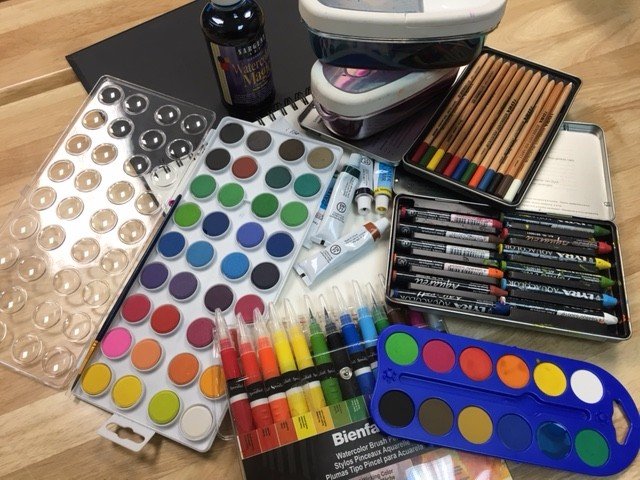
Did you know that there are different kinds of watercolour paints to choose from? There are several types:

  1. Pallets
  2. Traditional cream tubes
  3. Pencils
  4. Crayons
  5. Inks or liquids

Each type of medium can give your work a range of different outcomes, especially when you apply them using various techniques. You can change the look by the amount of diluting that occurs using colour, the use of different brushes, layering colours at different drying stages, and applying colour to a range of watercolour papers. Using a spray bottle with water can disperse the paint and even adding a pinch of salt over your piece can create snowflake droplets, adding texture to your piece.

Versitility

Using a medium like watercolours allows you to create motion and movement into your work and can be combined with other mediums such as oil pastels, ink, chalk, pen, and oil paint to create amazing multi-media art pieces!

Paul Klee: Watercolour and Multi-Medium Artist

Swiss-born Paul Klee is an artist who has used watercolour to create abstract explorations in Expressionism and Cubism. His travels to Tunisia and his background as a violinist no doubt influenced his work in pattern and colour exploration. You can read more about his biography here on this website.

In Emerging From the Gray of Night (1918), he uses ink and watercolours:

Here, Klee applies watercolour using a spatula in The Future Man (1933):

In Fish Magic (1925), Klee mixes two mediums – oil and watercolour – and covers it in varnish:

Klee uses watercolour on a chalk background in Hermitage (1918):

Klee deliberately layers shades of watercolour as it dries to create degrees of colours in his work Crystal Gradation (1921):


In the Studio This Week

Whether you want to come and explore the multimedia or layering techniques of Paul Klee, the vibrant inks for art journaling pages or prefer to experiment with more muted tones of pallets for composing a landscaping painting, we welcome you to try our vast array of watercolour materials in our art studio! Gentile guidance is available: how to add colour to your page, how to set up a sky, how to paint trees, or even learn how to start calligraphy or adding salt to your pages. Come and join us this week!

Painting Pictures With Paper – Open Studio Sessions

painting pictures supplies
painting pictures paper sheets

It’s all about Painting Pictures with Paper!

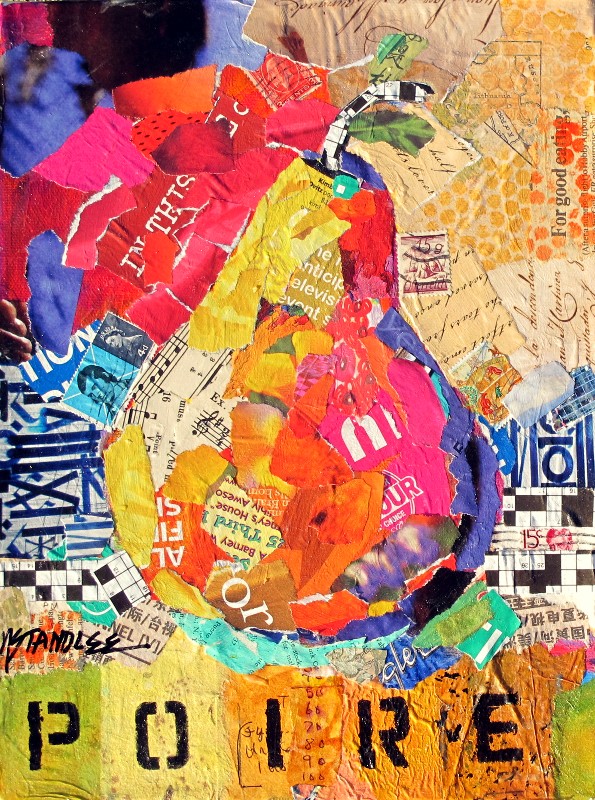
We’re painting pictures in the studio this week by exploring images and creating them using paper. Paper is extremely versatile and comes in different colours, textures, thicknesses, finishes, and weights. From simple to elaborate, a paper collage can be a really fun way to experiment creatively and try something different for a change.

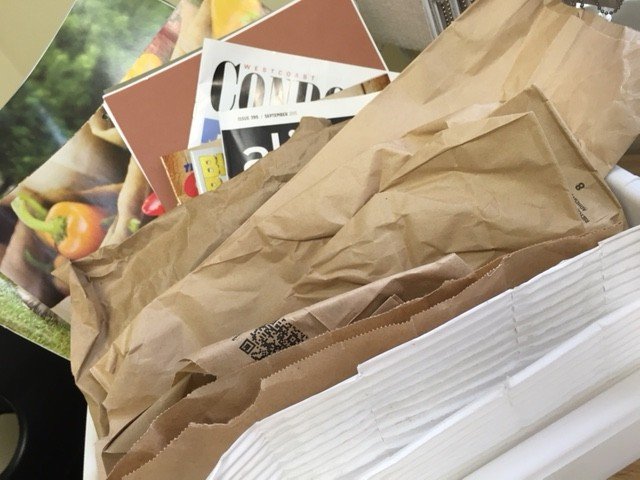
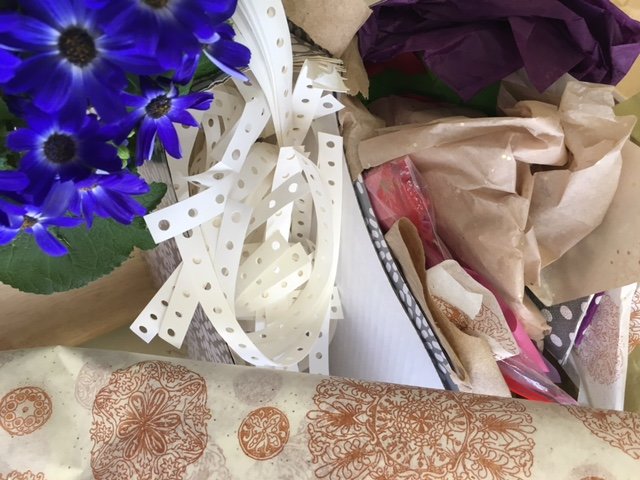
Choose from our variety of papers: magazines, sheets of music, origami paper, scrapbooking paper, wax paper, coffee filters, tissue paper, wall paper, corrugated paper, cardboard, foil, dress making paper patterns and even good old tractor feed computer paper! Use these to create a vast array of finished collage projects. Come with your own ideas, or be inspired by some of our in-studio examples. Here are some neat artists who are known for their paper arts and a few examples of paper pictures to get you started!

Artist and activist Sandhi Schimmel Gold uses 100% hand-cut recycled paper waste material, such as magazines, newsprint, greeting cards, and flyers and transforms them into paper portraits with a strong message:

“My work reflects society’s obsession with beauty in advertising. My junk-mail mosaic portraits are a purposeful intermix of thousands of pieces — images and text — hand cut and manipulated to assemble a newly envisioned portrayal of beauty, utilizing materials that would otherwise go to waste.”
– Sandhi Schimmel Gold

Schimmel Art

For amazing collage sculptures that are made by layering paper cuttings and applying gauche for detail, check out local Victoria artist Morgana Wallace!

Morgana M Wallace

Here are a few neat paper collage images!

collage

Nancy Standlee

Painting pictures using paper is a great way to expand your repertoire of techniques, and also to get out of a creative rut. As painters, sometimes we feel stuck in a medium, or like we end up painting the same thing over and over again. Using a different medium forces our brain to exercise another part of itself, and often creativity pours out because we’ve uncorked a blockage. We’d love for you to join us at our Open Studio Sessions this week on Monday from 6-9pm or Wednesday from 10am-1pm. See you there!

painting pictures using recycling
painting pictures using odds and ends
painting pictures in a basket

Picasso and Cubism – Open Studio Sessions this week

picasso rooster

I begin with an idea and then it becomes something else.” -Pablo Picasso

Picasso and Cubism – Our Inspiration at Open Studio Sessions this week

Welcome your week with a little bit of whimsy and fun! Homage to Cubism and Picasso’s Rooster!

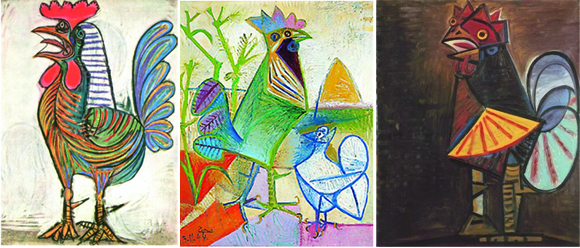
Spanish artist, Pablo Picasso (1881-1973), is well known for introducing the principles of cubism in artwork, where classical ways of depicting the natural world are deconstructed and reassembled, highlighting abstract shapes and their multiple and simultaneous viewpoints. Picasso is perhaps most well-known for his two cubism pieces “Les Demoiselles d”Avignon (1907)” and “Three Musicians (1921)”. Picasso’s rooster, suitably named,“The Rooster (Le Coq, 1938)” is a work of art that lingers in between a classical depiction of the bird itself and a cubist reconstruction of it. Here, Picasso uses line both in a mix of fluidity of form, juxtaposed with representations of only the basic elements of a rooster (eyes, beak, wings, tail feathers, legs, feet), omitting naturalistic details.

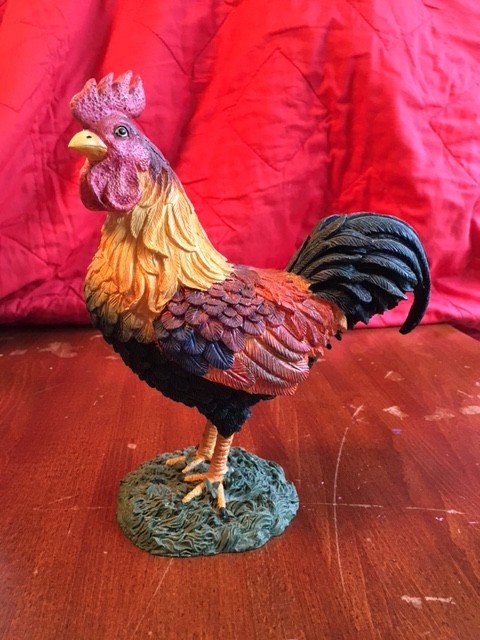
This provides us with an example of how Picasso embarked on creating a cubist style. This week come and learn more about Pablo Picasso, his work, and try your hand at learning the principles of cubism for yourself. You can use our lovely countryside bird as your inspiration to create a rooster, or you can deconstruct objects of your choosing by bringing something from home or selecting something from our in-studio still-life collection. As always, we have a vast array of watercolour mediums, chalk pastels, acrylic paints, oil pastels, air drying clay, a selection of mixed paper at your disposal. Those who would prefer working on independent projects are welcome to do so and have full access to the art studio as always!

Let your inner Picasso come to life! A great project for all ages. Have a look at a few of these examples!

Picasso Roosters Examples

Here is my rendition of Picasso’s Rooster (clay), that will be in the studio as inspiration:

picasso's rooster

Creativity is for everyone

Creativity For All

Creativity For All

“You may not be a Picasso or Mozart but you don’t have to be. Just create to create. Create to remind yourself you’re still alive. Make stuff to inspire others to make something too. Create to learn a bit more about yourself.” ~Frederick Terral

Creativity For All

Frederick Terral, the creator of of Right Brain Terrain, LLC and now, Brand Architecture Inc., is our inspiration for this week in the studio. He believes that everyone can create and that creating can inspire anyone to do new things and learn about themselves. We agree, and his manifesto is preserved for you to see at Brain Pickings and we encourage you to visit. It’s worth the read.

Open Studio Sessions are happening Wednesday from 10am-1pm and Thursday from 6:30pm-9:30pm this week! Come, create, explore with pastels, water colours, acrylics, beading, colouring, and more. Get lost in the creative process. Unwind, relax, and take some time to find out what you really like to do!