by Meg Neufeld | Aug 18, 2023 | Anxiety, Art, Creative Arts Programs, Creativity, Teens
They both are excellent tools to manage anxiety! In recent years, mindfulness has emerged as an effective strategy for children and adolescents dealing with conditions like ADHD, anxiety, autism spectrum disorders, depression, and stress. Coupled with the health benefits of art-making, mindfulness skills can be instrumental in managing anxious or negative thoughts for children and youth.
Mindful Art Making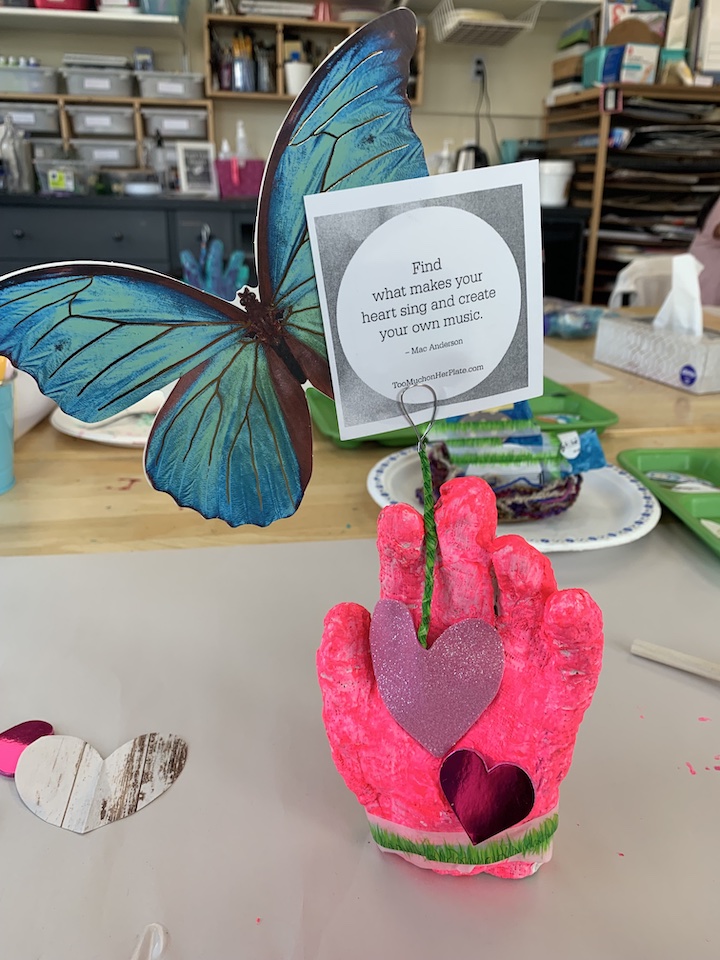
A recent study from the University of Waterloo shows that just 10 minutes of mindfulness-based activity a day can reduce anxiety and prevent your mind from wandering. Mindful art making activities, especially those that require repetitive tasks (like knitting), with sensory elements (like clay), and reflective components (like journaling) work to calm the nervous system, and soothe symptoms of stress and irritability.
Focusing on the process rather than the product, and approaching the art-making experience with compassion and a non-judgmental attitude can be instrumental in managing anxious or negative thoughts. Supporting child and youth mental health using mindfulness-based art activities is a no brainer (pun fully intended).
If you’re interested, check out the study from Waterloo: www.sciencedaily.com/releases/2017/05/170501094325.htm
If you’d like your teen to learn how to do this, check out our Name It To Tame It group starting this September! Click here to learn more.
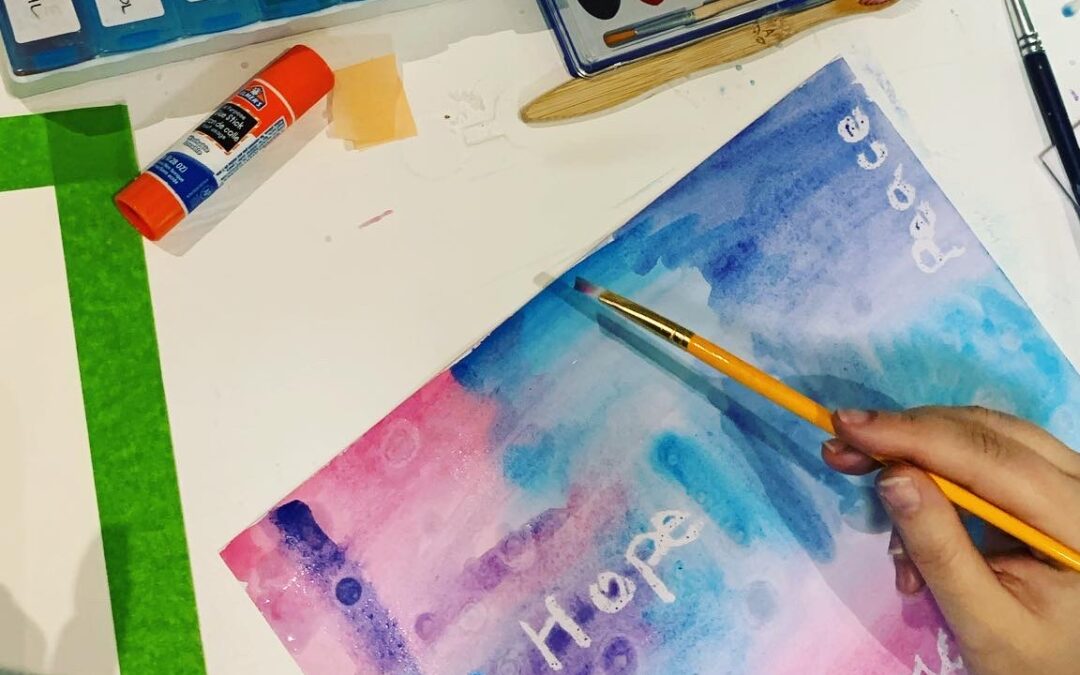
by Meg Neufeld | Aug 11, 2023 | Anxiety, Art, Creative Arts Programs, Creativity, Teens
Did you know that an estimated 1.2 million children and youth are affected by mental illness. 70% of mental health issues begin in childhood and adolescence, yet 75% of children with mental health issues do not access specialized services. Teen suicide rates in Canada is one of the highest in the world, with rates in Indigenous communities being 11x higher than the national average (Youth Mental Health in Canada statistic)
According to the Canadian Pediatric Society, over 30% of teens have anxiety disorders, with girls (38.6%) having a higher rate than boys (26.1%). This is why it’s so important for us to prioritize, support, and advocate for mental health programs and treatment for children and teenagers.
How can Art help Anxiety?
Back in 2019, the World Health Organization shared some eye-opening research. They found that letting young people explore their creativity through the arts can greatly improve their social skills, physical health, emotional wellbeing, and cognitive abilities. This holistic improvement in mental and physical health is making arts a vital part of healthcare, particularly for our children and teenagers. The more they’re able to express themselves through arts, the healthier they become, and this trend is gaining more recognition in the healthcare world.
Anxiety: Name it to Tame it
Our Name it to Tame it group is designed to use the arts described in this research to help teens with anxiety use art-making and mindfulness to improve their social skills, physical health, and mental and emotional wellbeing using a fun and creative art experience.
Click here to learn more about the Name it to Tame it group.

by Nik Stimpson | May 24, 2023 | Anxiety, Counselling, Dialectical Behaviour Therapy, Mental Health, Self Confidence, Stress, Therapy, Tips
Do you find yourself constantly worrying about every possible scenario that could go wrong? You’re not alone. Constant worrying, overthinking, and feeling out of control can take a big toll on your mental health and well-being. This makes it incredibly difficult to focus on daily tasks or enjoy life to its fullest. But there is a solution: Coping Ahead is an effective technique from Dialectical Behaviour Therapy (DBT) that helps you prepare for stress and manage emotions ahead of time.
Eventualities
When I was 19 years old I learned to pilot gliders (airplanes without engines, also called sailplanes). Before each flight, we would always go through our pre-flight checks, even if the aircraft had just landed from a previous flight. We would make sure all of the controls worked as expected, the instruments were reading correctly, and of other important things worth double-checking when you’re propelling yourself two thousand feet into the sky!
The very last step of every pre-flight check was to review “eventualities.”
Though it’s been many years now since I last flew, I still remember vividly what I would say out loud to myself at this step, time and time again:
“If a wing drops on the launch and I cannot recover, I will release the launch cable and land ahead. At a safe height and speed I will start to climb. In the event of a launch failure, I will release the cable and lower the nose to a recovery attitude, and gain sufficient speed before maneuvering. I will land ahead if possible. Otherwise, I will turn downwind, which today is [left or right] and complete an abbreviated circuit or find a safe landing solution. The wind today is ___ knots which means my minimum approach speed is ___ knots.”
Coping Ahead saves time and effort.
The reason for talking through these eventualities in so much detail on the ground is that you’ve already made all of your decisions in the event of an emergency. In an unlikely situation where the pressure is on and seconds count, you don’t need to waste precious time or mental effort deciding what to do. You’ve already thought it through, and simply must follow your plan.
And this skill isn’t just for pilots! In DBT, coping ahead is an emotion regulation skill that can help you rehearse strategies ahead of time to better handle stressful situations or uncomfortable emotions. By visualizing and planning out how you will cope with challenging situations in advance, you start to feel more confident in your ability to face them, boosting your self-esteem and reducing stress.
What’s the difference between Coping Ahead and overthinking?
Overthinking is a common response to stress that can be counterproductive. It is also a common feature of anxiety that involves dwelling on worst-case scenarios, often leading to a cycle of negative thoughts and emotions. It can be triggered by a wide range of every-day stressors or perceived threats.
On the other hand, rather than going in circles about problems, Coping Ahead involves thinking about solutions. It is a deliberate and proactive skill, rather than a reactive response that actually impairs your problem-solving abilities.
How do I learn to Cope Ahead?
If you want to learn how to Cope Ahead, there are some practical tips you can try.
- Identify potential stressors in your life, such as upcoming deadlines or social events.
- Plan coping strategies that work for you, such as deep breathing, positive self-talk, or seeking support from friends.
- Rehearse your coping strategies in your mind, visualizing yourself using them and picturing how they will help.
- Lastly, remember to take some time to relax and ground yourself. Well done!
If you are struggling with…
- Overthinking
- Low self-confidence
- Anxiety
- A sense of low control in your life
- Borderline personality disorder (BPD)
- Other conditions that cause intense emotional reactions to common life stressors
…then consider seeking support from a mental health professional. Coping Ahead is a skill that can be learned and practiced, and therapy can provide a safe and supportive environment for developing this skill. Contact our clinic to learn more about how we can help.

by Nik Stimpson | May 10, 2023 | Anxiety, Connection, Counselling, Depression, Dialectical Behaviour Therapy, Education, Encouragement, Health, hope, Mental Health, Motivation, Positive, Reflection
Finding Hope in a World Full of Challenges
Reflecting on the past year, it’s easy to feel discouraged. We are facing multiple ongoing crises in mental and physical health, the environment, economic inflation, political divisiveness, civil unrest, and war. Social injustice remains rampant. These concerns should not be dismissed, and I want to start by emphasizing that optimism in no way neglects their importance. Nor do encouraging statistics take away from the fact that every needless death is a tragedy.
However, it’s also important – for our own sanity – to consider the good news. I often describe to my clients how our brains are hard-wired to pay more attention to negative events or feelings than positive ones. This is a well-studied psychological phenomenon known as negativity bias. It can lead to rumination and even depression. We recall criticism better than praise. We remember negative events more strongly than positive ones, and think about bad things more frequently than good things. Counterintuitively, our brains do this for our own benefit. It is far more important for survival to know where the dangers are than to take time to appreciate the wonders of life!
We see this reflected in our news and social media: negative and alarming news grips our attention, and so it gets more airtime. We click more frequently on alarming headlines, so they get published more often. This amplifies the illusion that the world is threatening by default.
We cannot make effective change when trapped in a state of despair. To avoid such a toll, it is important to balance our negativity bias with mindful awareness of what’s going well. And it turns out there are many, many good things happening!
Discovering Optimism
One antidote to the prevailing doom-and-gloom narrative of our time can be found in Matt Ridley’s Book The Rational Optimist. He uses hard data and historical analysis to show that we have made incredible progress in recent centuries, and this trend of increased prosperity is likely to continue as we innovate and adapt to ever-changing circumstances.
Another important book is the late brilliant physician Hans Rosling’s Factfulness: Ten Reasons We’re Wrong About the World–and Why Things Are Better Than You Think. He writes:
“Every group of people I ask thinks the world is more frightening, more violent, and more hopeless—in short, more dramatic—than it really is.
Uncontrolled, our appetite for the dramatic goes too far, prevents us from seeing the world as it is, and leads us terribly astray.
Step-by-step, year-by-year, the world is improving. Not on every single measure every single year, but as a rule. Though the world faces huge challenges, we have made tremendous progress. This is the fact-based worldview.”
Such thinking is not new, either. Even back in 1830, British historian Thomas Macaulay posited:
“Hence it is that, though in every age everybody knows that up to his own time progressive improvement has been taking place, nobody seems to reckon on any improvement during the next generation. … On what principle is it that, when we see nothing but improvement behind us, we are to expect nothing but deterioration before us?”
So, what exactly is all this progress that thinkers like Ridley, Rosling, and Macauley are talking about? Here are some examples.
Good News for a Change
Poverty is declining.
Globally, the number of people living below the poverty line (defined as living on less than $2.15 USD a day, in 2017 dollars) fell from 2.01 billion people (37.8% of the population) in 1991 to 648 million people (8.44% of the population) in 2019. It is still too early to calculate precisely how the covid-19 pandemic affected this trend; preliminary estimates indicate it may have pushed 70 million people or about 9% of the population back into extreme poverty in 2020. Yet the overall trend continues as it has for past decades. In 2017 renowned economist Max Roser commented that “Newspapers could have had the headline ‘Number of people in extreme poverty fell by 137,000 since yesterday’ every day in the last 25 years.” For more insights, see his excellent research website Our World in Data.
Population growth is stabilizing.
Although the global population is still growing, the rate of growth has been slowing down since 1968 in an accurately predicted manner. The population is expected to peak somewhere around 10.4 billion people in the year 2100, and then decline. With reduced poverty comes gains in education and health, and declines in child mortality, all of which are associated with lower birth rates.
The rapid decline in child mortality deserves its own emphasis: Hans Rosling once stated that “child survival is the new green.” According to his educational website Gapminder.org, “saving poor children is an important factor in ending both poverty and population growth. The death of children is not holding back population growth. It is one of the reasons poor people still have many children.” People have less children when they do not need to worry about whether or not those children will survive to adulthood.
Medical advancement continues at an astonishing pace.
Life expectancy is rising everywhere. People around the world are living longer and healthier lives, thanks in part to advances in medicine as well as increased access to nutrition and education. From vaccines that have eradicated deadly diseases like smallpox and polio to new treatments for chronic conditions, the progress in medicine is astounding.
For example, new medical technology allows us to identify cancer and other diseases earlier, leading to better treatment outcomes. Targeted therapies are becoming more widely available, less invasive, and more effective than traditional treatments like chemotherapy. Midstage trials are providing renewed hope for the development of vaccines against various cancers.
Genetics represent another marvel of medical advancement. Knowledge about the genetic basis of diseases helps improve diagnoses and treatments. Researchers are making significant progress in developing gene therapies that can cure sickle cell disease, HIV/AIDS, and other debilitating diseases. Genetic testing is now available for certain inherited conditions, like Huntington’s disease, which can help people make more informed decisions about their health and their future.
We are also making progress towards treatments for amyotrophic lateral sclerosis (remember the ice bucket challenge in 2015?) and Alzheimer’s disease. The development of robotics has transformed surgical procedures, resulting in faster recovery times and fewer complications. Telemedicine makes healthcare more accessible and convenient. Wearable tech like smartwatches and fitness trackers can monitor vital signs and alert patients and their physicians to potential health issues.
Mental health care is advancing too!
Technology is helping mental health treatment as well. Our clinic and many others offer secure telehealth appointments, so that remote clients can get the same treatment as everyone else. We utilize cutting-edge measurement-based care platforms such as Greenspace to monitor mental health outcomes and help clients gain insight into treatment progress. Apps like How We Feel and Calm help clients develop emotional intelligence and mindfulness skills in an easy, approachable way. Neurofeedback is another relatively recent technology that provides an excellent alternative (or complement) to traditional talk therapy.
There are many more examples of medical innovation, and it may take time for some of these gains to become sufficiently accessible. But every day we are making great steps towards a healthier world.
There’s still time for the environment.
There’s no denying the reality that ecological sustainability and preservation are serious concerns. It seems likely we will overshoot 2.5°C of global warming, leading to severe weather events, expansion of deserts, food insecurity, animal species extinction, and economic harm. However, we can take solace in the fact that many initiatives are working, and progress is being made.
Many countries have reduced their greenhouse gas emissions while increasing their GDP. The world is making great strides towards clean and sustainable energy. Renewable energy sources like solar, wind, and hydro are becoming more accessible and affordable. Even though nuclear energy has suffered tragic accidents, it remains one of the safest and cleanest forms of energy when compared to death rates from air pollution created by fossil fuels. Fourth-generation nuclear reactors currently being developed will be even smaller, safer, and more efficient with far less nuclear waste produced. Scientists are making important discoveries towards fusion power, which has the potential to radically transform the world’s energy usage.
Another real concern is deforestation, but let us remember the wise words of Mr. Rogers concerning catastrophes: look for the helpers. Organizations like Cool Earth, which I fundraised for in 2019 and continue to support, are doing excellent work in this field. And we have data to support progress: a 2018 study published in Nature (one of the top scientific journals) identified with confidence that global tree cover has increased 7.1% since 1982.
Less harm from natural disasters
Furthermore, improvements in infrastructure and emergency preparedness have significantly reduced annual deaths from natural disasters, which were 3.7 million in 1931 and only 13,008 in 2022. Although we cannot prevent events like earthquakes, we can prevent high losses of life. The numbers prove that our efforts are working.
Admittedly, the tasks ahead will not be easy. But there is strong evidence that human effort and adaptability will allow us to fight current environmental threats and build a more sustainable world.
The world is more peaceful than ever before.
Given the widespread destruction and devastation in the first half of the 20th century, it is notable that the world has not seen a major global conflict in the past 78 years. Even considering the recent Ukraine conflict, warfare today is less frequent, less lethal, and more localized. While nobody knows the future for certain, there are reasons to believe that this calm and stability will persist. The globalization of trade means that the citizens of other countries are worth more to a nation alive than dead. As quality of life improves, we have less reason to engage in the discomforts of violence and vengeance. Institutions such as the United Nations have been developed to foster diplomacy, and cooperation has become more productive than armed invasion.
Violent crime is trending downwards as well. And the number of terrorist attacks and deaths from terrorism around the globe has dropped markedly since the 1970s (contrary to the over-representation of terrorism in the media, it accounted for just 0.05% of global deaths in 2017).
Overall, a person born in the world today is far less likely to be a victim of violence than a person born at any prior time in human history. That’s a remarkable achievement!
Basic needs are becoming more affordable.
It may be hard to believe, but it’s true: basic needs such as food, water, healthcare, housing, and education are becoming more affordable around the world. We owe this development to government and non-profit initiatives to reduce basic costs to individuals and families, as well as advances in technology, transportation, agriculture, and the global economy (lower prices stemming from businesses competing on a global scale).
The International Telecommunications Union, a United Nations agency, reported in 2022 that the price of mobile-broadband services has dropped to just 1.5% of gross national income per capita. Almost two-thirds of the world population has access to the internet. This number continues to rise, along with ownership of mobile phones. With more accessibility and affordability, the world is also becoming increasingly connected. I believe that will be a very important part of furthering communication and cooperation to solve global challenges.
What Now? “Learned Optimism.”
I hope these examples have conveyed that there are many reasons to see hope in all our futures. Our natural negativity bias can lead to a sense of learned helplessness. I firmly believe in countering it by cultivating learned optimism. We are better equipped to take on problems when we have an accurate, factual view of the world. The overwhelming evidence shows that the future is looking positive!
Here’s another piece of good news: the myth-driven stigma around accessing mental health care is disappearing rapidly.
In my clinical work, I often draw upon dialectical behaviour therapy (DBT), which teaches skills to strengthen emotional resilience and build a life worth living. These skills include radical acceptance (seeing situations as they are and focussing on what you can control rather than what you cannot) and checking the facts (developing a more accurate and realistic understanding of a situation rather than relying solely on assumptions and emotions).
Therapy can be useful in overcoming negativity and developing a more positive outlook on life. This is not simply turning a blind eye to suffering. Instead, it is about developing the skills to face challenges with a helpful and more effective outlook.
If you’re struggling with negative thoughts or feelings of helplessness, it’s important to remember that you don’t have to face these challenges alone. Consider reaching out to our team of skilled clinicians to explore therapy options and start building a more helpful future.