by Meg Neufeld | May 31, 2016 | Creative Arts Programs, In The Community
“Art washes away from the soul the dust of everyday life.” – Pablo Picasso
by Meg Neufeld and Mary Ann Burrows
Everyday life can be monotonous, full of repetitive tasks and, yes, even dusty, from the time we wake until we hit the hay.
Finishing off the last bites of our regular breakfast of choice, most of us face the day trying to get through our never ending “to-do” list of chores and errands, care for family members and drive carloads of folk from one appointment or activity to the next.
Art, however, can bring vibrancy to our daily grind. Art sparks curiosity and creativity; it makes the colourless colourful, the dull bright and the dreary shine.
Not sure how to add a little art and creativity to your day? You might be surprised… you may already be doing it.
Creative activity awakes the senses and can mean doing anything from taking a walk through a museum, gardening, making a batch of cookies, viewing the local high school theatre production, making a card for someone, writing in a journal, knitting, taking photographs or painting a picture. In the process, we’re creating.
By making decisions about what we like and don’t like, we’re on the path to discovering our own interests, opinions and tastes.
Art helps us to think about the world around us in new and exciting ways, and helps us discover more about ourselves as individuals and what we want to share with those around us.
When we do something creative we are “self”-making.
Not only does art allow us to self-reflect, it has a positive impact on our overall health and wellbeing.
Research shows that participating in creative activity can have a positive influence on health outcomes.
It can decrease symptoms of depression and anxiety; improve memory, problem solving and other cognitive functions; increase cardiovascular health and help address daily mobility and balance issues; improve social isolation and crossgenerational learning; and provide an outlet to explore difficult emotions while promoting personal growth and healing.
It can also be used as a tool to manage persistent chronic pain and a variety of other chronic illnesses.
Consider the satisfaction you get when finishing a page-turning book, the calm you feel as you view a beautiful sunset
filled with indescribable colours, the connection you feel when you share your passion with someone else, the wonder when you paint something new, or hear music that moves your soul.
Whether you are drawn to the visual, literary, performing arts, design, music or dance, creative moments like these help us to live a healthy and balanced lifestyle and they enrich our everyday life.
We look forward to walking with you as we explore themes on arts and aging, mental health and wellness, inspiring and creativity boosting activities, and share with you art stories on influential people, places and things.
For now, take some time this month to connect with your creative side by trying something new, or to reconnect with something you haven’t done in a long time.
The time is now: live An Art Full Life!
Meg Neufeld is a cultural anthropologist, practicing mixed-media artist and program director at Alongside You, a health organization that offers a multi-disciplinary approach to health, and where creative activity is encouraged amongst people of all abilities for overall health and wellness. Mary Ann Burrows is an artist, and the president and founder of Artists in the Village, a non-profit society that focuses on inspiring creativity within each other and the community through connection, expression and awareness.
by Meg Neufeld | Apr 3, 2016 | Articles, Creative Arts Programs, Open Studio Sessions

Thinking about art is good, making art is better!
The Brain Benefits of Creative Arts
We know that viewing art can affect us in positive ways, open us up to new experiences and enhance our quality of life. But did you know that trying to paint a masterpiece is better than just looking at one? In this post, we’ll take a look at the many brain benefits of creative arts and how to make use of the various art forms to help your brain stay sharp!
Every time you participate in a complex activity such as participating in creative art-making, your brain creates new connections as different parts of the brain communicate with each other. With the development of new neural pathways, researchers have found that people who create art show remarkable improvements in:
- cognitive function and problem solving abilities
- stress-relief and emotional well-being
- the development of personal expression and self-awareness
- psychological resilience and capacity to recall information and memory processing
The benefits for those who create art are significantly higher when compared with those who simply study art appreciation. The take home message here is: creating art has a positive impact on the brain.
Why is it important to maintain a healthy brain?
Chronic illness, diseases and conditions are on the rise
More and more people are living with chronic illnesses and diseases and are facing longer recovery times and hospital stays. Art-making is an effective preventative tool in managing chronic disease, and physical and mental health stresses (depression, anxiety, chronic pain), and is becoming an essential and vital component to our health care system.
Baby boomers are aging in Canada and dementia and other cognitive/memory health issues are on the rise
Creative outlets such as dance, drama, singing, painting, and writing have profound social, medical, physical and emotional effects on those who participate, especially in older adults. Studies show that those affected by Dementia, Alzheimer’s, Parkinson’s and other degenerative diseases flourish when participating in creative activities. Expressive and creative arts promote healthy living and enhance brain function as we get older. See this graphic on the implication of Dementia in Canadian society and the significant role of creative arts is now taking in wake of this medical crisis.
The brain can be shaped and re-shaped and adapt – participating in art allows the brain’s two hemispheres to work together at the same time!
How can you experience the brain benefits of creative arts right now?
“Drawing is an amazing process that requires precise orchestration of multiple brain mechanisms.”
–Dr. Lora Likova
Go back to basics: pick up a pencil and draw!
Yes, adult colouring is seriously in style, but did you know that doodling and drawing, as well as coming up with your own ideas of what to draw (instead of just colouring in the lines), uses all five regions of the brain? Drawing involves spatial orientation, visual processing, memory, precise motor planning and motor control as well as movement and other diverse cognitive functions. See Dr. Lora Likova’s research for an in depth look on the affects of drawing on the brain here.
You can also pick up one of these top doodle/journal books to get you started:
Start Where You Are: A Journal for Self-Exploration by Meera Lee Patel takes the time to ask important questions about life and dreams and encourages creative and thought provoking responses through catchy prompts.
The Happy Book by Rachel Kempster and Meg Leder offers creative prompts, places to make lists, fill in the blanks, drawing, and activities and wacky ideas focusing on what makes you glad and happy.
Take a Line for a Walk by Robin Linda has gathered some of the best drawing prompts from artists, architects, and illustrators in this spiral-bound book awaiting your creativity!
How to be Happy (Or at Least Less Sad): A Creative Workbook by Lee Crutchley is a supportive and interactive book that engages readers who may have anxiety and depression by putting things into new and different perspectives.
Try drawing with both hands at the same time!
This gets both the left and right side of the brain working at the same time! Simply start with one piece of paper and two pens and create designs that are mirror images from each other. For further directions, click here to see the a video of how to do it!
Express your creativity with music!
If you play an instrument, be intentional this week and set aside some time to play some tunes. Music is good for your noggin! Want to learn more about this? Check out this article on music and its benefits for the brain.
Listen to music while doing something creative!
If you don’t play an instrument, do the next best thing and groove to some music while doing something creative. The combination of motor skills and cognitive functions is what activates our brain muscles! Try knitting, needle work, crochet, animation or Manga, car kits, boat or airplane kits to put together or even Lego! Drawing to music….now that’s mind-blowing!
Brain Benefits of Creative Arts: In The Studio


Hopefully by now we’ve convinced you of the brain benefits of creative arts. We have plenty of things in our art studio that will spark your imagination and flex your brain muscles and really get those creative juices flowing!
Drawing tools and sketching objects
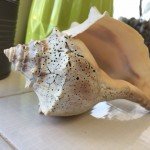
We have a wide range of pencils, pens, charcoal, chalk, and other drawing tools as well as objects to sketch. We have a changing selection of still life objects for you to use based on your own interests. The selections range from large branches, shells and textured feathers, to miniature replicas of cars, embroidered lace, stones, and playful figures such as ceramic birds. We always have a mirror on hand for those self-portraits!
Origami and Paper Cutting Crafts
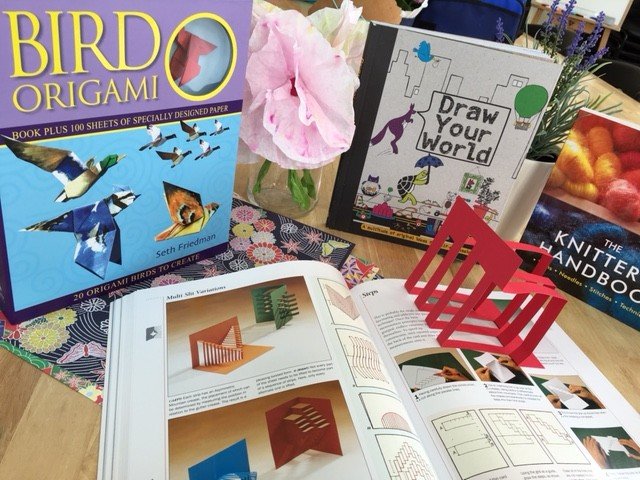
Origami and paper cutting crafts are great ways to participate in a creative activity and engage the brain. They develops fine motor skills, activate the right and left hemispheres of the brain, allow for imagination and require attention, patience, and the use of memory. Most of all, they help you develop pride and satisfaction in your work! If you’re interested in origami, we have an assortment of origami kits, books on origami and a beautiful selection of origami paper for you to choose from. We also have several types of paper and books on paper cutting and projects ready to go at any skill level!
Creative Cues
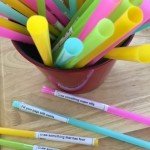
We several prompts that we call “creative cues,” that act as starting points to get your creative juices flowing! “Creative Cues – Images” are a collection of images and quotes that help to inspire and facilitate the beginning of the creative process and allow you to narrow down your focus. “Draw Straws” are straws that have instructions at the bottom of each end. You simply choose a straw and draw whatever it indicates. Examples of this are: “Draw something that starts with the letter M;” “Create an image only using circles;” “Re-create a scene from your most recent dream,” and many more!
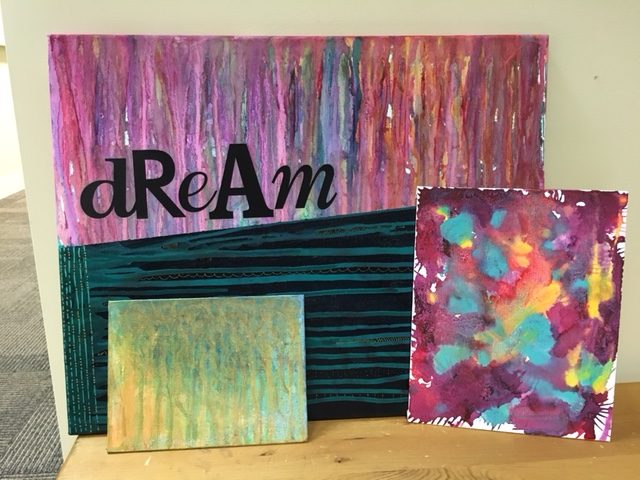
You can see examples of what we have in the studio in the images above, as well as the image below. We look forward to seeing you in the studio!
Producing art gives our brain a workout and creates optimal brain health! When we participate in doing something creative, we help our brains and ourselves become happier and healthier!