by Marcia Moitoso | Apr 4, 2019 | Mental Health, Stress
How many times over the past month have you said that you feel stressed? Once a month? Once a week? Once a day? Three times a day? Is even thinking about this question stressing you out? If you answered yes to any of those questions, this article is probably for you.
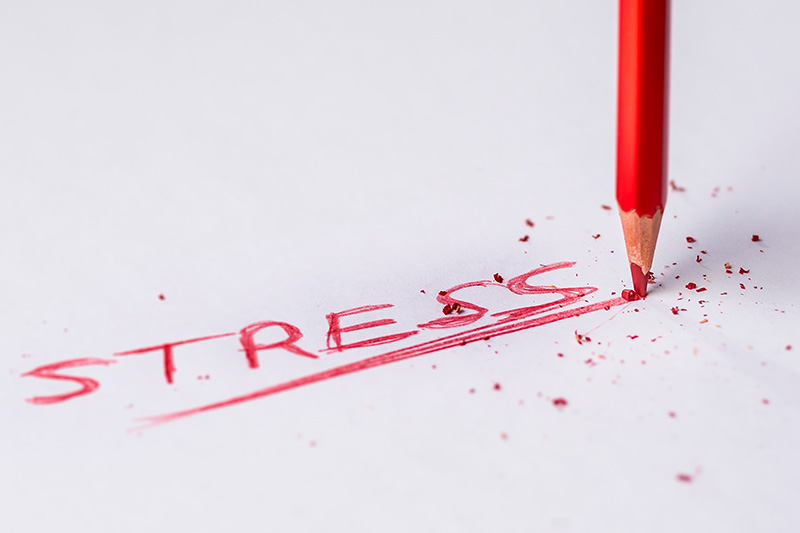
We talk about stress all the time! So often, in fact, that the word stress has almost lost its meaning. So, what exactly is this thing we call stress?
Stress is an undifferentiated name for the impact emotions have on our bodies2 In other words, it’s a bunch of feelings that are stuck in our bodies and lead us to feel exhausted or irritable or high strung, etc. There are two main different types of stress: Acute Stress and Chronic Stress.
Acute Stress
Acute stress is a normal part of everyday life. It happens when a stressor is short term and has a clear beginning, middle, and end. An example of an acute stressor may be giving a presentation at work or at school. Your heart starts pounding and you notice you’re sweatier than normal under your armpits and you maybe even feel like jumping up and down. The key here is that you give your presentation, it ends, you feel pretty okay about it, and you rest. The stress is over.1
Chronic Stress
We experience chronic stress when we’re exposed to a stressor for a long period of time. Examples of chronic stress might be working overtime for many days in a row, or working high-stress jobs in general. Other examples may be long term emotional or physical abuse, or Post Traumatic Stress Disorder (PTSD). In all these cases, our bodies respond to the ongoing stress by continuously secreting stress hormones that eventually negatively impact our mental and physical health.2
Sounds a little bleak right? You might even be a little mad at your body for reacting in such a way when you just need to work a little harder this year to get that raise, so if your body could just quiet down and stop with the tantrums, you could get this done…. or maybe that’s just me. When I learned about our body’s survival mechanism (the Fight/Flight/Freeze response), I became a little less mad at my body. It turns out that without that stress response system, we wouldn’t survive. Maybe if you feel the same way I did, you’ll be able to forgive your body too.
Fight Flight or Freeze: Your Body’s Survival Instinct
Your body’s first priority is always to keep you safe. Its ability to ensure your survival rests on its “Fight, Flight or Freeze” system within your central nervous system (CNS). In response to danger, your body mobilizes to either fight, escape (flight), or freeze. This process occurs faster than we can consciously think, it’s an automatic threat protection system built into each of us.3 4
Fight
Fight can also be thought of as our rapid anger/fear response. When we are in danger or when someone we care about appears to be in danger and it seems like we could overpower that source of danger in order to stop it, we go into fight mode. This is what happens in those moments when you might feel like you’re in a “blind rage.” You might react by punching or yelling because your central nervous system (CNS) has determined you are in danger and you need to fight your way out. 3 4
An everyday example of the fight response for many people is driving in heavy traffic. Someone cuts you off and you feel your heart pounding, your face gets hot, and you may start yelling in very colourful language from within your car (maybe you even gesture with your middle finger out of your window, the universal North American sign for “I will fight you!”).
Flight
This can be thought of as the fear/anxiety response. Your CNS determines that the source of danger is too frightening to face head-on, so the best chance of survival is to run. Your heart pounds, you get a burst of energy and your digestion slows down as the blood from your stomach gets transferred to your legs and arms, so you can move quickly. 3 4
In terms of our driving example, you might notice this feeling when a car has veered out of its lane and is coming toward you. There’s no time to think about your next course of action so your body mobilizes and you either slam on your brakes or you veer onto the shoulder to get out of the other car’s way.
Freeze
You go into a state of “freeze” when your CNS determines that the source of danger is too terrifying and too powerful for us to be able to successfully run from or fight. The emotional and/or physical pain is also too intense for you to take in the moment. Instead, you freeze, which allows you to not feel the intensity of the pain. In Freeze mode, our bodies become stiff, our minds go blank, and our brain becomes so overwhelmed, it stops recording memories. For some, this may feel like an out of body experience, for others it may feel like complete numbness. 3 4
Going back to our driving example, freeze is most likely to occur we you actually get into a car accident. This is why many people feel disoriented afterward a car accident and may not remember what happened.
How this Relates to Stress
“Stress” is another word for the fight/flight/freeze response. Chronic Stress a long-term feeling of fear/anxiety/anger that elevates your stress hormones to constantly mobilize you for fight or flight. 3
If every day you’re driving in intense traffic, you may feel constant fear/anxiety about potentially being late for work, compounded with anger at the person who’s driving too slowly in front of you. Then you get to work, and you might have a big project due and you feel fear/anxiety about whether you can get it done on time, you might also feel angry because it feels like the expectations placed on you are too high, oh and also your co-worker is a jerk. Then you drive home, same traffic issues (anger, fear). And then maybe you get home late from work, you have kids to feed and a spouse who is mad at you for working so late (you can fill in the blanks here with the anger/fears that come up with all of that). Then, you try to sleep but your brain is running around trying to solve the day’s problems, and you wake up not feeling very rested, and… repeat. This dizzying cycle of stress that is so common in our culture is too much for our bodies to take! No wonder we all feel so exhausted, irritable, and stuck.
Luckily, there are scientifically proven ways for us to become unstuck and to move through stress. It involves allowing our bodies to complete the stress response cycle. In my next blog post, I’ll explain what the stress response cycle is, and how we can use the steps of the cycle in our everyday lives to keep our minds and bodies healthy.
In the meantime, if you’re recognizing some of the signs and symptoms above, give us a call, we’re here to help!
References
- Centre for Studies on Human Stress (CSHS). (2017). Acute vs. chronic stress. Understand Your
Stress. Retrieved from https://humanstress.ca/stress/understand-your-stress/acute-vs-chronic-stress/
- Greenberg, L. S. (2015) Emotion-Focused Therapy: Coaching clients to work through their
feelings (2nd ed.) American Psychological Association: Washington, DC.
- Nagoski, E. (2015). Come as you are: The surprising new science that will transform your sex
life. Simon & Schuster: New York, NY.
- Van Der Kolk, B. (2015). The body keeps the score: Brain, mind, and body in the healing of trauma. Penguin Books: New York, NY

by Andrew Neufeld | Mar 15, 2019 | Neurofeedback, Stress, Tips
Let’s face it, we all have times where we feel absolutely exhausted. Parents, I’m looking at you! But we can’t blame it all on our children, as tempting as it may be! Sometimes we’re exhausted because we haven’t been sleeping (or maybe our kids haven’t been), we’ve picked up yet another cold/flu bug that’s going around, or we’re busy at work and the tasks never seem to end – the list goes on!
Does this sound familiar? If not, then either you’re superhuman, or you’re using the ever-so-often-used coping strategy of denial. Either way, let’s go on the assumption that you’ve felt exhausted for these, or other reasons at some point in your life. I know I have. What do we do? Life doesn’t stop! Responsibilities don’t stop! In fact, it almost seems like when I run into one of these times of feeling exhausted, life looks at me and says, “You don’t think you could be more tired? Challenge accepted!”
So, what do we do when we hit these times, and simply lying on a beach for a few months to recuperate isn’t an option?
We need to pay attention to our sleep
I know, we’re all superheroes that can survive on 4 hours of sleep, right? Wrong. It does appear that some people have a rare gene mutation that allows them to get by on less sleep than the rest of us, but most of us actually need more sleep than we get. According to research done by the National Sleep Foundation, and many others, adults need 7-9 hours of sleep per night, on average.
But it’s not just the length of time, it’s also the quality of sleep that matters. We need solid, deep sleep to get the rest we need. If we’re constantly waking up, taking a long time to fall asleep, or waking up too early then our sleep cycle is off and may need some help.
We need to pay attention to our mood and anxiety levels
Anyone who has ever struggled with anxiety, depression, or other related conditions knows the toll it takes on our energy. One of the hallmark symptoms of depression is exhaustion and lack of energy; it’s a direct symptom and consequence of the condition. Anxiety, on the other hand, produces the same result but for slightly different reasons. If anything, anxiety increases energy, but in turn, it takes an incredible amount of energy to manage our anxiety.
If we’re exhausted, one of the questions we need to be asking ourselves is, “How are my mood and anxiety levels? Am I more agitated lately? Am I noticing symptoms of depression? What’s my anxiety like?” If our mood is low and our anxiety is high, we’re likely going to feel tired!
We need to pay attention to our body
I’ve written many times before that the separation between the brain and the body is a complete myth. Our energy level is another area that highlights this. Just as our brain can give us clues as to what is going on, so can our body. If you’re feeling tired, how does your body feel? Here are a few things to look for:
- General tightness in your body, and even unexplained pain: this could be a symptom of anxiety and/or stress.
- Gastrointestinal (GI) issues: not surprisingly, one of the number one symptoms of anxiety in terms of our physiology is GI upset.
- Muscle fatigue: if you’re not feeling as strong as usual, this may be a sign of exhaustion.
- Shortness of breath: this can be another common symptom of anxiety. If you feel like it’s hard to take a breath, or hard to fully inflate your lungs and there’s no medical reason for it, this may be a clue that anxiety is hanging around with you.
- Restlessness: having a hard time sitting still? Legs won’t stop moving?
- Sweatiness: if you feel like you’re going through puberty and/or menopause because you can’t stop sweating and you’re not sure why anxiety may be the culprit. Note: being in the middle of puberty and/or menopause does not preclude anxiety also being a part of the picture!
Okay, I’m Tired. What Do I Do About It?
If you’ve ever been to a Registered Clinical Counsellor about your mood, anxiety, energy levels, or all of the above, they’ve probably made some suggestions about your sleep, diet, and exercise. These are the top three ways to manage mood and anxiety with natural and healthy habits. What if you’re doing those things and it’s still not helping? I’d like to suggest another method that may be able to address all of the areas above in one fell swoop: neurofeedback.
What Is Neurofeedback?
Neurofeedback is a brain training that uses both computer and EEG technology to help our brains function more efficiently. Many conditions may be a result of our brains not functioning at their best, and neurofeedback helps our brain train to regain its optimal function. Think of it as going to the gym for your brain. That is, it helps our brain train to function at its best, through learning what it is doing currently, and training itself to go back to operating within the correct parameters it was designed to work within.
How can neurofeedback help me be less tired
Neurofeedback can help us regain our energy and be less tired in three main ways, directly related to what we’ve covered in this article today. First, it can help our sleep cycle get back to normal. When our brain is operating in a less than optimal manner, our brain stops functioning at its best. This includes the areas associated with sleep. Neurofeedback can help these areas regain optimum function, and can help our brain calm itself and relax before going to bed.
Second, neurofeedback can help us regulate our mood. One of the number ones uses for neurofeedback, in my experience, and where we see beneficial results is in mood regulation. When our mood is off, so are the various wavelengths in our brains, as well as our neurotransmitters. Whether it’s anxiety, depression, anger, or otherwise, our mood impacts our ability to rest and impacts the amount of energy needed to maintain our mood. Neurofeedback can train our brain to function better and manage our mood better at the biological level.
Finally, neurofeedback can relax our brain and our bodies. By helping our sleep and our mood, it relieves the load placed on our brain and our bodies. It also acts directly on the Central Nervous System (CNS) and helps our body relax. This is why it’s very common for clients to feel physically tired after a session.
Think about it – if we’re wound up as tight as a top, our nerves, muscles, and everything else are using energy to stay wound up. If we help these areas relax by relaxing the CNS, we’ll feel tired. Similar effects can be found using yoga and other methods. Neurofeedback targets the brain and our nervous system directly to produce the relaxation response, which in turn, helps us rest and recover. Neurofeedback can induce the relaxation response, which has been studied and shown repeatedly to reduce stress. The other benefit of neurofeedback? We don’t have to do anything. If we can sit in a chair and stare at a screen while listening to music, we can do neurofeedback.
Is neurofeedback the “magic pill” that cures all?
I wish! No, neurofeedback is not the magic pill that cures all, but it is a technology that can significantly help our sleep, mood, body, and energy levels. The catch is that we still need to do the other things that keep us healthy – that is, have healthy sleep habits, eat healthy food, and exercise. But, neurofeedback is one of the ways at getting at the biology of the brain directly and helping it function at its best. In conjunction with these other healthy habits, it can be a game changer!
Curious? Give us a call or contact us. We’d be happy to discuss how neurofeedback may be able to help you get your energy back!

by Andrew Neufeld | Dec 5, 2018 | holiday, Stress
Articles on holiday stress are prevalent. I even wrote one back in 2015, which you can read here if you like. So why do we need another article about surviving the holidays? I can’t speak for everyone, but the reason I’m writing another one is that my hope is that we’ll all thrive, not just survive through the holidays we are about to embrace.
I don’t often look forward to the holidays – part of it is likely a personality trait of mine in that I don’t get particularly excited about holidays, birthdays, or other “special” times of the year. I’m not sure why it’s just not part of my makeup. Part of it, I think, is that as the owner and director of a rapidly growing clinic, I’m well aware of the “vacation effect” whereby any time off that I take inevitably results in work piling up and waiting for me when I return. Or perhaps it’s part of my love for routine and my contentment with life. I’m fortunate in that I love what I do, and there’s comfort in routine – I enjoy having my week go rather predictably as far as my schedule is concerned, and vacations mess with that.
I was reminded this weekend, however, that my kids love the holidays. We went to get our tree from our friends at Sunnyside Nurseries here in South Delta, and we may as well have gone to Disneyland! My kids were running wild from tree to tree, picking the best one until they came across another one to top the first, and so on and so forth until we finally ended up with a beautiful noble fir that we brought home.
Then came the decorating. My job is putting up the lights. It’s the part I care about because, well, there’s symmetry involved and I love symmetry and order. Then came the decorations, and the kids have an ongoing dialogue about who gets to put the star on top of the tree. Let me tell you, they know exactly who got to do it last year and if ever one deviates from this knowledge, a veritable onslaught of objections ensues. I realized this year that both of my girls have grown up a lot, and quite literally. They’re a lot taller now, and lifting them above my head to place the star is a much more difficult proposition than in years past! But, we figured it out and I put my younger daughter on my shoulders, climbed on the couch and onto the window sill and she placed the star on the tree. All, I might add, without injury.
It wasn’t until after we were done decorating that it hit me; that is, what I love about Christmas and the rest of the holidays. Remembering this is also what helps me survive the stress of the holiday season, which is no small feat as I’m sure you know!
I get excited by the little ones, and the little things they get excited about!
My girls are not so little anymore, which they love reminding me of on a daily basis. They may be growing up, but they still love the little things about Christmas: the decorating, making cards, baking cookies, wearing their pretty dresses, and of course, eating all the chocolate.
We may not get excited by the little things ourselves, but we can get excited vicariously through others who do. If we can do this, we’ll release endorphins, and be reminded of the joy around us, and invariably it’ll rub off on us too!
I’m mindful of what I enjoy about the season
When we’re stressed, it’s difficult to stay present, and our brain naturally focuses on the negative. It’s built into our neurobiology – when our stress level rises, our limbic system becomes more active and as a result, our brain natural looks for signs of danger – that is, the negative.
So, as we’re going from activity to activity, busying ourselves with the details, we need to remember to take time to slow down. Remember what we used to love about Christmas and all of the things that go with it. Remember those times when Christmas carols excited us and we found them soothing, rather than annoying; remember when the bells from the Salvation Army donation buckets were a positive reminder, rather than a resounding cacophony of ringing; remember when we got excited to give gifts rather than stressed about getting through our gift list without forgetting anyone!
I focus on others
One of the most wonderful things about the holiday season is that there are literally thousands of ways to get involved in helping others. So many people do this on a regular basis, but others may not during the year for many reasons, including time and availability. If we’re having a tough time this Christmas, perhaps getting involved in a charity, or another avenue of helping others would be a good idea for you, and for the whole family! There have been countless studies showing the benefits, a sample of which you can read here, here, and here.
One of my favourite things we do every year, and we’ve done with a group of friends for over 30 years now, visit a local mental health group home to sing carols, and bring Santa and treats. Every year we gather with these folks, many of whom have been there for as long as we have, and we celebrate together. Mental health homes often aren’t the cheeriest of places, but for a couple of hours, it turns into a giant party, with singing, and lots of joy. Quite honestly, it’s one of the most joy-filled times for me over the holidays because what is a very simple thing for us to do, brings such great levels of joy to the residents. They look forward to it all year, and they tell us so when we’re there.
If you’re struggling through the holidays, I highly recommend taking some time to focus on others through volunteering. There are some great places to do this, including Food On The Corner, UGM, Covenant House Vancouver, Deltassist, Delta Hospice, and so many more local organizations. Or, grab some friends, and go around the neighbourhood singing carols. Or perhaps you want to buy a bunch of roses, stand on the street corner and hand them out to people, just because!
Farewell to 2018
I don’t know about you, but 2018 has been a whirlwind for me. I’ve even remarked to clients on numerous occasions, “Didn’t I just see you last week,” and it’s been a month. Time goes fast! I know that one thing I’ll be focusing on this Christmas is slowing down. Resting. Recuperating. Reflecting.
It’s so easy to just keep going, and staying busy, even if it’s not at work. I’d encourage you to pick up that book you’ve been meaning to read, write that letter that’s been on your desk for the past 6 months, get together with that friend who you’ve been trying to get together with for the past year and somehow, it’s just never worked out. Find opportunities to share with those closest to you just how special they are to you, and how much you value them. If you can do this, you’ll do far more for them than any present could, and for yourself.
Merry Christmas and Happy Holidays to all of you, from Meg and I, and the rest of the team at Alongside You. We are blessed to be a part of your lives, and we wish you nothing but the best of times to finish the year and to start the New Year.

by Marcia Moitoso | Sep 13, 2018 | Counselling, Depression, Stress
Over the past two decades, we have seen a steady rise in media attention covering Postpartum Depression (PPD). This is partly because the psychiatric community officially recognized PPD as a distinct condition in the mid-90s [i] and partly because of celebrities who have started to talk about their experiences with postpartum depression. And yes, you read that correctly, although there are abundant records of women talking about their experiences with maternal mental illness from the early 1800s to the present, it only started being recognized as a distinct mental illness in the 1990s[ii]. As you might imagine, the result is that the science, the literature and the media reporting are all a bit behind. Luckily, with organizations such as Postpartum Support International (PSI), the science is finally starting to catch up and hopefully, that means the media and our social perceptions of maternal mental health will too.
What is Postpartum Depression?
Postpartum depression is often used as an umbrella term for all maternal mental health conditions, but in reality, there are a number of maternal mental health conditions that are distinct and vary in terms of severity, duration and characterization. All of these conditions tend to get jumbled up together in the media which is confusing for those who have PPD, as well as their loved ones. So, let’s break it down.
The technical term for postpartum depression is a Major Depressive Episode with Peripartum Onset. What that mouthful of jargon basically means is that PPD can be understood as a depressive episode that lasts a minimum of 2 weeks and is characterized by depressed mood, insomnia or hypersomnia, fatigue, feeling worthless, low interest in pleasurable activities and having thoughts of suicide[iii]. If you read my last blog post about the Baby Blues, you might note here that PPD is very different from the Baby Blues. Baby Blues are a normal part of giving birth where most mothers experience a drop in the mood right after giving birth for a short period of time. PPD not only last longer but is more severe. About 15% of new mothers experience PPD as opposed to 85% of mothers who get the Baby Blues[iv][v]. And while this distinction is important, keep in mind that whether you have the Baby Blues or PPD, you can absolutely get treatment, you don’t have to wait and see if it’s severe enough. Every person’s experience is different, and you deserve help. Do yourself a favour and check in with your doctor, midwife and/or therapist to see how they can support you to feel like yourself again.
Men experience PPD too. A growing body of research has shown that roughly 5% of new fathers experience PPD which comes as no surprise because mothers and fathers both endure the many new stressors like lack of sleep, way more responsibilities and demands put of their plate, and feelings of failure and inadequacy often associated with bringing a baby home[vi].
I won’t go too far into the causes of PPD here but if you ever want to talk about them, my door Alongside You is always open.
I’ve spoken to a lot of mothers and fathers who were very confused about the way their PPD presented itself. Interestingly, PPD might look different from what we might think of as a typical episode of depression. A lot of people with PPD have reported either anger or anxiety as their primary symptoms[vii]. Some experience periods of elevated energy and racing thoughts where they’re unable to sleep and can’t stop cleaning. Many also report panic attacks[viii]. While these responses may feel scary at the time, they are normal and can be helped with a number of different therapies that I will get into at the end of this article.
Overcoming Stigmas and Getting Help
Experts agree that PPD is underdiagnosed, primarily because those who endure it often feel too ashamed to seek help. There’s a common misconception that PPD is associated with infanticide which is simply not true. Those over-reported cases of infanticide are not cases of PPD, they are cases of severe psychosis with peripartum onset. Unlike depression, psychosis is characterized by delusions and hallucinations[ix]. And even if a parent does show signs of psychosis with peripartum onset, it is incredibly rare that these delusions will lead to infanticide[x]. I can’t stress enough how rare that is.
New parents are often under a lot of stress and experience intrusive thoughts. When a person’s brain is in an anxious state, it’s common for their mind to go to the worst possible thing they could do (as if you weren’t stressed enough already…). This happens to all of us. Sometimes when I’m driving up the Sea to Sky highway, my brain imagines veering my car off the cliff. Of course, I will never do that, but my brain plays some pretty wild tricks sometimes, just like yours might when you’re under a lot of stress and your baby is still crying.
The main danger with PPD is that the stigmas that result from those sensationalized media stories keep many new parents from reaching out for help. As a result, suicide (not infanticide) is the greatest risk associated with PPD.
What can Help Postpartum Depression
As I mentioned at the start of this blog, science is catching up and we now have many treatments to choose from for PPD. Some find antidepressants helpful, like one woman said, “the me I was used to re-appeared after medication.” Other treatments include infant sleep interventions, massage therapy and relaxation, increasing Omega-3 intake (fish, nuts, seeds, healthy oils), spiritual practices, yoga, bright light therapy and, of course, counselling (individual and couples counselling are both helpful). For most new parents, a combination of any of these above methods works best.
I’ll leave you with a simple and accurate quote from a mother I recently spoke with who had PPD – “Let people help, they want to.”
We’d love to help, if you’ll let us. Give us a call at the office, or contact us through our contact page and we’ll be happy to talk to you about how we might be of help!
Some books that have been helpful to others:
- Motherhood May Cause Drowsiness: Mom Stories from the Trenches: A Second Edition Monkey Star Press Anthology (What Is a Mother to Do? Adventures in Motherhood and Mayhem) – by: Lisa Nolan, et al.
- When Postpartum Packs a Punch: Fighting Back and Finding Joy – by: Kristina Cowan
- Tokens of Affection: Reclaiming Your Marriage After Postpartum Depression 1st Edition -by: Karen Kleiman, Amy Wenzel
- The Birth Partner: Everything you Need to Know to Help a Woman through Childbirth – by: Penny Simkin
References:
American Psychiatric Association. (1994). Diagnostic and Statistical Manual of Mental Disorders (4th ed.) VA: American Psychiatric Association
[1] Segre, L.S., & Davis, W.N. (2013). Postpartum Depression and Perinatal Mood Disorders in the DSM. Postpartum Support International. Retrieved from www.postpartum.net.
[1] American Psychiatric Association. (2013). Diagnostic and Statistical Manual of Mental Disorders (5th ed.). VA: American Psychiatric Association
[1] Shapiro, G.D., Fraser, W.D., & Seguin, J.R. (2012). Emerging risk factors for postpartum depression: Serotonin transporter genotype and Omega-3 fatty acid status. CanJPsychiatry, 57(11), 704-712.
[1] Khajehei, M., Doherty, M., & Tilley, M. (2012). Assessment of Postnatal Depression Among Australian Lesbian Mothers During the First Year after Childbirth: A Pilot Study. International Journal of Childbirth Education, 27(4), 49-54
[1] Breese McCoy, S.J. (2012). Postpartum depression in men. In M. G.Rojas Castillo (Ed.) Perinatal Depression (p. 173-176.) Rijeka: InTech. Available from: : http://www.intechopen.com/books/perinatal-depression/postpartum-depression-in-men-
[1] APA (2013)
[1] APA (2013)
[1] Postpartum Support International (2018). Postpartum Psychosis. Retrieved from http://www.postpartum.net/learn-more/postpartum-psychosis/
[1] APA (2013)
[1] Shapiro, et al. (2013)
[i] American Psychiatric Association. (1994). Diagnostic and Statistical Manual of Mental Disorders (4th ed.) VA: American Psychiatric Association
[ii] Segre, L.S., & Davis, W.N. (2013). Postpartum Depression and Perinatal Mood Disorders in the DSM. Postpartum Support International. Retrieved from www.postpartum.net.
[iii] American Psychiatric Association. (2013). Diagnostic and Statistical Manual of Mental Disorders (5th ed.). VA: American Psychiatric Association
[iv] Shapiro, G.D., Fraser, W.D., & Seguin, J.R. (2012). Emerging risk factors for postpartum depression: Serotonin transporter genotype and Omega-3 fatty acid status. CanJPsychiatry, 57(11), 704-712.
[v] Khajehei, M., Doherty, M., & Tilley, M. (2012). Assessment of Postnatal Depression Among Australian Lesbian Mothers During the First Year after Childbirth: A Pilot Study. International Journal of Childbirth Education, 27(4), 49-54
[vi] Breese McCoy, S.J. (2012). Postpartum depression in men. In M. G.Rojas Castillo (Ed.) Perinatal Depression (p. 173-176.) Rijeka: InTech. Available from: http://www.intechopen.com/books/perinatal-depression/postpartum-depression-in-men-
[vii] APA (2013)
[viii] APA (2013)
[ix] Postpartum Support International (2018). Postpartum Psychosis. Retrieved from http://www.postpartum.net/learn-more/postpartum-psychosis/
[x] APA (2013)

by Alannah Mcintee | Jul 18, 2018 | Anxiety, Counselling, Depression, Stress
It is not uncommon to feel worried or stressed in our everyday lives. Occasionally we find ourselves taking on too much and feeling unsure if we can do it all. Other times we may dread going to work, meetings, or social events. However, at what point does every day worry or stress become anxiety?
Everyday stress and worry tend to be more contextual; meaning, you can compartmentalize whatever is going on for you, it is manageable, or it can be a motivating factor to get tasks done. Anxiety, however, can be exhausting, depressing, and ever-present no matter how hard you try not to let it bother you.
Anxiety is sneaky and can work its way into our lives in different ways. Some of us may have constant and high levels of worry about nothing specific, while others may only fear social events because they’re concerned about offending someone, being judged, or embarrassing themselves. Sometimes we might worry about leaving our home even if it’s to go shopping, go out for a meal, or run errands.
It can also feel very different for everyone. I have had people describe it like a drowning sensation that never really goes away, or feeling unable to concentrate on whatever is in front of them because they are so in their head. Some people may feel anxiety in their body through frequent headaches or stomachaches, or other physiological symptoms. It is difficult to generalize what anxiety feels like since it affects people in a wide variety of ways.
Nevertheless, there are a few questions to ask yourself if you are still not sure if anxiety has snuck into your lifei:
- Have I had panic attacks and worried about having more?
- Do I have trouble sleeping or concentrating because I am worried about something? Or because my mind won’t shut off?
- Do I go out of my way to avoid objects or situations that make me anxious?
- Do I feel anxious about things more often and more intensely than others around me?
- Am I fearful about being embarrassed in public?
- Do I get headaches, stomach aches, or other bodily sensations from feeling anxious?
If you find yourself relating to any of these questions, then don’t worry (just kidding!) but really, you’re not alone. Anxiety is the most common mental health difficulty that people live with. It affects 12% of British Columbian’s which works out to approximately 1 in 8 peopleii. Contrary to what we may think, however, it does not need to be “cured.” In fact, it should be embraced! Now you’re probably wondering, “Why the heck do I want to embrace something that causes me so much distress?” Embracing anxiety can be helpful for recognizing your emotions and triggers to feeling anxious and overwhelmed so you can develop a toolbox of coping mechanisms and skills to handle anxiety as it comes up in your life.
How can counselling help?
It can feel cathartic and be relieving to express your worries and fears to someone who can relate. Additionally, counsellors can help you to figure out how to develop a toolbox of skills to embrace anxiety! Tools vary from person to person, but some can include meditation, relaxation and breathing techniques, cognitive behavioural therapy, worksheets, art therapy, the list is endless! There is no “one-size-fits-all” approach to living with anxiety, living with it depends on you as a person and how you want to embrace it. If you are not sure about counselling and/or would still like to learn about embracing anxiety, then take a look at the resources below or give us a call!

Alannah McIntee is the one of two new interns at Alongside You. Studying at Adler University she has a keen interest in working with kids and we’re excited to have her on board!
Anxiety BC: www.anxietybc.com
Candian Mental Health Association: https://cmha.bc.ca
HealthLink BC: https://www.healthlinkbc.ca/health-topics/anxty
[i] Canadian Mental Health Association: British Columbia Division. (2013). Anxiety Disorders. Retrieved July 13, 2018, from https://cmha.bc.ca/documents/anxiety-disorders/#could I
[ii] Canadian Mental Health Association: British Columbia Division. (2013). Anxiety Disorders. Retrieved July 13, 2018, from https://cmha.bc.ca/documents/anxiety-disorders/#could i