
by Andrew Neufeld | Jun 4, 2020 | Connection, Counselling, Racism, Relationships, Stress, Trauma
Yesterday, I took the day off from work. Originally it was scheduled so that I could take my wife to another of her recurrent surgeries for her chronic pain, which thanks to COVID-19, has been cancelled indefinitely. It happened to line up nicely, however, with cabinet install day for our home renovation that is thankfully heading ever so much closer to the finish line. It also coincided with a need that I’ve identified lately – that is, a need for rest. What I didn’t expect is to be spending most of the day feeling sad. For a while, I didn’t know why I was feeling this way, until the question loomed in my mind, “How do I respond to racism?”
You see, I’m one of the ones who is, on most given days, gleefully ignorant about racism. It’s not that I am not aware of it, because I am aware because on different parts of the world I’ve lived in, different ethnic groups I’ve worked with, clients I’ve seen, etc. It is, however, because on any given day, I am not personally subjected to it. In fact, it’s been exceedingly absent in my life. While I was pondering this question about how do I respond to racism all day yesterday, I realized that I can only think of one time in my life where I was keenly aware that I was being treated poorly because of my race. The details of the situation aren’t important here I don’t think, and likely wouldn’t spark any sort of helpful conversation, but it does highlight that in 39 years I can only think of one time where I was very aware of being discriminated against based on my race.
This doesn’t mean that I haven’t been aware of being treated differently, because I have been while travelling. While I would suggest that it’s still not okay, it’s normal, in my experience, to be seen as other when you’re in another country, and even hearing words like gringo if you happen to be white. Or, if you’re living in Ukraine and your friend is from Korea, it’s not uncommon for kids to stop dead in their tracks and stare simply because they’ve never seen an Asian person before.
There’s a massive difference, however, in the experiences I’ve had versus those from whom we’ve all been hearing from in the past few days through the Black Lives Matter movement and protests, and the devastating events around the death of George Floyd. In all of my 39 years, I can only recall one instance where I felt unsafe or threatened as a result of my treatment based on my race.
This is in contrast to some who can’t go 39 days, or 39 minutes, or perhaps 39 seconds between experiences that make them feel unsafe, threatened, or less than.
This makes me sad.
It makes me feel a whole lot of other things, including mad, confused, angry, frustrated, scared, and more. But, if I give myself the time to actually sit with the emotions and discern what I’m feeling, the core of it is sadness.
I’m sad because although I do my very best to honour everyone, regardless of race, colour, creed, ethnicity, or otherwise, I know that at some point I have unwittingly made someone feel this way myself.
I’m sad, because a part of my heritage story is related to culture – my family came to Canada in the early 1900’s because they were literally being killed off for being who they were, and coming to Canada saved their lives. And we still have the same problems over 100 years later.
I’m sad because although my wife and I do our best to raise our girls to love and respect everyone they meet, from all races and creeds and backgrounds, they too will struggle to follow through and will make mistakes, and this will inflict further pain even into the next generation.
We come from privilege. We are white, middle-class, and I am male. This carries a privilege that I am becoming more and more aware of. It carries a responsibility to realize this, and understand this, and do better in our actions as we move forward.
Now, some of you may have just cringed at that last paragraph. Some of you may feel that what I’m saying means that those of us who come from privilege need to be sorry for, repentant of, or similar for the fact that we are white, grew up reasonably well off, and may be male.
That’s not at all what I’m saying, and that’s not at all what privilege means. It simply means that we have some advantages in life that others do not, simply by being born into what we’re born into. With that carries a responsibility to be aware of this, and use this privilege to care for others.
It also doesn’t mean we didn’t work hard to get what we have, to do what we do, and that we shouldn’t appreciate it, and enjoy it. It simply means that if we didn’t have the privilege we do, it likely would have been harder for us to have the same successes in life.
How Do I Respond To Racism?
Herein lies the problem. I am by no means an expert on race relations, cultural history, sociology, or otherwise. I don’t have any perfect answers to this, or even particularly qualified ones. Instead, here are some thoughts I’ve had over the past few days that hopefully might be helpful to us all as we wrestle with this issue of racism that I don’t believe is going to go away anytime soon. How do we respond? What do we need right now to make changes?
We Need Grace
Nothing highlights the need for grace more to me right now than writing this article. I know that it is nowhere near perfect, and doesn’t come up with any astounding answers to any of the massive, looming questions many of us have. I know I’ve made mistakes in this article in my own ignorance.
This highlights our need for grace as we navigate this challenging issue, in a challenging time. While this article isn’t authoritative, or perfect, it is honest.
This are simply my honest wrestling with an issue I don’t know enough about. It is the start of an attempt to lend help, even in my own imperfection, with initial thoughts on a complex issue.
I ask for your grace as you read this, and I would ask for grace for us all, from those who are subjected to racism on a daily basis. You don’t deserve this treatment, and we don’t deserve your grace – but, if you can muster some grace for us while we try to change our understanding and our behaviour, we will all hopefully win in the end.
With grace, we can have hope for a different future, one that honours everyone, from all races and cultural backgrounds. A future that holds promise for us all.
We need to feel sad
Understandably, there is a lot of anger right now over the state of race relations, and particularly over the death of George Floyd. And, there should be anger over what happened to Mr. Floyd, and what has happened to far too many people over the years who have been subjected to similar treatment.
In my area of expertise, psychology, we understand generally that anger is a basic emotion (one of the 6 basic emotions according to the Gottman Institute). Anger, however, is often a secondary emotion – based on underlying emotions that aren’t expressed.
One of the most common source emotions for anger that I see, particularly in men, is sadness. I know for myself, I am far more likely to express anger than I am sadness. It’s not particularly socially acceptable in North America for men to express sadness, but it is much more socially acceptable (if only for being more common) to be angry.
The problem is that very few productive conversations happen through anger and the expression of anger. It doesn’t mean it’s not valid, it just isn’t as effective in communication. If someone is angry with us, our back usually goes up and we become defensive. Very rarely is our response to ask something like, “Can you help me understand why you’re angry, please tell me more.” Instead, our fundamental biology kicks in through our limbic system and we go to defensive mode, and most likely, enter into our fight-or-flight stance (or freeze for that matter).
What happens, then, if we embrace the underlying sadness? I’d suggest it instructs us better (I can easily describe right now why I’m so sad about all of this versus if you asked me in the angry moments to describe why I’m angry), and it’s more effective in communication. If someone tells us they’re sad, we’re far more likely to respond in curiosity and kindness wanting to know more, simply because our limbic system isn’t firing.
“Anger is valid and ok, but we shouldn’t gloss over the underlying sadness.”
We need to educate ourselves
This may seem blatantly obvious, but it’s still the truth. We are woefully uneducated as a whole about racism, no matter what our background is. This is where I will plead ignorance regarding resources because I’m at the stage of doing my best to find out what some of the most helpful resources are.
There are two main reasons that we need to educate ourselves: to understand, and to reduce pain.
While I am early on in my journey toward education on this subject, I did come across this article that lists a number of resources that I have seen posted many, many times and seem to be helpful. Our very own Rebecca Farnell posted the book, Me and White Supremacy: Combat Racism, Change the World, and Become a Good Ancestor on her Instagram feed and it seems like it would be a good resource for those of us wanting to learn more. I am continuing to look to find resources that are suggested by people who know far more about this than I do. I’ll update this post as I find more resources as I hope it will be helpful to others.
The second reason we need to educate ourselves is because when it comes to pain, the inevitable result of racism, current pain science research shows that it is one of the greatest modifiers of the pain we experience.
Since I do have a particular interest in chronic pain and the psychological management of pain, I was reading The Explain Pain Handbook: Protectometer yesterday to try to find some resources for a client. In this book they explain that in terms of physical pain, embracing bioplasticity and education about pain can adapt the body to reduce pain and disability and increase life satisfaction (p.30). They also state that bioplasticity is based on the research on neuroplasticity which is the research showing that our brain is able to change over time, no matter our age.
What we do know, is that physical pain and emotional pain act the same way in the brain, and hit the same receptors. We have documented data on the effects of traumatic stress on the brain. It seems to me that if education can reduce our physical pain, it should help our emotional pain. If we know what is happening, we can respond differently, and this can change the impact on our neurobiology.
We need to connect
More than ever, we need to connect around this issue. We need to learn together, do better together, change together. I’m convinced that the solution to our problem with racism lies in human connection. It’s going to be a long road, but connection is where we start.
If we connect, we can learn from those who are hurting and change our behaviour. If we connect, those who are hurting can understand the perspective of the perpetrators and what they are trying to do to change, thus reducing their pain. Note well, this is not to excuse the perpetration, it is to understand one another’s positions and the efforts being made to change for the better, and to reduce pain in the meantime.
If we connect, we can reduce pain. I remember a study that Sue Johnson mentioned once (and I’m actively trying to find the study), where subjects participated in a random controlled trial on secure relationships and pain response. From memory, they had three conditions:
- Subject enters the room, is shocked with electricity, and their pain response is measured.
- Subject enters the room, a random person is also sitting in the room, and the subject is shocked with electricity and their pain response is measured.
- Subject enters the room, another person they have a safe, secure relationship with is also in the room, and the subject is shocked with electricity and their pain response is measured.
In that third condition, the study found that they could get the pain response down to almost zero. Let’s remember, the other person in the room did nothing other than sit in the room with them.
This is how powerful safe, secure human connection is. If we can find ways of doing this in the midst of our pain around racism, we stand a chance to weather the storm while we try to make the changes we need to make to do something about it.
Our commitment at Alongside You
I hope it goes without saying that everyone is welcome at Alongside You. We embrace all races, cultures, and backgrounds at our clinic. Our staff and associates come from all backgrounds, as do our clients. Our intent is to welcome anyone and everyone and that they would feel loved, and cared for.
I also understand that we are not perfect, and we too make mistakes. Here is my commitment as the Director of our clinic – if anyone has had, or in future has any concerns about how they are treated by our clinic for any reason, and particularly with regard to race and ethnicity, please contact me directly and I will sit down with you personally to listen, to learn, and to see what if anything needs to change at our clinic.
Safety, security, compassion, and respect are core to our values and I commit to doing anything I can do ensure that these values are communicated to every client by our words, our actions and our policies.
Thank you for taking the time to read this, and if you’re struggling with racism in any way, we’re here with you in the middle of it. Let us know how we can help.
by Amy Ibrahim | May 20, 2020 | Counselling, Grief, Mental Health, Relationships, Stress, Tips
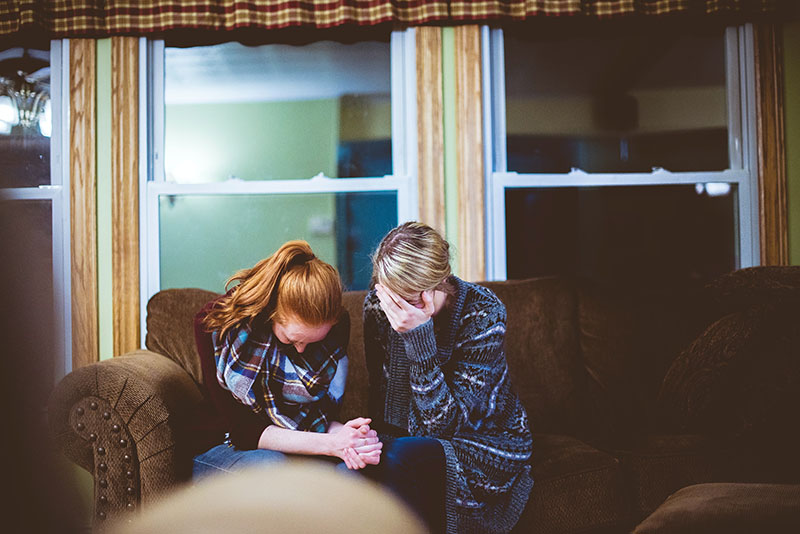
Grief is a bit of a mystery to us, and something that our brains and our bodies have a hard time processing. Many times we might wonder, “How do I support someone who is going through grief?” It can be hard to know what to say or do when someone you care about is grieving a major loss. Some people may be afraid of saying or doing the wrong thing, or maybe think that there is nothing they can do to make things better. Others may simply feel uncomfortable with the intense pain and emotions that grief brings. These are common fears that we all experience when someone we deeply care about is going through a difficult time. It may help to know that there is no magic pill – no cure for the pain of loss, and nothing that can take it all away. But that doesn’t mean that there isn’t anything we can do to support someone who is grieving. You don’t have to have all the answers or be able offer great insight or advice for your loved one to feel supported and know that you care about them. Often times, your mere presence is enough. The bereaved would benefit from just knowing that they are not alone in their suffering, and that they have a caring and compassionate friend to turn to if they need to. This alone can help the bereaved process the pain and slowly start to heal.
Nonetheless, here are some good ground rules to keep in mind when you’re trying to answer the question of how to support someone who is grieving.
Listen
Your friend or loved one may have not had the chance to share their thoughts and feelings about the loss with anyone. Often times, those who are grieving may avoid talking about the deceased with close family members or friends so that they don’t bring them too much pain. This means that they may have never had the chance to share their grief story. Just by listening to them, without judgement or restriction, you offer them a unique opportunity to verbally process the loss and express the impact it has had on them, which can be healing in itself!
Give Permission to Grieve
Some of us may be uncomfortable with this step because of the intense pain and emotions that grief brings. We may feel propelled to offer advice, or provide intervention or direction in some way, which is understandable – no one wants to see their loved ones suffer! But as mentioned earlier, the most helpful thing we can do is offer our presence and remind ourselves that there is nothing we can do to take their pain away. Depending on your relationship with the person experiencing grief, you can encourage them to express their grief, especially if they consider you to be one of their safe and close friends. Keep in mind that grief may not only involve feelings of sadness, but can also include intense feelings of guilt, anxiety, anger and despair. Allow them to express the range of emotions they may be feeling, without judgement. Many people hide their grief and pretend that everything is alright, so giving them permission to express their grief, with all the extreme emotions it involves may be very freeing. You can say something like, “tell me about your dad,” or, “this must be really hard,” and let them know that grieving is a normal and healthy response to loss. You can even tell them, “I’m not sure what to say, but I want you to know that I care.”
Share Information About the Grief Process
Grief often comes in waves, and many people don’t know what to expect from it. Some people may be surprised by the duration or intensity of it and they may judge themselves for how long it’s taking them to heal. It can be helpful to remind them that grief affects everyone differently, and that their journey is unique to them. Not only that, but it is also normal and expected to have some good days along with the bad. Reassure them that this does not mean that they love the individual they lost any less – finding ways to cope with the loss and finding a new normal is part of the healing journey.
Assist in Practical and Concrete Ways
Lastly, helping the bereaved in practical ways can be one of the most helpful ways to support them, especially in the early days after the loss. They may very likely have no energy to ask for support at this time or may not know exactly what it is that they need. That’s why it’s helpful to take initiative to make a practical, concrete offer that would lessen the burden of their daily responsibilities. This could be something like offering to deliver them a meal, babysit their children so that they can have some time to themselves, or take long walks with them for fresh air and exercise.
Practice Self-Compassion
Finally, it’s important to practice self-compassion as we support someone else on their journey through grief. It’s hard when we see those close to us suffer. Even though it’s not our own suffering, their pain still impacts us, and we may experience it as our own. That’s why it’s important to show kindness towards ourselves and acknowledge how hard it is for us to know that a loved one is going through a difficult time and that there is nothing we can do to take their pain away. This allows us the capacity to be there for those who are suffering and not get lost in their pain. If we are able to attend to our own emotions and have compassion for ourselves, we increase our capacity to be there for others and offer them the gift of our presence.
If you or someone you love is experiencing grief, we’re with you. If we can be of any help to you on your journey through grief please give us a call.
by Sarah Vaughan-Jones | Jul 25, 2018 | Health, Relationships
“This week’s blog is written by one of our volunteers, Sarah Vaughan-Jones. Sarah is entering her last year of her Psychology degree at UBC this fall and is helping out around the clinic as she learns more about the field of psychology.”
Relationships can be challenging. They don’t come along easily and require constant attention to sustain them. At different stages in our lives, they can be more difficult with the other challenges that life throws at you. Being in a relationship, and having a romantic partner can play an especially large role in our health outcomes. Whether it is a budding relationship in high school, or a 30-year marriage, having a partner can certainly impact our health. Let’s take a look at a few of the ways this can happen throughout our lifespan.
Late adolescence
As we reach our later teens, major changes happen in our day to day lives. Many of you are heading off to college or joining the workforce. It is probably the first time many of you have lived on your own, with less direct guidance or support from your parents. You may find that you are ripped out of your comfort zone and put in a new environment, where you may not know anyone! This can be lonely and stressful!
With your newfound freedom, you might explore new things such as drugs and alcohol, experimenting with sex, and others. Often, these are in an effort to develop and form relationships with others, including romantic partners. How might relationships affect this? Research has found that young adults in a relationship may have less mental and physical health problems when compared to single college students, as they may engage in less risky behaviour (Braithwaite et. al, 2010). Sometimes we experiment with risky behaviours as we look to expand our social network. Alternately, being in a relationship might encourage us to be healthier. In the people studies, exercise, smoking habits and eating habits were more likely to improve due to being in a relationship with a partner (Nichols, 2017). Couples can receive the emotional support and comfort that they may be missing from home, benefiting their wellbeing.
Early Adulthood
Life continues to change once we’re in early adulthood. Relationships can quickly become a more important part of our lives. Many feel stress and pressure from society to find a relationship, as it’s a common time for marriage, moving in together or having children. Whereas a few years ago it was all new and experimentation, now the pressure is on – people may be expecting you to be in a relationship as you get older. It can be tricky to balance; you’re trying to find security in a job and search for a partner at the same time as dealing with whatever other life challenges come your way!
In this stage of life, research suggests that women will have better mental health outcomes, while men will have better physical health, when in a happy, committed relationship (Nichols, 2017). A married man’s health was similar to that of a non-smoker, with regular blood pressure and BMI levels (Loving & Slatcher 2013, p.8). Happy couples also have a decreased mortality risk, decreased the risk of cardiovascular disease, and decreased cancer-related mortality.
On the other hand, when in a relationship, conflict can arise between career and love. With a common goal of being financially stable, this can mean more time at work, which can strain and cause stress in relationships. This kind of stress has been linked to future cardiovascular problems (Nichols, 2017). Research suggests that adults who are able to maintain a good balance between many demanding situations have the ability to adapt to demanding environments better than others, which helps form a greater identity (Cao, 2013, p.7).
If this is you, you might feel trapped in a cycle of doubt, as it can be hard to find a solution and how to balance a relationship with work and other commitments. What you might find interesting is that being in a relationship can help with coping; that is, the relationship becomes a strength in coping. They call this “dyadic coping” and it can be beneficial for many couples. Dyadic coping focuses on how couples can cope together to decrease their stress. They can prepare for future stressors, and plan on how to deal with them together. This can increase an individual’s support for their partner, and improve trust and intimacy with one another, improving each other’s mental health (Landis et. al 2014, as cited in Umberson & Montez, 2010).
Adulthood
Long-term marriages and relationships can also have a significant impact on our health. Whether you are new parents or retiring, relationships still have a substantial influence on your health.
Research is finding that that long-term relationship satisfaction is different between men and women. Men that engage in problem-solving and stress management, are predicted to have the healthiest relationships (Pietromonaco et. al, 2013). It seems as though focusing on problem-solving and stress management in relationships may allow men to be rational and calm under stress, which may place less of a negative stress on their body.
Some of the research highlights that health outcomes for women improved when they were intentional about paying attention to their personal satisfaction and this led to better relationship happiness overall (Pietromonaco et. al, 2013).
What about children? Having a child can be an important part of a relationship. Research has found that during pregnancy, women that receive support from their partner had reduced anxiety during and after pregnancy. It can be a stressful time for many couples, and having support can be not only healthy for the mother, but also the child. Reducing parental anxiety levels can also improve the infant’s behaviour and development for the better (Pietromonaco et. al, 2013). Parents who are calm and less stressed during, and after pregnancy may have less distressed children.
Later on in life, as we age, more and more health problems may arise, including chronic diseases. Having a partner as a support system can have great effects on health outcomes. Cancer patients reported feeling more intimacy in the days in which their spouses supported them. What’s interesting is that giving support, not just receiving support can also be beneficial to our health. Supporting a spouse showed lower mortality rates for the supporting partner (Brown et. al, 2009, as cited in Pietromonaco et. al, 2013).
What can we take from this? Although relationships require effort to find, grow and maintain, they may be very beneficial to our health in the long run. With the curve balls life can throw in your direction, it can be very beneficial to have the support of a partner, at any time in your life. But of course, there is always an alternative to this. Others in your life such as close friends and family can also provide a similar support for you in times of need, or anytime at all! For any question, feel free to contact us!