by Ava Neufeld | Sep 3, 2020 | Anxiety, Children, Connection, Education, Encouragement, Tips
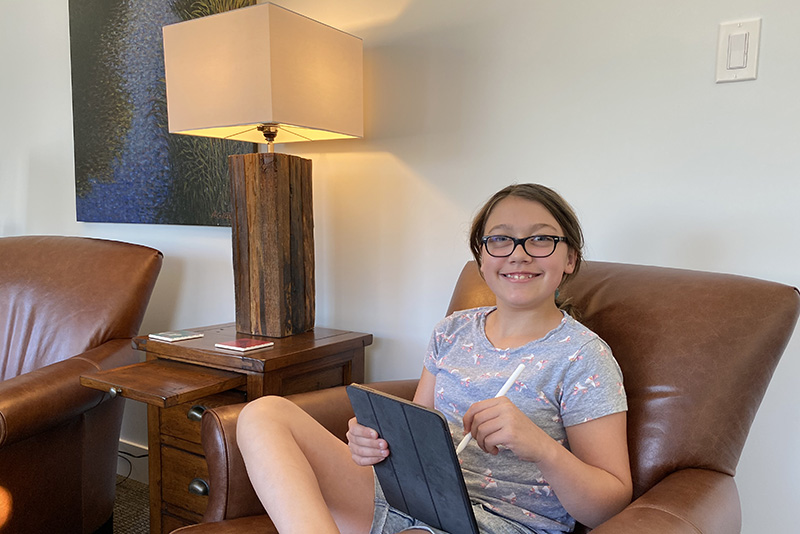
From The Directors: Today on the blog, we’re starting a new series. Our daughter, Ava is going to be writing for our blog from time to time. She’ll be talking about some of the issues she experiences and comes across with her friends, in school, and in life, to offer a perspective from a kid. We professionals can be helpful, but sometimes kids need to hear from kids. We hope this is something that some of your kids can benefit from and see that they’re not the only kid thinking of these things or struggling with things in life. We also hope that some of Ava’s tips will help them too!
Hello!
My name is Ava. I am a tween, and I have a sister and I have a dog named Buttercup – she is 10 years old. I love to do gymnastics and play with my beautiful dog. I love to bake, ride my bike, read, go skateboarding and last but not least, I LOVE TO PLAY WITH SLIME!!!!!!!!
You may be wondering why I love to play with slime, so here are a few reasons why:
- I have anxiety and learning disabilities. Playing with slime helps calm me down when I am nervous. I love the feeling of it in my hands and how the texture changes by what I put in it. It can be really smooth, soft, fluffy, wet or stretchy! Just having it in my hands helps me concentrate better.
- It helps me be creative and lets me experiment with ingredients such as, white glue or clear glue (optional), hand cream, glitter, clay (but add in after you activate), foam beads and shaving cream. For activator you can use borax, contact solution and tide, but only use one activator for one slime. Don’t use two activators in one slime.
- You can do this on your own or while social distancing with a friend. Or, you can make it online in FaceTime or Zoom – I like to do this with my cousins. It is a very soothing activity but it can get a little bit messy! It doesn’t take long to clean up! If it gets on your clothes just put the clothing in a bucket and put it in hot water to soak for 30 minutes to an hour and it will come right out.
Have fun!!!
I hope you enjoyed my blog today! Every once in a while, I’m going to write a blog that I hope will help some people. I know that I have a hard time with school and with anxiety sometimes, and I hope some kids out there will hear that it’s ok if things are hard. Life can be hard sometimes! I hope that some of my experiences and ideas might help you!
See you next time!
Ava
 Ava Neufeld is the newest author on our blog. She is a 12 year old student in the Delta School District and wants to share her perspective on life and challenges in the hopes that it helps others.

by Rebecca Farnell | Aug 28, 2020 | Anxiety, Children, Connection, COVID19, Education, Encouragement, Mental Health, Stress
I feel tired. I wonder if you are too? I am feeling anxious. I wonder if you can relate? I am feeling discouraged. Are you as well? I could use some self-compassion.
There seems to be increased tension if you are brave enough to venture into public spaces. Do I wear a mask? What if I can’t and people judge me? It feels like we are on hyper alert, the slightest cough, sniffle or tickle causes panic and uncertainty. Not to mention the larger conversations around the legitimacy of the pandemic and differing views of safety and the infusion of fear.
We made it through the spring and now the last weeks of summer linger in the air. Fall is approaching and with it comes questions. So. Many. Questions.
- What is school going to look like?
- Should my kids return to school?
- When will this end?
- Will things ever return to how they used to be?
- Will there be a second wave?
- How do I keep myself and my loved ones safe?
There seems to be a collective ‘heaviness.’ We could call it COVID fatigue? I feel it too.
Let’s all just stop.
Whatever you are doing this very moment – breathe.
Take a nice deep breath from your belly. In through your nose and out through your mouth. Notice your shoulders and lower them, try to ease some of the tension. Try to find a moment of calm.
Contrary to what some may think, Registered Clinical Counsellors are not immune to feelings of overwhelm and uncertainty. I wanted to share a few things that have been helping me lately. I hope that you will find some of them helpful too.
Do The Things That Keep You Well
Many people are feeling tired, sad and even depressed. I have been noticing that motivation is dwindling for many. The things that we know help us and we enjoy doing, are the very things that are falling away. We cannot simply sit around waiting for the motivation to return. We need to do the very things that we so quickly dismiss. May I gently ask you to dust them off and try them again?
- Go for a walk. Enjoy the fresh air and sunshine.
- Pick up that instrument you love to play.
- Paint, draw, sculpt.
- Read a book.
- Go for a run.
- Putter in your garden.
- Call a friend
- Take a nap
These are difficult times. Our hearts can feel weary. There are pressure and demands coming at us from all sides. It is vital to take care of yourself first in order for you to show up the best you can for those you love and are looking to you for support and care. I know that I feel the joy returning when I put on my helmet and take my bike for a ride; I have too many excuses as to why I don’t, but the moment I do…there it is – joy and lightness come trickling back.
What can you do today to help some lightness return?
Engage In Mindful Self-Compassion
I often say “Be kind to yourself,” when I am speaking with my clients. It is a nice sentiment, but what exactly does it mean? A few months ago, I had the privilege of taking an online course on Mindful Self-Compassion with Kristin Neff and Chris Germer. I would love to offer a few helpful points that encouraged me.
Let’s face it, often the way we treat ourselves is terrible. The thoughts and comments rolling around our mind are not kind, in fact they can be downright cruel. The crux of Self-Compassion is this: Treating yourself the same way you would treat a good friend. Typically, we tend to be more understanding and empathetic to others and not as much to ourselves.
There are 3 main components of self-compassion:
Kindness – giving yourself compassion and empathy
Mindfulness – allowing yourself to be with the painful feelings
Common Humanity – understanding that you are not alone in your suffering
Self-Compassion fosters connection and togetherness as we hold our suffering and realise that we are not alone. Self-Compassion allows us to pause and realise the present experience without judgement. The paradox of self-compassion is that we give ourselves compassion not to feel better but because we feel bad.
When we feel different emotions, we can learn to notice the emotion, feel the emotion, and label the emotion. Offer compassion to yourself as you experience this emotion. Try placing your hand on your chest and offer yourself some kind words, just like you would a good friend. For example: “This is hard.” “This hurts.” “I am sorry.”
Focus on Being Mindful In Everyday Life
Introduce the practice of mindfulness into your daily life. This can look different for each person. From guided meditation, to breath work, to savoring experiences, cultivating gratitude and self-appreciation.
I’d encourage you to check out more suggestions and ideas at Dr. Kristen Neff’s website. She has some great resources that make the introduction to mindful self-compassion much easier to grasp.
Please remember that you are not alone in your pain. It is true that no one know exactly what it is like to experience your pain, yet, we have a collective humanity in that we all go through suffering. There are folks who experience more pain than you do and there are folks who experience less pain than you; it is not a competition. Let’s remember to use suffering as a way to cultivate empathy and connection.
Start Your Journey With Self-Compassion Right Now With Me
Self-Compassion is about taking a moment to check in with yourself – to stop and listen; to feel and to ask, “What do I need right now?” And if possible, to be kind enough to give it to yourself.
- Make your mental health a priority. I cannot stress the importance of counselling right now. As physical health and safety is taking a front seat in the news, it is imperative to keep your mental health on check as well. Personally, I have been making my counselling sessions a priority. They are a lifeline during this time of uncertainty. Please know that Alongside You is here to help. We have appointments available 6 days a week – morning, afternoon and evenings. We provide face to face sessions as well as secure video sessions. Please reach out and talk to someone. We are here for you.
- Practice Gratitude. There is much to be discouraged about – cases of COVID 19 are rising, there is political unrest in the United States, tensions are high about going back to school, natural disasters surge, and innocent lives are being taken at a sobering rate. I have found myself feeling overwhelmed and struggling to know how to respond. I acknowledge that I am but one person and the need is great. I was asked by my counsellor in our last session, “Where is gratitude in all of this?” I smiled. I can still practice gratitude when there is injustice all around. I can delight in my flowering geraniums on my patio, despite my not-so-green thumb. I can be thankful for my family, for my weekly handwritten cards in the mail from my mom. I can savour a delicious meal cooked at home and delight in the technology that allows me to stay connected with loved ones around the world.
We can hold more than one feeling at the same time. We can acknowledge the pain, suffering, uncertainty and fear we feel. And we can appreciate the beauty, the simplicity, the kindness, the compassion and love that still exists.
Sadly, I do not have a magic wand to make everything better. If only I did. But what I do know is that we can step steps to help ourselves through this time. You are braver than you know. Do the things that bring you joy. You are not alone. Reach out for help. Remember to breathe. And finally – know that you matter. The world needs you.

by Nikita Bhatty-Avdic | Jul 22, 2020 | ADHD, Anxiety, Children, Connection, Education, Stress
One of my favourite things to do during my time as a teacher was to set up schedules for my classroom, plan out lessons and units, and help students stay on track with their learning and with their assignments. As a young mom back then, I thought it would be a good idea to use the same kind of set up at home with my own kids around scheduled feeding, sleep time, and play time. As my own kids grew and my role as a teacher of teens continued, I realized more and more that kids of all kinds thrive from structure, routine and predictability. All of these things help our kids with their executive function.
In school, teachers provide schedules, structures and routines to kids that, over time, become a way of life. The benefits of this kind of structured functioning became clear to me as my students and my own children entered the teenage years. In my roles as a mom and a teacher I was able to witness the advantages of good planning skills in teens firsthand, and the troubles that can arise for kids when organizational skills fall apart.
These kinds of planning skills are known as executive function skills (meaning the skills you need to execute tasks). What most parents and teachers don’t realize is that the full scope of executive function doesn’t just include planning and organizing, but also includes:
- Getting started
- Following through on tasks
- Goal-directed persistence
- Performance monitoring
- Emotional regulation
With the latest research in neuropsychology, we’re discovering that it can take up to 25 years for executive skills to fully develop! In other words, executive skills are dependent on brain development over time. This development happens in the prefrontal cortex – the part of the brain just behind the forehead.
Once I started to learn more about executive skill development in kids and teens, I became particularly concerned about kids who had challenges with executive skills. These are the kids who underachieve because of weak skills in organization and time management, which in turn prevents them from working to their potential or achieving their goals. In many cases these kids have had chronic problems throughout school and may have developed a negative history there. Sometimes these kids have been labelled as lazy, irresponsible and not caring about their own success and achievement. These children are largely misunderstood. For kids with attentional disorders and learning challenges, these skills develop even more slowly and are more sensitive to disruption.
Stress and Executive Function Skills: Getting Through School Closure And Online Learning In The Time of A Pandemic
At the time of our school closures when typical schedules and routines disappeared, and teacher support for project completion, time management and organizational skills was unavailable, many students with weak or immature executive skills floundered. In fact, many students of all abilities, including high achieving students, struggled without the day-in, day-out support that teachers typically provide through face to face connections and organizational supports in classrooms.
Even more importantly, in times of stress (such as during the current pandemic), everyone’s executive skills are taxed. From a survival point of view, right now is the time when our brains are hard-wired to focus on the immediate needs in our environment and whatever is causing our stress. This in turn decreases the resources that usually get directed to executive skills, leading to reductions in working memory, emotional regulation, sustained attention and goal-related persistence – just to name a few!
When Kids Are Stretched And Stressed
During the pandemic, many parents are struggling to contain their own worries about jobs, lost income and health conditions related to the COVID-19 virus. When kids begin to understand what their parents are worrying about, they start to worry too. To add to the strain, the familiarity and routine of school as well as the many supports at school that provide security to students have disappeared. This support often includes nutrition breaks, feelings of love and belonging, and connections with teachers and peers who care for them.
Finally, increased expectations that kids manage their school work on their own when daily routines disappeared tended to overload many students and contributed to a significant amount stress and difficulty completing work. This stress can result in reduced mental resources that are normally devoted to executive function, causing significant difficulties for kids in coping emotionally and keeping up with learning at home.
How Can I Help As An Executive Skills Coach?
Moving forward, as we all wait to hear from our Education Minister regarding school opening plans, we can be thinking about how to best support kids in this upcoming school year, no matter what it brings. The best approach (at any time, but especially at a time like this) is to view executive functioning difficulties as obstacles, rather than character flaws or poor choices. If we approach kids using problem-solving strategies that include a sympathetic ear, trauma-informed practice (relationships matter!) and some open-ended questions and discussions, kids are more likely to work with us, do better and feel better.
Many parents regularly use coaching as an option when teens push back against attempts to teach new skills to help them manage the details of life. Coaching is a process that keeps the pressure and the meltdowns away from parents, preserves family relationships at a time when they matter most, and helps kids develop the skills they need to adapt to new realities with resilience.
Through coaching, kids can become the independent, self-sufficient individuals they want to be (and that their parents want to see), even during a pandemic.
As a coach, I work with kids to support their emotional health and well-being, help them identify their goals, and make daily plans to achieve them. This might include keeping up with assignments, advocating for accommodations at school, improving grades or even getting a job. I work hard to help kids feel autonomous and make important decisions about the goals that they want to work towards. At a time like this, our kids need a helping hand to navigate their way through very unsettling times, all the while keeping their eye on the prize – there is a way through this!
As a consultant, I offer advice and strategies to kids, leaving the final decisions in their hands! In this way, a pre-teen or teen’s success building small goals will build a base for achieving bigger goals over time. I firmly believe that with help, kids can overcome the hardships that have suddenly landed on them and feel proud of themselves for prevailing.
My role in the life of your child and your family in my practice at Alongside You is to offer support to help kids build executive function skills and feel successful, help your kids survive the pandemic and the continued upcoming changes in school life, and to help all of you stay connected and learn to rise above the current schooling challenges due to the pandemic.
If you would like to meet with me for a consultation regarding your child’s progress, please contact us and we will be in touch with you soon. Secure video appointments are a safe, kid-friendly space to meet virtually and shake-off the anxiety, despair and overwhelm and gain some ground as we approach our new normal at school.
Reach out for help, relieve worry and remember that a helping hand is what is most needed for kids at this time in order to feeling better, learn better and do better. I look forward to working with you and your kids!

by Kathryn Priest-Peries | Apr 16, 2020 | Anxiety, Connection, COVID19, Depression, Mental Health, Tips
The COVID-19 pandemic has had many of us in social isolation and practicing social distancing when in public for weeks now. For a fortunate few, this has been a welcome reprieve from an otherwise hectically paced life. For the majority, it has meant being cut off from friends, family, community, and routine supports such as gyms, recreation centres, and social gatherings. We have become a people who are afraid to even greet one another in person. It’s because of these shifts that some of us, particularly those who have struggled with depression before, may be asking the question, “How can I prevent depression during COVID-19?”
How Can I Tell If I’m Depressed During COVID-19?
Anxiety about the risks of catching the Coronavirus are at an all-time high as are concerns about the future of jobs, financial security, and the availability of needed supplies, the education of children, and so on.
When ongoing anxiety is combined with a lack of social and community support, the result can be despair and even full-on depression. Depression is defined by features such as:
- A feeling of purposelessness or hopelessness about life
- Feelings of intense sadness often combined with heightened irritability
- Failing to attend to one’s personal hygiene
- A loss of interest in activities previously enjoyed
- Changes in appetite
- Failure to adhere to previous routines
- Sleep disturbances
- Loss of motivation
Some of the features indicated above are currently forced upon us by the pandemic. For example, simple aspects of hygiene such as going for a haircut are not currently available. And, even if we can find the motivation, many of the activities we would do are structured and rely on facilities such as a gym or a recreation centre which are currently closed.
The Effects of Social Distancing on Depression
Perhaps most alarming out of all of the effects of the pandemic is the imperative that we practice social distancing (or maybe more aptly, physical distancing). While this is entirely necessary at the present time, it can serve to greatly contribute to the development of depression. It is primal in human beings to gather with a friend, a family member, or community supports when experiencing stress. As it happens, we are incurably pack animals – maybe like orcas or wolves. Rare is the person who wants to be alone for extended periods of time while anxious. Rather, we naturally gravitate toward one another and, furthermore, we need social connection to remain emotionally and psychologically healthy. The need for social distancing has forced us to behave in a manner that is counterintuitive to our being healthy in the world.
Ways to Prevent Depression During COVID-19
What all of this means is that we will need to be very deliberate and stubborn in our efforts to fend off depression. I have a few suggestions for us all to consider, as I try to answer the question, “How can I prevent depression during COVID-19?” Here they are:
- Contacting with friends or supports by phone or video. Don’t be shy about admitting that you’re in a funk and just need to talk.
- Go for walks outside alone or with others (6 feet apart of course…)
- Do a bit of what you enjoy – whether it’s a hobby, listening to your favourite music, etc
- Pay close attention to your nutrition and don’t let it slide into bad habits
- Exercise – whether it’s a run outside, a workout following a TV or YouTube instructor, throwing the ball for your dog, riding a bicycle, etc. 20 minutes of exercise daily is ideal to fight depression
- Reach out for professional support if needed. Yes, we’re open for business and can safely meet with you if you feel that a counsellor is needed to support you for a time.
- Stick to as much routine as possible. Get up at a decent hour, get showered and dressed even if you aren’t going out. And then do that 20 minutes of exercise mentioned above
We don’t currently know how long the pandemic will last and that uncertainty can be very upsetting. Preventing the anxiety and the upset from becoming depressed in life is one of the few factors that we can actually control with some decided effort.
If you’re resonating with anything I’ve written, know that I’m rooting for you. We’ve all been there, and we’re all in this together. If you’re asking yourself how you can prevent depression during COVID-19, I’d love to help you out. Give us a shout at the office, and set up an appointment. Don’t go through this alone, we all need some help sometimes and I’d love to be there for you through this.

by Rachelle Kostelyk Pals | Apr 8, 2020 | Anxiety, Connection, COVID19, Mental Health, Tips
We find ourselves in a very unique time in history, don’t we? We’re so globally interconnected (part of the reason why Covid-19 became a global pandemic in a few short months!), and yet so isolated (particularly now that we all do our part to practice social distancing). For many people, the practice of being removed from others is especially difficult because they felt alone before social distancing was even a thing. For others, there is a reawakening to the importance of relationships. Maybe it’s a bit of both for everyone. How can we stay connected during Covid-19?
Give Social Distancing A New Name
As we practice social distancing, I think it’s important that we give it a better name and call it for what it is – physical distancing.1,2 I’m certainly not the first to propose this name change, and even the World Health Organization and health authorities have recently begun to swap social distancing for physical distancing terminology. The reason why it matters is because we are social beings, and we may need each other more than ever right now – but from a safe physical distance. We cannot, and should not, deprive ourselves of social connection at time when we are more prone to anxiety, dread, fear, and uncertainty.
Maintaining Social Connections During This Pandemic
If you are feeling isolated or lonely, it is still very safe to go outside for a walk and call a friend as you enjoy the fresh air. Many people are using Zoom (online video platform), WhatsApp, voice memos, and regular phone calls to connect with people they can’t see in person right now. It might be, for some, that you find you have more greater quantity of time to invest in the people that really matter to you, and as a result you experience more quality time. Perhaps some people will use this self-isolation period as a unique opportunity to reinvest in important relationships.
If you find that your screen time has increased significantly in the last couple of weeks, and that connecting on social platforms is becoming an impediment to a regular rhythm in life, perhaps you could consider making some changes to how you divide your time. If you spend an hour or so each day reading the news, and find that this drains you of mental or emotional energy, try to cut down your news intake! If you allow yourself 20 minutes to read the news each day, you might then spend more screen time with people whom you are socially connected to.
Maintaining A Physical Connection During This Pandemic
While social connection is something we can all become creative around, it is the physical connection that may feel challenging over time, particularly for those in troubled relationships, or those who live alone. I have some good news! Would you like to hear something interesting that we know from neuroscience? Oxytocin, the bonding hormone released through safe and affectionate physical contact, also sometimes called the “love” or “cuddle” hormone, essentially shuts off our stress response in the body. Research conducted several years ago measured for rates of oxytocin in people when they touched themselves (on the arm, face, stomach, etc.) versus when they were touched by another person. What they found was that there was virtually no difference between when they were touched by another person, versus when they touched themselves.
So, if you live alone, or are in a home with people you do not receive physical affection from, put your hand on your chest and take some long, deep breaths. Give yourself a foot rub or a hug, massage your temples, or place your hands on your neck. This is, in a true sense of the word, self-care! 3
Maintaining Your Community Connection During Covid-19
During this time while we are physically removed from one another, how can we stay connected during Covid-19? We all need social bonds that tether us together as we face this crisis at a community level, and on a global scale. We can look for ways to support the most vulnerable in our community. If we express ourselves creatively — drawing, painting, playing music, writing, cooking – we can share it with those who might appreciate it. We can post our project online or drop off food for an isolated neighbour. We can find some comfort in the fact that we are taking care of one another by remaining physically distant. We can cheer from our front door at 7pm for our frontline workers, and remember, for a moment, that although we are physically separate, we are all in together.
If you find that you are struggling with anxiety, loneliness, or grief, please do not hesitate to make an appointment with one of our counsellors at Alongside You. We are seeing clients for in-person and online sessions. We’re also offering a free online support group for anxiety related to Covid-19, which you can read about here. Wherever you’re at, whatever you’re managing, pulling for you! Let us know how we can help.
- https://www.washingtonpost.com/lifestyle/wellness/social-distancing-coronavirus-physical-distancing/2020/03/25/a4d4b8bc-6ecf-11ea-aa80-c2470c6b2034_story.html
- https://www.latimes.com/science/story/2020-03-28/isolation-is-hazardous-to-your-health-the-term-social-distancing-doesnt-help
- https://self-compasorg/the-chemicals-of-care-how-self-compassion-manifests-in-our-bodies/

by John Bablitz | Apr 2, 2020 | Addiction, Anxiety, COVID19, Mental Health, Tips
The COVID-19 coronavirus pandemic has affected everyone in some way – many of us are unable to work, unable to find access to child care or other important resources (one friend of mine has even been barred from doing laundry in his building). For some, like someone I know of who runs a milk delivery company, the pandemic is like an early Christmas present. Significantly and unfairly, the pandemic most adversely affects those who are most vulnerable: people living in or close to poverty who are out of work, people who are homeless, and those at highest risk to develop illnesses.
An important, but often overlooked group impacted by COVID-19 coronavirus are those who use substances. That includes those who rely on alcohol, cannabis or other drugs for medicinal or functional purposes (such as anxiety management), injecting drug users who rely on access to safe injection sites, and users of a variety of other substances for whom access has now dried up or become increasingly unreliable.
Imagine having to go device-free for a week, or longer – no phone, TV, computer, or other screen. For many of us this would involve literal symptoms of withdrawal, as we have become accustomed to using screens to cope with negative emotions, stress, anxiety, and to connect with others. I’m willing to bet you couldn’t, or wouldn’t, pull it off. A substance user’s drug of choice likely serves a similar function and is very likely quite painful to suddenly lose access to, without any sense of choice or control. My colleague very kindly reminded me of the difficulty some people will go through losing access to substances during a very uncertain and stressful time, and I feel sad to think of the number of us that will go through painful withdrawal symptoms (physical pain, uncontrollable anxiety or panic, and severe depression are just a few) and as a result will be forced to find other ways to cope.
People are incredibly resilient and will generally find ways to get through difficulties whatever the cost. I wanted to talk a little bit about the ways we can cope with difficulties, even in the face of withdrawal from something as mild as social isolation or as severe as substance addiction. Recovery from substance dependency involves building recovery capital, which is a blanket term referring to resources (both external and internal) that allow us to slowly build up capital – a wealth of other ways to cope. There are hundreds of examples, but some key themes are relationships with others, health (physical, mental, and emotional), strategies and tools, and a relationship with oneself.
Substances can be an effective tool in the short-term, but they have shortcomings: they don’t tend to last very long, they take a physical toll, and they can keep us away from some opportunities for the growth that comes from going through difficulty with the right support. Substances are considered part of passive coping, just like video games, junk food, and ignoring a problem. Passive coping is not bad, it is an important resource and we don’t want to overuse it. Active coping is also an important resource: exercise, diet, certain types of social support, therapy, learning, and other health behaviours fall into this category. Simply put, active coping is anything we do to directly cope with a difficulty, and passive coping tends to avoid the implications of a difficulty. The trick is striking a healthy balance between the two.
If you have recently lost access to substances or access to other important habits, I’m really sorry – you didn’t get to have a choice in the matter; an invisible and seemingly uncaring force made the decision for you. That really, really sucks, and now you’re stuck managing as best you can. Some that I have talked to will use tools such as exercise or meditation to achieve another type of “high,” and focus on emotional, spiritual, or intellectual pursuits when they have the energy to do so. When they don’t, they will use whatever means necessary to get through the really hard moments: sleeping a little more, indulging in TV or video games, venting to friends, or eating a little extra sugar.
You will find a sample list of different coping tools and a couple resource links at the bottom of this article. However, I’m not really here to give a bunch of advice, as everyone is different, and there aren’t any one-size-fits-all solutions. If you want help taking care of yourself right now and want to talk about creating a short-term plan, let me know and I can help with that. But you know yourself best, and you know what will get you through this better than anyone else does, and hopefully you know when you might need to seek support. Mostly, we just want to say that whatever your situation, we are thinking of you and rooting for you to get through it, because there is a lot of uncertainty and difficulty for a lot of us right now. Always feel free to reach out, and most of all, take care of yourself.
Tips for the “Green Zone” – when we have some energy or motivation:
- Don’t overdo it – quality over quantity. Give yourself a realistic and short amount of quality time (say 15 minutes) to spend on something that your ideal version of yourself would do: go for a walk or a run, listen to some music, do yoga, spend some time reading, writing, singing, or drawing, complete a short work task, organize your cupboards – whatever. When you’re doing this, try to let all your focus rest on the activity at hand. Here’s a quick video tip from a children’s book I’m a fan of.
- Try meditation. Focus for a few minutes on your breath, and spend some time being curious about yourself: how do I feel at this moment? What physical sensations do I notice? Do I feel anything towards myself or towards those sensations? Try to avoid positive or negative judgments during this time, and if they arise, just notice that they are there. The goal is just to be, to observe yourself internally at that moment.
- Spend time cooking yourself a healthy meal from scratch, and eating it without any distractions, focusing on how good it tastes, and feeling good about yourself for putting the energy in to make it. If you can, even better to share it with someone.
Tips for the “Yellow Zone” – when our stress is present but manageable:
- Notice what thoughts and feelings are coming up with as much compassion as possible. Imagine the things that are happening internally are happening to someone you really care about (real or imaginary). What would you tell them? How would you want to care for them? Try to identify a small way you could care for yourself in that moment. If all else fails, take some deep, slow, breaths.
- Exercise. Get your blood pumping and get moving, this will give you an adrenaline spike to help you get through the next while. If you are tired later, you’ve earned a break! Take a nap.
- Put on some music to match your mood, and paint, draw, or write along to it.
- Call or chat with someone. Most of us have time on our hands – talk (or even vent) about what is stressing you, ask how they are doing and try really hard to listen well. When we share with others, or work hard to understand others, our relationships deepen and we feel closer and more comfortable. If you’re not up for a conversation, just play some online video games together. If you are struggling with something specific, try to find an online chat group that specializes in that type of thing. If substance use is your thing, there are tons of online chat groups full of people who have good advice and good support, all anonymous and for free.
- If you have a therapist, an online session might be a good idea.
Tips for the “Red Zone” – When the bomb hits or is about to hit:
- Breathe. Inhale for 3-5 seconds, hold for 2-3, and exhale slowly for 7-10, like you’re blowing on something to cool it.
- Douse your head in cold water for a few seconds – this activates a survival “dive reflex” that calms the body. You can also try grabbing some ice cubes and squeezing them in your hands, focussing on that feeling and seeing how long you can go before having to let go. It’s pretty hard, and good at redirecting the brain.
- Reach out to whoever feels safe to reach out to, in whatever way feels ok.
- Feel free to use your favourite passive coping mechanism: watch a movie, eat something (preferably deliberately slowly), try to take a nap.
- Imagine or daydream.
- Write or draw – destroy some paper with whatever you’re feeling at the time.
There are countless other things you can do, and lots of online resources for meditation, emotional regulation, practical addiction support. Again, individuals vary wildly, so if you want help creating a specific plan for yourself, feel free to reach out to a mental health professional. We’re in this together, and we’re rooting for you here at Alongside You.