by Kathryn Priest-Peries | Nov 28, 2019 | Emotional, Mental Health, Mental Health Disorder, Post-Traumatic Stress Disorder, PTSD
In today’s world, many of us have experienced events that are deeply troubling. These include car accidents, physical assault, gruesome deaths, difficult childhoods, witnessing violence, working in fields where tragic things occur, etc. None of these experiences in themselves will result in post-traumatic stress disorder. Indeed, many events in life can be extremely upsetting but may not lead to post-traumatic stress disorder. For some, however, such events stay with the individual and change their ability to cope significantly.
Let’s begin with a bit of discussion about the difference between a difficult event and a traumatic one. I like to refer to difficult events as small-t traumas. These are events that can upset us for days, weeks, and even months. They take time to adjust to and with time and social support the individual is eventually able to function as well as they did prior to the difficult event. Capital-T traumas tend to be events that impact the psyche in ways that prevent us from returning to our previous ability to function. These tend to be events that are outside of the realm of normal human experience, i.e., they are statistically unlikely. Therefore, it is difficult for the sufferer to find social support as most people cannot identify with the events that have occurred. In addition, traumatic events tend to happen quite suddenly and therefore overwhelm the brain in terms of its ability to process what has occurred. There is a great deal of science that explains this but it is beyond the scope of this blog. Capital-T traumas can result in full-blown post-traumatic stress disorder.
How do I know when I need to get help for PTSD?
How does one know if they have post-traumatic stress disorder and should, therefore, seek help? There are several factors that experts agree are consistent with a diagnosis of post-traumatic stress disorder.
The first of these is physical symptoms. Following a traumatic event, it is not uncommon for the sufferer to report extreme fatigue, dizziness, headaches, as well as a host of gastrointestinal difficulties. In addition, the event itself may have left the individual with chronic pain. For example, motor vehicle accidents often result in observable injuries that are painful. If these symptoms persist beyond the length of time in which healing should occur, this may be a symptom of PTSD.
Secondly, those with post-traumatic stress disorder typically report nightmares about the traumatic event and other flashbacks. Flashbacks sometimes called triggers, occur when something relatively small reminds the sufferer of the entire traumatic event and the sufferer experiences a very high level of distress. An example of this might be smelling alcohol following an event in which an assailant was intoxicated or smelled like alcohol. The sound of sirens can also be a common trigger.
In addition, PTSD sufferers tend to exhibit a specific form of anxiety in which they begin to avoid situations that might remind them of the traumatic experience. This is done so that the sufferer can avoid feeling the distress and pain that they felt during the initial event. For example, if the traumatic event involved harm coming to a child, the sufferer may begin to avoid settings where there are children. These avoidances can make it very hard to resume normal life as some of them are quite common settings and or objects.
The next symptom that commonly occurs with PTSD is social withdrawal. This can take the form of an otherwise friendly person who begins to decline invitations that they would normally attend. The sufferer may also begin to spend time alone and become very quiet even within their own family. Added to this, the sufferer may begin to use alcohol or drugs in an attempt to withdraw from the feelings and memories associated with the trauma. They may also begin to engage in risky and seemingly wild activities such as driving erratically, walking alone in high-risk situations, etc., as a means of distracting themselves from the traumatic memory.
Repression or trying to forget the event is another symptom of PTSD. This can take the form of the sufferer destroying anything that might remind him or her of the traumatic event. It can even go so far as to result in a memory loss wherein the sufferer does not have a conscious memory of the traumatic experience.
Folks with post-traumatic stress disorder often become emotionally numb. Their loved ones may begin to notice a difference in that the sufferer appears to have no feelings. Sufferers themselves often describe feeling numb. This is the mind’s way of protecting us from becoming overwhelmed when something horrible has occurred.
Another common symptom of PTSD is what is called hyperarousal. Basically, this means that the individual becomes very jumpy and is easily startled. They may be startled by a sound that was present during the initial event such as a loud banging sound or may as easily startled by anything that they consider sudden. Individuals with PTSD often appear to be on edge as if they are waiting for the next bad thing to happen.
With all of the triggers, nightmares, hyperarousal, attempts to avoid being reminded of the traumatic event, and physical discomfort that may be present, it is no wonder that trauma survivors are commonly irritable. Irritability is the final factor that is typically present in a person with PTSD.
Is there hope for me or my loved one if PTSD is involved?
If the above describes yourself or someone you love, there is much reason for hope. PTSD is not a lifelong condition. However, it can be life-threatening if it is not addressed because the suffering is so intense. Ways of addressing PTSD include talking about it with someone trusted and who can really listen. Formal help in the form of counselling is recommended. It is important to identify and work with a therapist who has expertise in the assessment and treatment of PTSD. Such a therapist is likely to use methods such as progressive relaxation, Eye Movement Desensitization and Reprocessing (EMDR), talk therapy, art therapy, or neurofeedback, and may work in concert with the sufferer’s physician or other members of a healing team.
It is possible to return to living a full and happy life just like before the trauma. While the traumatic event cannot be forgotten, it does not have to define or debilitate a person who has survived a terrible experience. With the right help, it is possible to learn from even life’s most terrible experiences rather than be controlled by them.
—
Kathryn Priest-Peries is our newest Associate at Alongside You, starting in January. She has lived experience with, and a high level of expertise in working with Post-Traumatic Stress Disorder. If you identify with this article and would like to meet with her, please contact the office and we would love to set up an appointment for you.


by Marcia Moitoso | Apr 11, 2019 | Emotional, Health, Stress
The Stress-Response Cycle: How to Move Through Stress
To follow up on my last post, it’s time to get practical! What do we do with stress? We’re often told to reduce our stress by taking on fewer responsibilities when we’re feeling overwhelmed. That certainly can help, but what’s more important is to learn to move through the stress response cycle so that when we are faced with stressors our bodies have the capacity to handle them. This requires learning to listen to our bodies and our emotions.
Don’t Confuse the Stressor with the Stress
A stressor is something that causes stress, such as a semester of school. Stress is that feeling of fight, flight or freeze. Often, we believe that we’ll feel less stressed once we’ve dealt with the stressor. I often tell myself that when the next term at school is over, I’ll feel energized and happy again. Then, the end of term comes and after a week I notice I’m still feeling exhausted and irritable. This is because I was confusing the stressor with the stress. The stressor may be long gone and successfully conquered, but the reason I still feel irritable and exhausted is that my body hasn’t moved through the stress response cycle and come out the other side.1 Can you relate? Let me explain.
Stress-Response Cycle: Listening to our Bodies
Our body’s natural tendency in times of stress is to move through the beginning, middle and end of our response to stress. When we are in fight, flight or freeze, a lot of adrenaline is pumping through our bodies. Our body’s natural tendency is to find a way to expend that energy. With fight, it would be throwing punches, flight would be to run, and even in freeze, our natural tendency when we come out of freeze is to shake. Once we’ve expended that energy, our natural tendency is to find safety and to rest. This is the full cycle: trigger (beginning); energy expending (middle); safety and rest (end).1
Unfortunately, in our culture we’ve been taught to suppress the messages we get from our bodies. Our culture is uncomfortable with feelings and so we’re told to suck it up; we’re told that everyone is stressed and that’s just what life is. We override our body’s messages because they’re not always compatible with work or with the social context at hand. When we keep overriding the messages our bodies send us, our bodies become stuck in a state of stress. When we never feel like we can escape the feeling of stress, we start to cope in ways that are less healthy, such as developing addictions or lashing out at people when we don’t mean to. This is because there’s so much pent up energy and it hasn’t had a chance to move through us.1
How to Complete the Cycle
We probably don’t want to be fighting people when we’re stuck in traffic or running out of our cars after a car veers into our lane. Thankfully, there are more practical ways to complete the stress-response cycle.
The Middle Part of the Cycle: (The part where you let the energy out)
- Physical activity: This helps to re-calibrate the nervous system. It lets your body complete the middle part of the cycle and expend all of that adrenaline that was secreted from the various stress-related triggers in your life. Any kind of physical activity will do, as long as it gets you moving and gets your heart-rate up.
- Allow yourself to have a good cry or a primal scream. The kind of cry where you sob for 10 minutes and then have a big sigh of relief. This lets the emotion move through you instead of getting trapped in your body.
- Journaling: Writing your thoughts down can sometimes offer a feeling of release and relief. You can keep an ongoing journal of your thoughts and feelings and/or you can write them down and then rip them up. The act of ripping up the pages can also be relieving.
- Art: Finding creative ways to express emotion and dispel stress. You might think you’re not particularly artsy, so maybe you want to try coming to something like our Open Studio Sessions to start where you can get some gentle guidance and try some new things out?
The End of the Cycle: (The part where you rest)
- Seeking affection from someone you trust. This is proven to be a very effective way to calm the nervous system.
- Identify people and places that you can trust to provide space for you to feel your feels.
- Sleep: Do what you can to prioritize it, and seek help from a doctor and/or counsellor when you’re having consistent trouble sleeping.
- Grooming: For some, it can be meditative and give a feeling of self-care.
- Engaging in anything you find
Throughout the Cycle:
- Mindfulness: Start cultivating a mindfulness practice, even if you start out with just one minute per day.
- Mindfulness allows us to notice what we’re focusing on, notice what we’re feeling and then have control in deciding what we want to focus on and how we want to express that feeling.
- Headspace is an app that offers a free mindfulness series to get you started, and the app allows you to start with mindfulness exercises as short, or as long as you want.
- Counselling: A counsellor can help you learn to move through your stress response cycle in a way that feels right for you. They can also help you to make sense of stress responses and emotions that feel confusing and stuck.
Remember, this can be very difficult, especially if you’ve grown up in a culture that teaches you to suppress your feelings and your body’s signals.
The most important part of moving through the stress response cycle is to be patient and kind to yourself. You’re learning something new, it takes time and you don’t need to do it alone.
References
Nagoski, E. (2015). Come as you are: The surprising new science that will transform your sex life. Simon & Schuster: New York, NY
Van Der Kolk, B. (2015). The body keeps the score: Brain, mind, and body in the healing of trauma. Penguin Books: New York, NY
by Marcia Moitoso | Jan 24, 2019 | Emotional, Encouragement, Positive
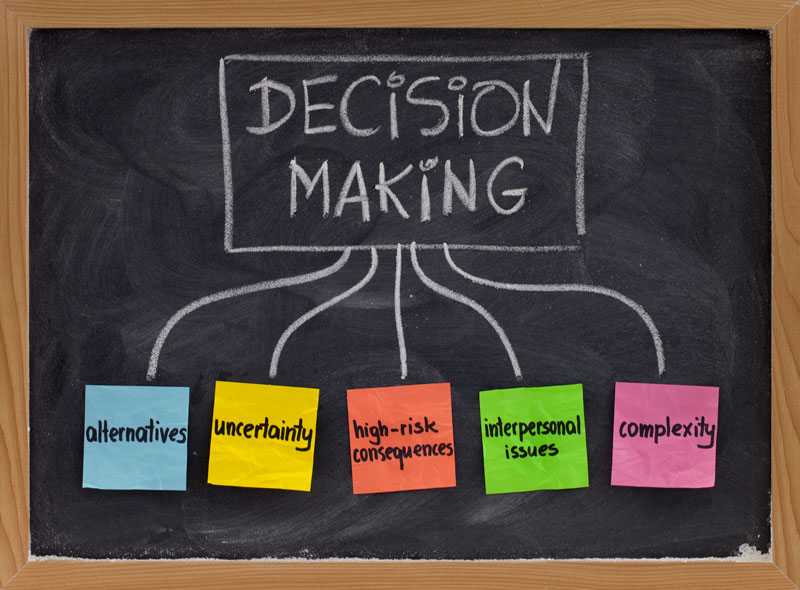
Seems counterintuitive right? How could it be that those seemingly irrational, often painful internal reactions (emotions) have any business in the world of rational decision making?
Many of us have accepted the tradition of believing that reason is the best guide to decision making and that emotions are a nuisance that needs to either be controlled or vented to get them out of the way of higher rational thinking.1
The truth is that we’re all much smarter than our intellects alone!1 Our emotions are a big part of the reason our species has survived for so long. Rational thinking helps us to thrive, but without emotions, we wouldn’t survive.2
For example, as Marsha Linehan, the founder of Dialectical Behaviour Therapy says, “if you decided to never feel afraid again, you’d end up dead pretty fast.”3 You wouldn’t know to avoid dark alleys that seem dangerous. Your rational mind may have heard some news reports on muggings in dark alleys, but without your fear response, you’d be unlikely to apply those warnings into your own life. First, if you feel some fear when listening to the news reports on dark alleys, your brain integrates the warning into memory much quicker and much more effectively than a piece of information that doesn’t generate any emotion. Second, when you approach the dark alley, you might feel some feeling in your gut or a physical instinct to run away from it. This is your fear emotion popping up to quickly remind you to stay away from an important source of potential danger. Once you feel that sensation in your gut or that urge to run, you can then integrate it with your rational thought (which happens much slower than your emotion brain) and determine whether it’s best to go through the dark alleyway or to go around it.
Humans are wired to integrate both emotional guidance with rational thinking. The trouble is that in Western culture, we’ve been taught to dismiss the important messages our emotions send us.
The Middle Path: Integrating Emotion with Rationality
Think of yourself on a canoe, travelling down the river. Over by the right bank of the river are the rapids (your emotion brain) and over by the left side, the river is really shallow (your rational brain). If you veer into the left, rational side of the river, you become reefed and your boat can’t go anywhere. But if you veer into the right side of the river you move too fast and out of control because you’re caught in the rapids! Dan Siegel calls these the “chaos and rigidity banks.”2
Life on the Rigidity Bank
We get stuck on the rigidity bank because without emotions we wouldn’t be motivated to do anything.
Think of the word E-motion – emotions move and guide us. “E” stands for energy, and motion directs us to act on our feelings. Some feelings are full of energy, like anger or fear. These high energy emotions guide us to act to protect ourselves or someone we care about. Other feelings like sadness or shame are very low energy. They guide us to pull back and take time to determine what our next steps should be in the face of a painful situation like losing a loved one. Emotions help us to determine what we need in each moment. The more we understand what we feel and how to move through those feelings, the more likely we can befriend our feelings and allow them to integrate into our everyday rational life.
Furthermore, to stay on the rigidity bank, we have to push our emotions aside, and I’m sure many of us have experienced the way emotions tend to come back with a vengeance when we haven’t listened to them. Life stuck on the rigidity bank simply isn’t realistic long-term, there’s nowhere to go. 1, 2
The Life of the Chaos Bank
On the other hand, if we’re caught in the rapids, we may have a sense of what we need but it’s much harder to determine how to responsibly execute it in a way that will be beneficial to us and to others.2
Remember the question of whether or not to go through the dark alley? If we’re stuck on the chaos bank, then we might run away and panic and have no idea why. When we veer back toward the centre of the river, we can remember some of the reasons that we might have felt that fear and then we can take a look around and determine how to feel safe again.
Floating Down the Centre of the River: Integration
The key to integrating our emotion mind with our rational mind is to remember to take a step back and give ourselves some time. Our emotion mind will tell us what we are needing in the situation, and our rational mind will remind us of what’s realistic.1,2
How to Practice Integrating Emotion and Reason
Take a moment right now to be curious about what you’re feeling in your body; maybe you feel some tightness in your chest, some heaviness in your eyes or even a pit in your stomach. That’s where your emotions are sitting. In other words, when you have a “gut feeling,” your body is trying to tell you something important and you need to take a moment to listen to it.1
It might be really uncomfortable at first, but if you start noticing what’s happening in your body at any given time, you’ll also start having a better sense of how you really feel in a situation. Once you can name what’s going on it your body, you can then name your emotion. Once you have your emotion, you can start to make sense of it an decide what to do with it. That’s where your reason comes in. The magic is in the integration.1,7
This is tough work that you don’t have to do alone. A Registered Clinical Counsellor can help you to figure out how to integrate your emotion and rational mind in a way that makes sense for you. It’s also a great idea to get into the practice of regularly scanning your body for sensations. This makes it easier to know what you’re feeling at moments where it really counts.1,9
Just as Mister Rogers said,
“Anything that’s human is mentionable, and anything that is mentionable can be more manageable. When we can talk about our feelings, they become less overwhelming, less upsetting, and less scary. The people we trust with that important talk can help us know that we are not alone.”
When we begin to attend to our emotional sensations, we can start to name them. When we can name them, we can learn to manage them and integrate them into our decision making to help us live a balanced life.
To get started, check out some free online guided body scans can be found here:
If you’d like some help moving forward with integrating your emotions, contact us and give us a call. We’d be happy to sit down with you.
References
- Greenberg, L.S. (2015). Emotion-Focused Therapy: Coaching Clients to Work Through Their Feelings. American Psychological Association: Washington DC.
- Siegel, D. J., & Bryson, T. P.(2011). The whole-brain child: 12 revolutionary strategies to nurture your child’s developing mind. New York: Random House.
- Linehan, M. (2018). DBT Skills. Retrieved from https://app.psychwire.com/courses/c2629l/course
- Living Well (2018). Body Scan. https://www.livingwell.org.au/mindfulness-exercises-3/6-body-scan/
- Neff, K. (2018). Self-Compassion. https://self-compassion.org/
- Rogers, F., & Neville, M. (2018). Won’t You Be My Neighbor? Tremolo Productions:
- Thiruchselvan, R., Hajcak, G., & Gross, J.J (2012). Looking inward: Shifting attention within working memory representations alters emotional responses. Psychological Science, 23(12). https://doi.org/10.1177/0956797612449838
- Yip, J.A., & Cote, S. (2013). The emotionally intelligent decision maker: Emotion-understanding ability reduces the effect of incidental anxiety on risk-taking. Psychological Science, 24(1). https://doi.org/10.1177/0956797612450031
- Goleman, D. (2017). How emotionally self-aware are you? Mindful, 36. Retrieved from https://www.mindful.org/emotionally-self-aware/

by Andrew Neufeld | Oct 25, 2018 | Depression, Emotional, Neurofeedback
Neurofeedback is one of the most amazing technologies at our disposal for so many reasons. It’s an invaluable tool for overall resilience, cognitive flexibility, mental health management, sleep enhancement, and so much more. One of the most common questions I get, however, is how on earth does it work? I’m going to do my best to explain it here for you!
Dynamic Neurofeedback Training
The type of neurofeedback training that we use here at Alongside You is called dynamic neurofeedback. What this means is that our neurofeedback system constantly monitors the brain using electroencephalography (EEG) and provides feedback to train your brain. To put this into perspective, our system monitors the brain 256 times per second. That’s a lot of feedback!
The feedback happens through video and audio sources. During neurofeedback training, you’ll be watching a computer screen that displays a variety of moving images and listening to an audio soundtrack. The neurofeedback system monitors your brain activity through EEG, and when it senses that your brain activity on the various wavelengths is outside of the optimal range for your brain, it interrupts the video and audio signals briefly. Because this interruption is tied to your specific brain activity, your brain knows to connect the dots. This allows your brain to know what it is doing at that point in time, and adjust accordingly.
I Still Don’t Get How It Works Andrew!
Let me explain a little bit more then! One of our misconceptions is that because our brain is constantly working, it must know what it’s doing at all times. This is unfortunately not the case. It’s like when I grew around 6 inches in one year, I kept walking into door frames because I didn’t realize where my shoulders were in 3-D space! What our brain is able to do, however, is adjust itself for optimal health if it has the information it needs. Neurofeedback training is what helps provide the necessary information for the brain to change itself.
Imagine you’re driving. Anyone who has driven for any length of time knows that the mind wanders sometimes. Every once in a while, we’ll wander too far to the right and our right tires will go over the shoulder, and we’ll feel a rub strip or gravel under the tires, and hear a noise that signals to us that we are over the shoulder. What happens next is automatic – we naturally move over to the left a little bit. We generally don’t even need to think about it, we just do it. This is analogous to what happens with our brain during neurofeedback training. The interruptions in the audio and video signal to the brain where it is on the wavelengths. The brain uses this information and adjusts itself accordingly. Over time, this training helps the brain stay within the optimal range on the various wavelengths on an ongoing basis.
How Long Does Neurofeedback Training Take?
This is the million-dollar question! It’s also an understandable one. We all want to know how long something is going to take. It’s really no different than wanting to know how long counselling is going to take. Unfortunately, the answer may not be any more gratifying than the answer to how long counselling is going to take: it depends.
Here’s the truth – it depends because every brain is different. It’s also challenging to predict because dynamic neurofeedback training is not a specific treatment for a specific symptom, it is a whole-brain training aimed at helping the entire brain function better. Because of this, we can’t claim that neurofeedback will cure your anxiety, depression, or otherwise. What we can say, however, is that by helping your brain to function better, symptoms that exist because your brain is not functioning at its best are likely to improve. What I can say, is that this has definitely been my experience in working with clients with neurofeedback. Symptoms of concern do improve, our ability to manage any remaining symptoms gets better, and we become more flexible and resilient, but it takes time.
It may be helpful to think of neurofeedback training as gym training for your brain. When we go to the gym, we don’t see much improvement after one workout. We see improvement over a series of workouts, and over a consistent effort to train. How fast each of us builds muscle, and get in shape depends on a whole lot of variables, so in the same way, we can’t predict how long it’s going to take for you to build the muscles you want and get in the shape you’re looking for. What we do know, however, is that if you train consistently over time, you’ll build muscle, and you’ll get in better shape.
How Do You Know It Works?
This is a great question. Monitoring brain changes can be challenging, but here’s how we do it. Before you start, we use a variety of tracking tools to track the symptoms you have concerns about, and over the course of the sessions, we repeat these tracking tools to look at improvements. In addition, we check in with you each session to see how things are going and what you’re noticing. The true indication of whether it’s helping is the answer to a very simple question: “How do you feel now versus how you felt before we started?” Sometimes it’s hard to notice the shifts, and this is where we can also help you monitor by asking the right questions to pick up on shifts.
I have noticed significant positive results in my clients who have done neurofeedback training. In fact, it’s uncanny how positive it has been. I hope this article has helped explain a bit more about neurofeedback, how it works, and how it might be helpful. If you have any more questions, give us a call and we’d be happy to answer them!

by Alannah Mcintee | Oct 4, 2018 | Counselling, Depression, Emotional
Grief is a normal emotional process that happens when adjusting to a loss or change. It happens not only when someone has died, but also after things like a job loss, the ending of a relationship, or while anticipating a future loss. Grief is a complex process that has no concrete roadmap, but there are some common factors that influence the process we go through. Some of these factors are:
- Our relationship with the individual who is gone
- The circumstances surrounding the loss
- Our current coping mechanisms and how past emotional distress has been handled
- The availability of support networks while we grieve
(Living Through Loss, 2017)
No matter what we are grieving, it is difficult, painful, and exhausting.
Part of the difficulty in grief, as I alluded to above, is that the roadmap isn’t clear. What we do know, however, is that there’s no right or wrong way to grieve. It is okay to feel relief, emptiness, or nothing at all when coping with a loss. It’s also okay to cry, feel physically exhausted, be angry, or struggle with feelings of guilt. Grief is a process that is unique to each person and so our bodies and our minds will respond as best they can in whatever way they feel is best for us to move on; in other words, they do the best they can at the time, with what they have to work with.
Sometimes the timeline of grief can be a challenge. Often, we expect ourselves, or even others expect us to move through the grieving process more quickly than we’re able to. It’s important to know that it’s okay to take as long or as little time as we need to move forward. Given the popularity of the five stages of grief (denial, anger, bargaining, depression, and acceptance), many people believe that they need to go through these five stages linearly to move forward (Living Through Loss, 2017). That may be the case for some people, but it is not for everyone. As mentioned above, people experience a wide range of emotions and experience grief in different ways so their grieving process may not always be forward moving. Sometimes we get stuck, sometimes we go backwards, or sometimes we’re all over the place and have a mix of good days and bad days, which sometimes ends up looking like a mess.
How do we manage while all of this is happening? With how intense and exhausting grief can be, it is vital that we take care of ourselves. Often, we’re so overwhelmed we can’t even think of how to take care of ourselves. Here are some suggestions for ways you can practice self-care while going through the grieving process:
- Avoid drugs and alcohol since they may make you feel worse
- Avoid isolating yourself and find support from a friend or counsellor
- Get lots of rest. Grieving is exhausting, so you will likely be more tired than usual
- Drink lots of water and try to eat the best you can, and try to avoid sugar and caffeine
- Exercise, even if it’s only going for a walk around the neighbourhood
- Give yourself time and permission to mourn as often as needed
- Do things that make you feel good such as journaling, art, listening to music, reading
- Be kind to yourself. You’re doing the best you can
(Living Through Loss, 2017)
After some time, we will adjust to our losses. It’s hard work and takes time, but eventually, we can come to terms with what has happened, grieve and mourn our loss, and move forward. However, some people find themselves stuck. This experience has been described as something called Complicated Grief. Some of the signs of complicated grief are:
- Being unable to move on
- Being unable to carry out everyday routines
- Isolating yourself
- Feeling intense loneliness or numbness
- Feeling extreme sorrow, pain, or depression
- Feeling that life has no purpose
- Ruminating or experiencing intrusive thoughts about your loss
- Wishing you died with your loved one
(HealthLinkBC, 2017)
If you notice that you or someone you care about are experiencing any of these symptoms, then may be time to seek out professional help such as counselling. Therapy can give you a space to talk about your loss and help you to work through your thoughts, feelings, and memories relating to your experience. Counselling can also help to identify and work through any potential trauma relating to the loss and helping you to adjust to this change.
I hope this article has been helpful if you’re experiencing grief and loss. We’ve all been there, and some of us are there right now with you. If you could use some help as you walk through this journey of grief, we would love to talk to you. Please give us a call or contact us anytime, we’re here.
References
Complications of Grief. (2017). Retrieved from https://www.healthlinkbc.ca/health-topics/aa129291
Grief and Loss Resources. (2017). Retrieved from https://livingthroughloss.ca/