Are You New to this Therapy Thing?

Are You New to this Therapy Thing?

New to Counselling?

Are you new to this counselling thing? Are you contemplating giving it a try? Do you need to go to counselling? Or just curious as to what the fuss is all about? 

Well, here’s my attempt at giving you a little glimpse into the beauty of this phenomenon that is growing in its cultural acceptance and perhaps this can help you figure out whether signing up for counselling is the next right move for you. I speak as a fellow human who has attended counselling and as a therapist who has sat opposite to many who have courageously sought out help through the medium of therapy.

Here are some stats to gain a wider picture:

  • Statista conducted a survey of 1,650 people ranging from 18 years and older in 2020 via telephone interview. They asked the respondents, “in the past 12 months, have you received any counseling or treatment for your mental health?” 43.7% of respondents from British Columbia said “yes.” New Brunswick wins (or loses depending on how you look at it…) at 60.1% of respondents responding with “yes.” Manitoba was the lowest at 27.7%. 
  • Another study found that between 2019 and 2021 the percentage of adults who had received mental health treatment in the past 12 months grew from 19.2% to 21.6% (Terlizzi & Schiller, 2022). 
  • Statistics Canada found that in 2018 17.8% of Canadians aged 12 and older reported needing some help with their mental health. This is around 5.3 million people. That’s a lot of people! Out of that 5.3 million, 43.8% reported that their needs were either not met (they did not go to therapy) or were partially met (they went to therapy but it was not enough).

What do these three sources tell us? 

Simply put, therapy is being accessed more and more. Perhaps, we are catching on to the fact that our mental health is worth investing in. It really is. Gone are the days when therapy was reserved for those that we lazily labeled (or diagnosed) with words like “crazy” or “problematic.”

5.3 million Canadians acknowledged the need for assistance with their mental wellbeing. 

Deeper than just being accessed more, these studies are perhaps a helpful reminder that you are not alone, not part of a small fringe group, but… dare I say… human. Not yet got this “life” thing figured out. Normal? I think so.


What Does Therapy Look Like?

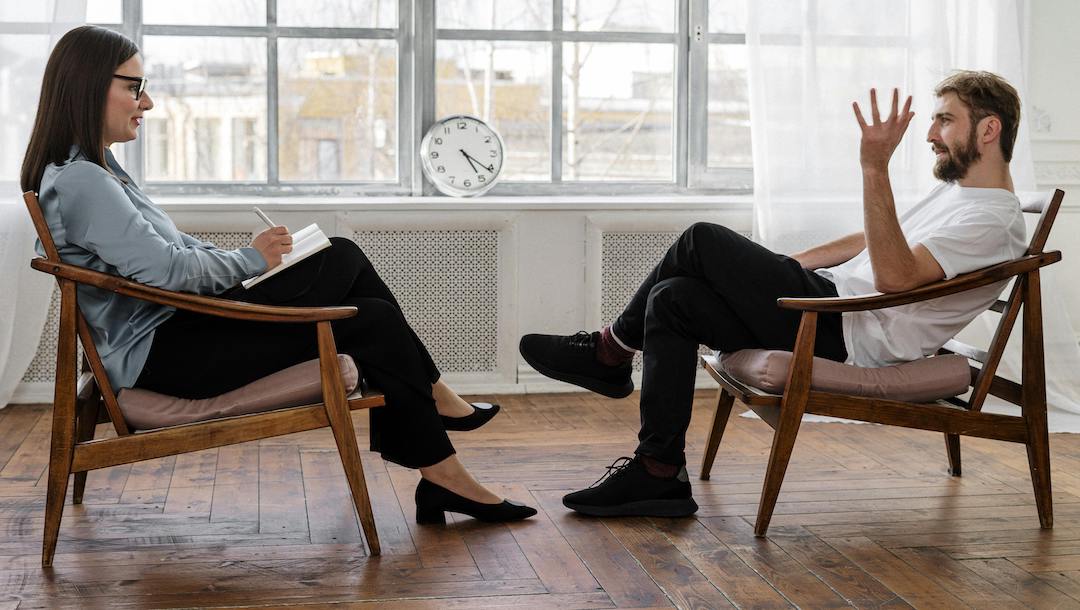
So, if you’re new to this or not yet bought into it, give me a moment to paint a picture of what it looks like: 

You arrive in a cozy office, sit in the waiting room, another fellow human – your counsellor – will arrive and call your name, together you’ll enter a room with a couch and perhaps a few chairs. You sit down. And then…

This is what you may see on the outside but so much is happening internally. 

You are setting out on a grand adventure. 

You are escaping the noise and bustle of every-day life.

You are marching out into battle. 

You are sitting by a warm fire on a stormy winter evening.

You are resolving unfinished business.

You are tending a wound that no-one around you sees.

You are aspiring and hoping for who you could become.

You are settling into who you are, becoming more at home in your own skin.

If you break your arm, you go to a doctor. This doctor will first assess your injury and then set you off on a path of healing and recovery – aligning your arm, bracing it, and advising you on what activities may or may not be achievable in light of your wound. 

In a similar way, you may have experienced various psychological/relational/emotional challenges – a huge setback in your work life and left feeling fragile, recurring conflict in your most intimate relationships, abuse from people that were supposed to be your protectors – and the question remains: where do I go to sort through/respond/heal these challenges?

The added challenge of mental health is its invisible quality, which leaves us vulnerable to the pushback: “is this just in my head? Can I just push through and deal with this?” A broken arm just seems so simple and obvious. However, mental pain and suffering left unattended can fester in similar ways than an untreated wound. Though, it may come out in angry outbursts, tension in your shoulders (perhaps its not so invisible…), the inability to know what you feel, a low sense of self-worth, or intrusive thoughts that plague you every time you slow down. 

This is where counselling becomes useful in attending to your mental well-being. It is true that humans are resilient and often, even after experiencing traumatic life events, people bounce back with courage and vitality. And yet, counselling is a protected space to address and tend to our relational, emotional, personal challenges.


How does counselling accomplish change?

At very least it accomplishes this through undoing our unbearable aloneness. Dr. Diana Fosha passionately declares that our relational, emotional, personal challenges largely stem from “being alone in the face of overwhelming emotion” (Fosha, 2000). Thus, therapy, at its best, works to undo aloneness.

Judith Herman, the legendary trauma therapist, writes that “the fundamental premise of the psychotherapeutic work is a belief in the restorative power of truth-telling” (Herman, 2015, p.181). In the presence of another human, can you share honestly how you are doing? Can you express, in detail and with clarity, the truth of your being? As you dive into the biggest challenges that seem to plague your life through this act of “truth-telling”, you are met with wise attentiveness and deep compassion.

Bessel Van Der Kolk, the medical director of the Trauma Center in Brookline, Massachusetts, says “being able to feel safe with other people is probably the single most important aspect of mental health; safe connections are fundamental to meaningful and satisfying lives” (Van der Kolk, 2015, p. 81).


A Safe Relationship

Do you have relationships marked by trust, safety, honesty? How can you tell?

Bessell highlights the importance of each of us being heard and seen by another person in our lives. We need to be held in someone else’s mind and heart. He writes, “no doctor can write a prescription for friendship and love; these are complex and hard-earned capacities” (Van der Kolk, 2015, p. 81).

Do you feel a desire to be met with this sort of attentiveness and care? Does it feel too good to be true? Too simple? Fair responses. A helpful question to explore is what the costs are for not receiving this hard-earned capacities? 

I know I need them. And as I step into vulnerability—this act of receiving and trusting—I find myself walking lighter, thinking with greater clarity regarding my relationships and problems, and feeling more at home in my body and in this world. Perhaps you could call it feeling mentally healthy.

I encourage you to find relationships that are characterized by these qualities. Whether or not they are counsellors. It will change your life. It’s changed my life.

Here at Alongside You, these quotes inspire our work; We offer award-winning counselling services that are shot through with these qualities: a safe context to be seen, held in the mind of another, and this “hard-earned” love that Bessell speaks about. If you wish to learn more, contact us to see how we can help.


References

Elflein, J. (2022, August 31). Adults who received past-year Mental Health Counseling Canada 2020. Statista. Retrieved from, https://www.statista.com/statistics/1328941/adults-who-received-past-year-mental-health-counseling-canada-by-province/ 

Facts and figures. Fraser. (n.d.). Retrieved from, https://vancouver-fraser.cmha.bc.ca/impact/influencing-policy/facts-and-figures/#:~:text=Between%2019.6%25%20and%2026.2%25%20of,a%20mental%20illness%20each%20year. 

Fosha, D. (2000). The transforming power of affect: A model for Accelerated Change. Basic Books. 

Herman, J. L. (2015). Trauma and recovery. Basic Books.

Statistics Canada. (2019, October 7). Mental health care needs, 2018. Health Fact Sheets. Retrieved from, https://www150.statcan.gc.ca/n1/pub/82-625-x/2019001/article/00011-eng.htm 

Terlizzi, E. P., & Schiller, J. S. (2022). Mental health treatment among adults aged 18-44: United States, 2019-2021. US Department of Health and Human Services, Centers for Disease Control and Prevention, National Center for Health Statistics.

Van der Kolk, B. A. (2015). The Body Keeps the Score: Brain, Mind and Body in the Healing of Trauma. Penguin Books.
Why I’m Optimistic in 2023

Why I’m Optimistic in 2023

Finding Hope in a World Full of Challenges

Reflecting on the past year, it’s easy to feel discouraged. We are facing multiple ongoing crises in mental and physical health, the environment, economic inflation, political divisiveness, civil unrest, and war. Social injustice remains rampant. These concerns should not be dismissed, and I want to start by emphasizing that optimism in no way neglects their importance. Nor do encouraging statistics take away from the fact that every needless death is a tragedy.

However, it’s also important – for our own sanity – to consider the good news. I often describe to my clients how our brains are hard-wired to pay more attention to negative events or feelings than positive ones. This is a well-studied psychological phenomenon known as negativity bias. It can lead to rumination and even depression. We recall criticism better than praise. We remember negative events more strongly than positive ones, and think about bad things more frequently than good things. Counterintuitively, our brains do this for our own benefit. It is far more important for survival to know where the dangers are than to take time to appreciate the wonders of life!

We see this reflected in our news and social media: negative and alarming news grips our attention, and so it gets more airtime. We click more frequently on alarming headlines, so they get published more often. This amplifies the illusion that the world is threatening by default.

We cannot make effective change when trapped in a state of despair. To avoid such a toll, it is important to balance our negativity bias with mindful awareness of what’s going well. And it turns out there are many, many good things happening!

Discovering Optimism

One antidote to the prevailing doom-and-gloom narrative of our time can be found in Matt Ridley’s Book The Rational Optimist. He uses hard data and historical analysis to show that we have made incredible progress in recent centuries, and this trend of increased prosperity is likely to continue as we innovate and adapt to ever-changing circumstances.

Another important book is the late brilliant physician Hans Rosling’s Factfulness: Ten Reasons We’re Wrong About the World–and Why Things Are Better Than You Think. He writes:

“Every group of people I ask thinks the world is more frightening, more violent, and more hopeless—in short, more dramatic—than it really is.

Uncontrolled, our appetite for the dramatic goes too far, prevents us from seeing the world as it is, and leads us terribly astray.

Step-by-step, year-by-year, the world is improving. Not on every single measure every single year, but as a rule. Though the world faces huge challenges, we have made tremendous progress. This is the fact-based worldview.”

Such thinking is not new, either. Even back in 1830, British historian Thomas Macaulay posited:

“Hence it is that, though in every age everybody knows that up to his own time progressive improvement has been taking place, nobody seems to reckon on any improvement during the next generation. … On what principle is it that, when we see nothing but improvement behind us, we are to expect nothing but deterioration before us?”

So, what exactly is all this progress that thinkers like Ridley, Rosling, and Macauley are talking about? Here are some examples.

Good News for a Change

Poverty is declining.

Globally, the number of people living below the poverty line (defined as living on less than $2.15 USD a day, in 2017 dollars) fell from 2.01 billion people (37.8% of the population) in 1991 to 648 million people (8.44% of the population) in 2019. It is still too early to calculate precisely how the covid-19 pandemic affected this trend; preliminary estimates indicate it may have pushed 70 million people or about 9% of the population back into extreme poverty in 2020. Yet the overall trend continues as it has for past decades. In 2017 renowned economist Max Roser commented that “Newspapers could have had the headline ‘Number of people in extreme poverty fell by 137,000 since yesterday’ every day in the last 25 years.” For more insights, see his excellent research website Our World in Data.

Population growth is stabilizing.

Although the global population is still growing, the rate of growth has been slowing down since 1968 in an accurately predicted manner. The population is expected to peak somewhere around 10.4 billion people in the year 2100, and then decline. With reduced poverty comes gains in education and health, and declines in child mortality, all of which are associated with lower birth rates.

The rapid decline in child mortality deserves its own emphasis: Hans Rosling once stated that “child survival is the new green.” According to his educational website Gapminder.org, “saving poor children is an important factor in ending both poverty and population growth. The death of children is not holding back population growth. It is one of the reasons poor people still have many children.” People have less children when they do not need to worry about whether or not those children will survive to adulthood.

Medical advancement continues at an astonishing pace.

Life expectancy is rising everywhere. People around the world are living longer and healthier lives, thanks in part to advances in medicine as well as increased access to nutrition and education. From vaccines that have eradicated deadly diseases like smallpox and polio to new treatments for chronic conditions, the progress in medicine is astounding.

For example, new medical technology allows us to identify cancer and other diseases earlier, leading to better treatment outcomes. Targeted therapies are becoming more widely available, less invasive, and more effective than traditional treatments like chemotherapy. Midstage trials are providing renewed hope for the development of vaccines against various cancers.

Genetics represent another marvel of medical advancement. Knowledge about the genetic basis of diseases helps improve diagnoses and treatments. Researchers are making significant progress in developing gene therapies that can cure sickle cell disease, HIV/AIDS, and other debilitating diseases. Genetic testing is now available for certain inherited conditions, like Huntington’s disease, which can help people make more informed decisions about their health and their future.

We are also making progress towards treatments for amyotrophic lateral sclerosis (remember the ice bucket challenge in 2015?) and Alzheimer’s disease. The development of robotics has transformed surgical procedures, resulting in faster recovery times and fewer complications. Telemedicine makes healthcare more accessible and convenient. Wearable tech like smartwatches and fitness trackers can monitor vital signs and alert patients and their physicians to potential health issues.

Mental health care is advancing too!

Technology is helping mental health treatment as well. Our clinic and many others offer secure telehealth appointments, so that remote clients can get the same treatment as everyone else. We utilize cutting-edge measurement-based care platforms such as Greenspace to monitor mental health outcomes and help clients gain insight into treatment progress. Apps like How We Feel and Calm help clients develop emotional intelligence and mindfulness skills in an easy, approachable way. Neurofeedback is another relatively recent technology that provides an excellent alternative (or complement) to traditional talk therapy.

There are many more examples of medical innovation, and it may take time for some of these gains to become sufficiently accessible. But every day we are making great steps towards a healthier world.

There’s still time for the environment.

There’s no denying the reality that ecological sustainability and preservation are serious concerns. It seems likely we will overshoot 2.5°C of global warming, leading to severe weather events, expansion of deserts, food insecurity, animal species extinction, and economic harm. However, we can take solace in the fact that many initiatives are working, and progress is being made.

Many countries have reduced their greenhouse gas emissions while increasing their GDP. The world is making great strides towards clean and sustainable energy. Renewable energy sources like solar, wind, and hydro are becoming more accessible and affordable. Even though nuclear energy has suffered tragic accidents, it remains one of the safest and cleanest forms of energy when compared to death rates from air pollution created by fossil fuels. Fourth-generation nuclear reactors currently being developed will be even smaller, safer, and more efficient with far less nuclear waste produced.  Scientists are making important discoveries towards fusion power, which has the potential to radically transform the world’s energy usage.

Another real concern is deforestation, but let us remember the wise words of Mr. Rogers concerning catastrophes: look for the helpers. Organizations like Cool Earth, which I fundraised for in 2019 and continue to support, are doing excellent work in this field. And we have data to support progress: a 2018 study published in Nature (one of the top scientific journals) identified with confidence that global tree cover has increased 7.1% since 1982.

Less harm from natural disasters

Furthermore, improvements in infrastructure and emergency preparedness have significantly reduced annual deaths from natural disasters, which were 3.7 million in 1931 and only 13,008 in 2022. Although we cannot prevent events like earthquakes, we can prevent high losses of life. The numbers prove that our efforts are working.

Admittedly, the tasks ahead will not be easy. But there is strong evidence that human effort and adaptability will allow us to fight current environmental threats and build a more sustainable world.

The world is more peaceful than ever before.

Given the widespread destruction and devastation in the first half of the 20th century, it is notable that the world has not seen a major global conflict in the past 78 years. Even considering the recent Ukraine conflict, warfare today is less frequent, less lethal, and more localized. While nobody knows the future for certain, there are reasons to believe that this calm and stability will persist. The globalization of trade means that the citizens of other countries are worth more to a nation alive than dead. As quality of life improves, we have less reason to engage in the discomforts of violence and vengeance. Institutions such as the United Nations have been developed to foster diplomacy, and cooperation has become more productive than armed invasion.

Violent crime is trending downwards as well. And the number of terrorist attacks and deaths from terrorism around the globe has dropped markedly since the 1970s (contrary to the over-representation of terrorism in the media, it accounted for just 0.05% of global deaths in 2017).

Overall, a person born in the world today is far less likely to be a victim of violence than a person born at any prior time in human history. That’s a remarkable achievement!

Basic needs are becoming more affordable.

It may be hard to believe, but it’s true: basic needs such as food, water, healthcare, housing, and education are becoming more affordable around the world. We owe this development to government and non-profit initiatives to reduce basic costs to individuals and families, as well as advances in technology, transportation, agriculture, and the global economy (lower prices stemming from businesses competing on a global scale).

The International Telecommunications Union, a United Nations agency, reported in 2022 that the price of mobile-broadband services has dropped to just 1.5% of gross national income per capita. Almost two-thirds of the world population has access to the internet. This number continues to rise, along with ownership of mobile phones. With more accessibility and affordability, the world is also becoming increasingly connected. I believe that will be a very important part of furthering communication and cooperation to solve global challenges.

What Now? “Learned Optimism.”

I hope these examples have conveyed that there are many reasons to see hope in all our futures. Our natural negativity bias can lead to a sense of learned helplessness. I firmly believe in countering it by cultivating learned optimism. We are better equipped to take on problems when we have an accurate, factual view of the world. The overwhelming evidence shows that the future is looking positive!

Here’s another piece of good news: the myth-driven stigma around accessing mental health care is disappearing rapidly.

In my clinical work, I often draw upon dialectical behaviour therapy (DBT), which teaches skills to strengthen emotional resilience and build a life worth living. These skills include radical acceptance (seeing situations as they are and focussing on what you can control rather than what you cannot) and checking the facts (developing a more accurate and realistic understanding of a situation rather than relying solely on assumptions and emotions).

Therapy can be useful in overcoming negativity and developing a more positive outlook on life. This is not simply turning a blind eye to suffering. Instead, it is about developing the skills to face challenges with a helpful and more effective outlook.

If you’re struggling with negative thoughts or feelings of helplessness, it’s important to remember that you don’t have to face these challenges alone. Consider reaching out to our team of skilled clinicians to explore therapy options and start building a more helpful future.
Using Art and Mindfulness for Pain Control

Using Art and Mindfulness for Pain Control

Using Art and Mindfulness for Pain Control


“Art gives a face to the ambiguity of chronic pain…it gives a visual expression to something that is often elusive.”

– Dr. Steve Feinberg, American Chronic Pain Association


It’s Not Easy Being In Pain


How many of us have pinched a finger in a door, have sprained or broken a limb, have woken up with a back ache or gone to bed with a searing migraine? In some form or another, we can relate! After all, we are human. For some of us, however, either due to injury or illness, the pain never goes away. Day in and day out, pain follows us all the time. It is no surprise then, that pain impacts all aspects of our lives: our sleep, our ability to work or go to school, and even our social connections and family relationships. Using art and mindfulness for pain control can be an extremely helpful tool for our journey. Before we get into that, let’s look at some of the information on chronic pain and illnesses.


The Statistics


Did you know that nearly 8 million people in Canada live with chronic pain (or pain that persists for than three months)?i This means that 1 in 5 people suffer from prolonged pain. 1 in 5 children and youth experience ongoing pain and 1 in 3 adults 65 and older experience chronic pain.ii This can include but is not limited to conditions such as endometriosis, cancer, neurological disorders, fibromyalgia, and Lupus.

Like other chronic illnesses, the chronic pain experience is also impacted by other factors such as poverty, mental health and substance use issues, diversity in gender, race, ethnicity, abilities, and concurrent medical conditions.iii


The Stigma

 
Some of us have been on the receiving end of a dirty glare when parking in a handicap space, using the elevator meant for those with physical disabilities, or for not offering your seat on a bus to another person with physical disabilities. If only they knew! Because chronic pain is largely invisible, those affected by it can often feel disbelieved, unheard, or dismissed. The stigma builds as individuals are labeled as a “problematic and frequent patients,” mainly because they seek medical treatment regularly. The huge range of symptoms that one can have related to chronic pain makes it difficult to reach a diagnosis and plan for treatment. What begins is a search for effective, compassionate and quality help.
 

Facing Challenges

 
For people living with chronic pain or illness, getting help is not always straightforward.
In my own pain experience and in my work with others with chronic conditions, this seems to be a reoccurring experience. Navigating through our medical system is complex and confusing at times. For patients with chronic pain it’s certainly not a walk in the park!

To be fair, medical professionals do their best to care for their chronic pain patients but struggle to work within a health care system that is not always well-equipped to manage the complex nature of pain. With nearly 900,000 British Columbians without a family doctoriv, the limited amount of time with each patient, and long wait times in walk-in clinics and emergency wards, medical professionals are not always able to spend the time they need or want to with their patients.

As a result of this, chronic pain sufferers are faced with considerable challenges when seeking help?

  1. The need to review their medical history for every new practitioner. With each new doctor or specialist, patients are asked to review their medical challenges and ‘pain history’ and it is exhausting! If there is no continuity of care or no regular doctor who can follow your progress and prescribe effective treatments, those with chronic pain can be left with feelings of despair and frustration.
  2. Self-advocacy is hard. With many chronic pain symptoms being invisible, those of us with chronic conditions need to be forthright, consistent, and clear when we articulate our symptoms, and defend our state of being and need for treatment. This not a skill that everyone has and it forces already vulnerable people to go outside of their comfort zone or find an advocate who can be their spokesperson.
  3. It is hard to get timely help. It can take many months and even years to see specialists, receive surgery, or gain access to public pain programs. In the meantime, patients are left to cope, to seek out alternative forms of treatments. Sometimes it’s hard to know where to look, and see if they are accessible (financially, geographically, or demographically).
  4. Building a support network is not always easy or within reach. With prolonged reliance on friends and family for practical, financial, physical, emotional, and spiritual support, those with chronic pain may be left with changed or strained relationships. Asking for help regularly or relying on others may not always be an option due to life circumstances. Feelings of loneliness and of being a burden often weigh heavily on those with prolonged pain.


How Do We Address These Issues and Improve Quality of Life?

 
How many times have you heard, “You’re going to have to learn how to live with your pain?” We groan, yes, but it’s true. There is no magic wand, so how do we do this? The chronic pain experience is riddled with complexities; because it has both physiological and psychological components, taking a holistic approach in tackling chronic pain is the most effective treatment plan in retraining our body and brain. For a good discussion of the importance of a multi-disciplinary approach to pain management, check out this video.

When used together, interventions such as pain medication, surgical procedures, counselling, body work (occupational therapy, physiotherapy, massage therapy, exercise, acupuncture), and the arts (visual, performance, music, dance, literary), can reboot our nervous system, teach us productive skills to manage symptoms, and help us to connect with ourselves and others and have a better quality of life amidst our pain experiences.
 

The Role of Art and Mindfulness For Pain Control

 
Using the Arts and mindfulness for its health benefits is widely becoming a critical component of healthcare to positively enhance, impact, healv and strengthen overall health and well-being.vi Research shows that mindfulness, or the act of paying full attention to the present moment without judgement,vii is a very effective practice to provide relief for both physical and psychological symptoms of chronic pain. Jon Kabat-Zinn, leading researcher of MBSR (mindfulness-based stress reduction) advocates that mindfulness can alleviate symptoms of pain, reduce stress in the body, alter our negative thought distortions to more positive ones, create emotional balance, and enhance overall health.viii

It’s no surprise then, that combining the art making process with mindfulness can be an effective way to tackle pain management. The very act of creativity and expression can promote body awareness,ix be an effective practice for rehabilitation and lead to significant life changes. It also offers a tangible and fun way to learn mindfulness skills, and encourage self-compassionate creativity.
 

What types of art activities can we do to learn mindfulness?

 
There are a wide variety of artistic activities that can help us learn to be mindful. Here are a few ideas:

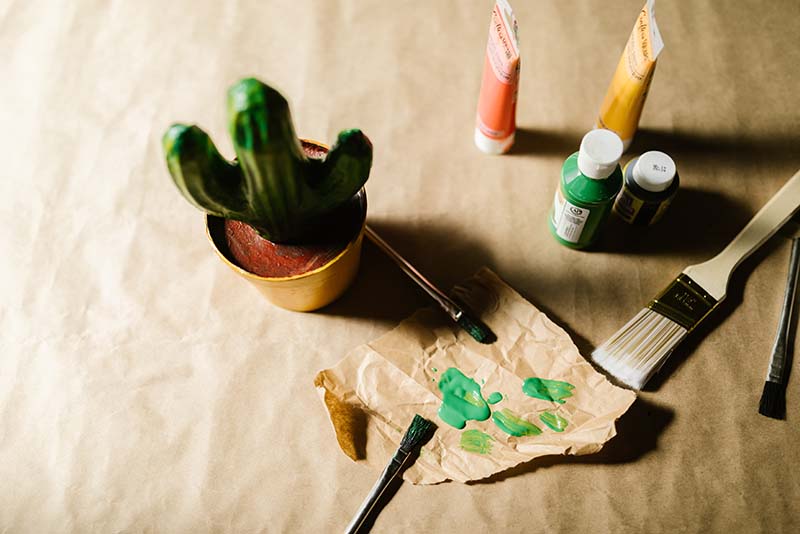
  • Activities such as drawing, paper marbling or knitting can provide temporary respite or healthy distraction from physical symptoms of pain,xi xii and allow chronic pain sufferers to lose themselves in the moment or artistic process.xii xiii
  • Reflective journaling and guided meditation connects both the physical body and the psychological mind, using the art making process to encourage positive self-care, and experimentation and risk-taking, two essential qualities of the art-making process.xiv
  • Creating a self-portrait or vision board is a way to explore understandings of self, improve self-confidence,xv process suffering or significant life changes, and provide a visual representation of the life you want to have moving forward.
  • Making art with others in a supportive environment can help us feel connected and understood by talking to others about pain experiences,xvi building companionship, and having a sense of belonging, and decreasing social isolation and loneliness.
  • Selecting from a range of colours, shapes or images in an art activity encourages experimentation,xvii affirms a sense of control over surroundings and the decision-making process, and builds upon and improves cognitive functions (memory processing and problem solving).xviii

 
Using art and mindfulness for pain control, along with healthy changes to our diet, sleep, and exercise regimes and with attentiveness to empathy and creativity can help lower stress levels, give our nervous system a rest, and helps to promote self-care habits. By using a variety of creative processes, health difficulties can be better expressed, understood, accepted, and help us build our resilience. xix

I hope this article has given you a taste of the benefits of using art and mindfulness for pain control. If you want to try something fun, meet others who understand and support you, and learn how to manage symptoms through the process of creating, join us in our Pain in the Arts class, where we will learn how to make art with a mindfulness lens.

If you want to learn more about our Arts in Health Program at Alongside You, please visit our page on Arts in Health.


i. Canadian Pain Task Force Report. 2021 Accessed July 13th, 2022. Link
ii. Canadian Pain Task Force Report. 2021 Accessed July 13th, 2022. Link
iii. Canadian Pain Task Force Report. 2021 Accessed July 13th, 2022. Link
iv. Xu, Xiao “Nearly 900,000 British Columbians don’t have a family doctor, leaving walk-in clinics and ERs swamped.” Globe and Mail. April 29 2022. Accessed July 13th. Link
v. Fancourt, Dr. Daisy; Warren, Katey and Augusterson, Henry. “Evidence summary for policy: The role of arts in improving health and wellbeing.” Report to the Department for Digital, Culture, Media, and Sport. April 2020. Accessed July 5th, 2022.
Link
vi. Link
viii. Gardner-Nix, Dr. Jackie and Lucie Costin-Hall. The Mindfulness Solution to Pain. New Harbinger Publicaitons, Inc. 2009: vii.
ix. Callahan, Margaret Jones. Mindfulness Based Art: The Sparks Guide for Educators and Counselors. Friesen Press. 2016.
x. Ann Behav Med. Eds. Mindfulness Meditation for Chronic Pain: Systematic Review and Meta-analysis.2017 Apr;51(2):199-213.Link
xi. Kabat-Zinn, J., Lipworth, L. & Burney, R. J The clinical use of mindfulness meditation for the self-regulation of chronic pain. Behav Med (1985) 8: 163.
xii. Dr. Daniel Potts. How art therapy enhances the life for Dementia Patients. 2014. Accessed September 15th, 2016. Link
xiii. “The Art of Pain Management.” American Chronic Pain Association: Link
xiv. McNiff, Shaun. Chapter 2: The Role of Witnessing and Immersion in the Moment of Arts Therapy Experience. P. 41. In In Mindfulness and the Arts Therapies: Theory and Practice. Laury Rappaport ed. Jessica Kingsley Publishers. 2014: 38-50.
xv. McNiff, Shaun. Chapter 2: The Role of Witnessing and Immersion in the Moment of Arts Therapy Experience. P. 40. In In Mindfulness and the Arts Therapies: Theory and Practice. Laury Rappaport ed. Jessica Kingsley Publishers. 2014: 38-50.
xvi. Monti, Daniel W., Caroline Peterson, et al. A Randomized, Controlled Trial of Mindfulness-based Art Therapy (MBAT) for Women with Cancer. Thomas Jefferson University, Philadelphia, PA, Psycho-Oncology 15:363–373 (2006)
xvii. McNiff, Shaun. Chapter 2: The Role of Witnessing and Immersion in the Moment of Arts Therapy Experience. P. 41. In In Mindfulness and the Arts Therapies: Theory and Practice. Laury Rappaport ed. Jessica Kingsley Publishers. 2014: 38-50.
xviii. Quintana Hernández DJ et all. The effects of a neuropsychology program based on mindfulness on Alzheimer’s disease: randomized double-blind clinical study. Revista Espanola de Geriatria y Gerontologia [2014, 49(4):165-172]
xix. McNiff, Shaun. Chapter 2: The Role of Witnessing and Immersion in the Moment of Arts Therapy Experience. P. 40. In In Mindfulness and the Arts Therapies: Theory and Practice. Laury Rappaport ed. Jessica Kingsley Publishers. 2014: 38-50.
Arts In Health – Why We Should Be Using Art In Healthcare

Arts In Health – Why We Should Be Using Art In Healthcare

What is Arts in Health?


The idea that The Arts have a role in the health of individuals and communities has a long history in cultures around the world.i Arts in Health (also known as Arts in Medicine or Art in Healthcare) incorporates The Arts (visual, performing, literary, music, and dance) to support and enhance the continuum of care and plays a critical role in the overall health and well-being of people seeking help for various conditions.

This growing field of research and inquiry is developing world-wide, especially in The United Kingdom, Australia, the United States, and across Europe.ii Increasingly, medical professionals are ‘socially prescribing’ non-medical, community-based activities and services that provide patients and practitioners greater health options when faced with complex medical and social problems.iii Though not as developed as in other countries, there are various health initiatives that incorporate The Arts with diverse creative holistic approaches to health across Canada.iv

This multi-disciplinary approach to health is becoming recognized both as an effective and creative way to positively impact health outcomes in both inpatient and outpatient healthcare and community settings, and boost mental, emotional, social, physical and brain health.

Specifically, participating in the art-making process:


  • Reduces stress, anxiety and depressionv
  • Improves self-confidence,vi self-awareness and empowermentvii
  • Encourages positive self-care skills
  • Provides a supportive setting to socialize, decreasing loneliness and social isolation
  • Is an effective preventative tool to manage symptoms of chronic pain and illness, and diseases such as Dementia, or Alzheimer’s disease
  • Improves and maintains neuro-spatial functions, memory processing and problem solving as we ageviii
  • Fosters emotional resilience, confidence, and personal growth
  • Is a healthy outlet and distraction tool to heal from physical, emotional, and psychological issues

To learn more, check out this infographic based on the research of Alain De Bolton and John Armstrong “Art As Therapy.”


Where does Arts in Health take place and what does it actually look like?

 
If you have ever been to a museum, a hospital, or community-based care home, you have most likely come across both art work and programs that fit under the umbrella of Arts in Health.

Museums and art galleries are accessible places where art can be viewed, questioned, created and bought. Artists and craftspeople are culture makers; they often play a huge role in cultural education and wellness. They are catalysts and bring people together through exhibitions, celebrations, ceremonial performances, and demonstrations. Artists can also showcase their work and sell their handcrafted art pieces.

Art work or painted murals are displayed in hospitals in hallways, waiting rooms, intensives care units, palliative and hospice wards, treatment and operating rooms and children’s wards. Outdoor art installations are also found on hospital grounds, music is played in high stress areas to benefit the patients and health-care staff, art activities are used at bedsides or during treatment (chemotherapy, radiation, and dialysis).

Community-based organizations such as rehabilitation and addiction centres, women’s shelters, day programs for people with diverse abilities, and immigrant services are just a few examples of where recreational forms of art-making are used to strengthen, to heal, and to communicate.
 

Who Benefits from Arts in Health Programs?

 
Along with other therapeutic interventions such as counselling, neurofeedback, Dialectical Behavioral Therapy (DBT), Cognitive Behavioral Therapy (CBT), occupational therapy and physiotherapy, The Arts allows us to discover, explore, practice, connect not only with others, but with ourselves. More specifically:
 

  • Kids and Teens: Approximately 20% of Canadian youth are affected by a mental illness or disorder.ix Extracurricular activities such as art making can be especially beneficial for both teens and children because it provides a fun, non-threating, and inclusive setting where they can be introduced to new skills, learn coping strategies, shore up defenses and can develop deeper understandings of themselves and others.x
  • Socially Isolated Individuals: Approximately 1 in 5 Canadians say that are not satisfied with their number of friends.xi Loneliness is real. Making art with others can promote social satisfaction and allow individuals to connect with others with similar interests
  • Caregivers or other individuals with overwhelming stress and anxiety: Using The Arts is good place to begin when coping with the stresses of everyday life. Picking up a paint brush or writing in a journal can be small but positive self-care steps to improve everyday life
  • Individuals with diverse needs, abilities, and diagnoses: People with diverse physical, intellectual, developmental, and emotional needs thrive when art activities are tailored to suit their individual interests and needs. Those with chronic pain or illnesses also benefit from the art making experience which helps in pain management
  • Individuals who just want to have fun! Making art in a beautiful space with a variety of different art, alongside others can really boost our mood. We can also receive individualized and collective support and guidance while working on creative projects
  •  

    Who is considered an Arts in Health practitioner?

     
    Arts in Health practitioners are composed of a variety of individuals: professionally trained artists, artists-in-residence, expressive arts practitioners (who use multiple forms of art), arts or health educators, art consultants, community-based support staff, other health-care professionals, recreational instructors in hospital or community programs, or other creative individuals who incorporate art in health disciplines.xii

    These practitioners provide patients, family members, and caregivers with opportunities for creative engagement in a variety of ways. Many artists are involved in fundraising efforts for health-related causes. From auction items, art commissions, internet sales, art shows, and community events, artists are uniquely woven into the commercial market, bridging artistic development to benefit healthcare initiatives. It is common for artists to work as educators inside schools or workplaces. They lead students, teachers, businesses and organizations in creating collaborative art pieces, and provide training and professional development on how to practice self-care and how to infuse wellness in their classroom or organization.

    Artists have always played a pivotal role in places of religious expression and places of worship, such as churches, mosques, temples and more. They help bridge creative expression (music, building architecture, prayers) with spiritual health and healing.

    Musicians, performance artists, dancers, visual and literary artists play a huge part in improving our collective quality of life, especially during challenging times. Throughout the pandemic, we have seen how The Arts have brought us together and helped us cope anxiety and stress.
     

    So why does Arts in Health matter?

     
    Increasingly, the health-care system is going thought a shift, one that focuses on treating the whole person (body/mind/soul), not just the condition. Medical programs are integrating the arts into training, teaching and research because of the overwhelming evidence-based research that shows a direct correlation between healing and the arts.xiii

    This infographic provides a great visual on the importance of community-based Arts in Health.

    Both on an Individual and community level, at Alongside You, we seek to reduce the burdens of illness, to foster connection, provide hope and build resilience so we can help others live vibrant and thriving lives. It is for these reasons that we offer Arts in Health programs at Alongside You. If you have any questions about how our Arts in Health programs can help you on your journey, please reach out to me and I’ll be glad to hear your experience and talk about how including arts in your health plan could help!
     

    “An active engagement with the arts – whether as a participant, or as a viewer – is one effective way for individuals and communities to address issues of public health. We recognize that prevention and health promotion are important in avoiding the costs and issues associated with acute care later on, down the road. This is where the arts are effective in health promotion.”

    – Sarah Chilvers, (former Program Director for Health and Social Development for the Vancouver Foundation)


    i. Clift, Stephen, and Paul M. Camic (eds). Oxford Textbook of Creative Arts, Health, and Wellbeing: International Perspectives on Practice, Policy and Research. Oxford University Press. 2016. Page 3.

    ii. Clift, Stephen, and Paul M. Camic (eds). Oxford Textbook of Creative Arts, Health, and Wellbeing: International Perspectives on Practice, Policy and Research. Oxford University Press. 2016. Page 4.

    iii. Wouldn’t it be great to have this in Canada?

    iv. To name a few: Dalhousie University’s Medical Humanities Program called Heals, that combines the arts and humanities with healthcare; The University of Prince Edward Island’s Advancing Interdisciplinary Research in Singing (AIRS) Research Environment that connects researchers across discipline with singing and well-being; McGill University’s leading researcher in neurosciences, Daniel Levitin’s work on the impact of music and the brain; Arts Health Network is hub that links research in arts and health knowledge across Canada; In Manitoba, University of Victoria’s Health Initiative (UHI) aims to enhance health research, healthy aging, indigenous health, and mental health.

    v. Repar, Patricia Ann DMA; Patton, Douglas Med. Stress Reduction for Nurses Through Arts-in-Medicine at the University of New Mexico Hospitals. The Departments of Music and Internal Medicine.

    Holistic Nursing Practice: July 2007 – Volume 21 – Issue 4 – p 182-186. University of New Mexico. Accessed July 14th, 2022. https://journals.lww.com/hnpjournal/Abstract/2007/07000/Stress_Reduction_for_Nurses_Through.4.aspx

    vi. McNiff, Shaun. Chapter 2: The Role of Witnessing and Immersion in the Moment of Arts Therapy Experience. P. 40. In In Mindfulness and the Arts Therapies: Theory and Practice. Laury Rappaport ed. Jessica Kingsley Publishers. 2014: 38-50.

    vii. McNiff, Shaun. Chapter 2: The Role of Witnessing and Immersion in the Moment of Arts Therapy Experience. P. 41. In In Mindfulness and the Arts Therapies: Theory and Practice. Laury Rappaport ed. Jessica Kingsley Publishers. 2014: 38-50.

    viii. Zeki, Semir. Art and the Brain. Journal of Consciousness Studies 6(6-7). 1999. Accesses September 14th, 2020. Link

    ix. Canadian Mental Health Association Statistics: Mental Health and Mental Illness. Link

    x. Coholic, Diana. Arts Activities for Children and Young People in Need. (2010). P. 11.

    xi. Canadian Mental Health Association. Coping with Loneliness. Link

    xii. Dewey, Patricia, Bettes, Donna et.all. Arts, Health and Wellbeing in America. (2017). Accessed July 15th, 2022. Link

    xiii. This is evident with the growing recognition amongst Canadian physicians the establishment of medical schools such as Queens University, Memorial University of Newfoundland, the University of Alberta that bridge medical training with The Arts.

Developing a Healthy Sex Life After Sexual Abuse/Assault – Part 2

Developing a Healthy Sex Life After Sexual Abuse/Assault – Part 2

This article talks about some skills and strategies to heal the traumatized part of your brain and move toward the intimacy you deserve. If you missed the last article about the ways that sexual abuse/assault impacts intimacy and sexuality, I’d recommend going back and reading that article before beginning this one.

Remedies

Every nervous system is a little different. What works for one person may not work for another. There are many options for healing trauma and developing a healthy intimate and sex life, so I encourage you to choose options that resonate best with you.

Shift Ideas about Sex

A good place to start might be with the ideas you and your partner(s) hold about sex. Often survivors of sexual assault hold negative beliefs about sex. These beliefs result from parts of our brains confusing sexual assault (violence) with sex (consent, pleasure, equality). The two are not the same, and we need to rewire our brains to reflect this. I recommend having a look at Wendy Maltz’s comparisons chart here https://healthysex.com/healthy-sexuality/part-one-understanding/comparisons-chart/. This will help explain the difference between ideas about sex that come from experiences of abuse, versus healthy ideas about sex.

You can continue to develop a healthy sexual mindset by avoiding media that portrays sexual assault or sex as abuse or talking about sexual attitudes with friends or with a therapist. You can also educate yourself about sexuality and healing through books and workshops. One book I strongly recommend is Come as You Are by Emily Nagoski.

Communication with Partners

This may be the most important recommendation in this article. You cannot have consensual sex without communicating about it. That’s true for anyone, whether they’re an assault survivor or not. Sex remains a taboo subject in our culture, even though sex is very normal and most people have some form of sex at some point in their lives. When things are taboo and not widely talked about and understood, people develop feelings of shame about the taboo subject. Shame lurks in the darkness. This feeling of shame or embarrassment or even just awkwardness keeps many people from talking about sex with their partners despite engaging in sex.

  1. Consent is dynamic: It can be given and withdrawn at any time

All people, and especially survivors of assault/abuse need to be able to give and withdraw consent AT ANY TIME during a sexual or intimate act. Many survivors will experience flashbacks or triggers at various times through physical or sexual activities. Because they don’t feel safe to tell their partner to stop (often out of fear for making them feel bad), they will instead dissociate and push through the sexual experience. When you do this, you are telling your brain and body that what you feel doesn’t matter and that the other person’s pleasure or comfort is more important.

While it may feel frustrating to have to stop mid-sex or mid-kiss or mid-hug because something has triggered you, listening to your body will actually help the healing process go much faster. Each time you override what your brain and body needs, the trauma gets reinforced and the triggers continue to come back. Slower is faster when healing from trauma. This is something partners need to understand. If a survivor is saying no, it’s because they trust you enough to say no, not because they’re not attracted to you. Every “no” is sexy because it’s getting you closer to an enthusiastic, consensual “yes”

  1. Understand and Communicate your preferences

In addition to understanding and respecting the need to withdraw consent at any time, it’s important to talk about sexual preferences. What feels good, what feels neutral and what doesn’t feel good. Communicate when something felt uncomfortable and explore together to find what does feel comfortable. When sex is approached with curiosity and exploration rather than rigidness and shame, it becomes increasingly safe and pleasurable for both parties.

  1. The need to take a break

Sometimes survivors of sexual abuse and assault may need to take a prolonged break from sexual activity. This can happen when the individual is in a relationship or not. The break allows space to focus on healing and figuring out what feels good and what doesn’t without worrying about the anxiety of managing their partner’s advances. When you are ready to engage in sexual activity again, do so when you want it, not when you believe you “should.” You have a right to be an active participant in your own sex life. Communicate your likes and dislikes and give yourself permission to say no at any time.

How to Manage Triggers and Flashbacks

As mentioned above, some survivors will experience triggers or flashbacks during physical touch or sexual activity. Flashbacks and triggers are often thought of as images of the traumatic experience. But they can also be experienced as unpleasant sensations, or a lack of sensation, an experience of disconnection, or an experience of overwhelm. When this happens it’s important to stop whatever is triggering the flashback, i.e. stopping the sexual activity or the physical touch. When you have a flashback, a part of your brain thinks it is in the past when the trauma happened, You need to remind that part of your brain that you are in the present moment and that the danger has passed. Another word for this is “grounding.”

Grounding Strategies/Orienting back to the present moment

  • 5,4,3,2,1
    • Name 5 things you can see, 4 you can touch, 3 you can hear, 2 you can smell, 1 you can taste
  • Deep breaths
    • Breathe in for 4, hold for 7, out for 8 (or any variation of that where you breathe out longer than you breathe in
  • Box breaths: in for 4, hold for 4, out for 4, hold for 4 (repeat 4 times)
  • Stand up and move your body – get the adrenaline out
    • Run on the spot, go for a walk, jumping jacks
  • Watch youtube video that makes you laugh (laughter is grounding)
  • Play a categories game
  • Say the alphabet backwards
  • Show these strategies to your partner and do them together

Once you’ve successfully grounded (and give yourself as much time as your nervous system needs for this, remember slower is faster), take some time to rest and find comforts. Your nervous system has just gone through a lot. It can also be good to think about what triggered you and to discuss with you partner how to change that in the future. You may want the help of a counsellor to determine this.

Counselling

Trauma counselling can really help you to overcome the impacts the trauma has on your life. You may also want to incorporate some couples counselling to help improve communication so that the two of you can work as a team on this.

There are 3 types of trauma counselling that can be beneficial. You may benefit from a mix of all three.

  1. Top-Down counselling:

This type of counselling helps you to change the thought patterns and behavioural habits that have formed as a result of the trauma. You will learn to notice the emotions and to change the behaviours and thoughts that tend to come as a result of the emotions. Some examples of this include CBT and DBT.

  1. Bottom-Up Counselling:

Emotions and survival responses are physiological. You may notice a tightness in your chest when you feel anxious, a lump in your throat when you feel sad, a pit in your stomach when you feel embarrassed, or any variety of physical manifestations of emotions. When we feel an emotion our bodies are automatically mobilized to do something with it. For example, if you see a grizzly bear, your body might instinctively run or freeze or even try to fight it. You don’t even have to think about it, your brain does it automatically! Your body also knows how to heal from the trauma, but often circumstances prevent us from being able to allow our bodies to do what they need to do. Bottom-up counselling approaches such as EMDR, Sensorimotor Psychotherapy, or Somatic Experiencing can help you to process the trauma by mindfully allowing your body and brain to do what it needs to do to heal. This will also greatly improve your relationship to your body

  1. Mindfulness Counselling or Practices

Through mindfulness practices you can train your nervous system (brain and body) to become fully present. You learn to notice when triggers are happening while keeping a foot in the present-moment so that you don’t become overwhelmed. With mindfulness you can learn to allow emotions to come and go naturally without being swept away. If you’d like to start mindfulness on your own I’d recommend starting with short 2 minute practices and slowly working your way up. Examples of mindfulness-based counselling include Mindfulness Based Cognitive Therapy and Mindfulness Based Stress Reduction.

I hope these tidbits can help you get started, or to continue on your healing journey. You deserve a healthy intimate life that includes boundaries, consent, pleasure and joy. Slower is faster; trauma takes time to work through, but it is very treatable, and you don’t have to do it alone.

Sources

Maltz, Wendy (2021). Healthy Sex: Promoting Healthy, Loving Sex and Intimacy. https://healthysex.com/

Nagoski, Emily (2015). Come as you Are: The Surprising New Science that will Transform your Sex Life. Simon & Schuster Inc: New York.

University of Alberta Sexual Assault Center (2019). Sexual intimacy after sexual assault or sexual abuse. https://www.ualberta.ca/media-library/ualberta/current-students/sexual-assault-centre/pdf-resources-and-handouts/intimacy-after-sexual-assault-2019.pdf

Developing a Healthy Sex Life After Sexual Abuse/Assault – Part 1

Developing a Healthy Sex Life After Sexual Abuse/Assault – Part 1

Note: This article speaks in broad terms about sexual assault and abuse. If you feel overwhelmed at any point reading this article, I encourage you to stop reading (or skip to the section on “grounding”) and allow your body to do what it needs to do to come back to the present. Whether it’s going for a brisk walk, doing some deep breathing, or calling a trusted friend. As this article will discuss, there’s no need to push yourself past the point of overwhelm. Healing can only take place with patience.

Many survivors of sexual assault face difficulties with intimacy and/or sexuality at some point in their lives. While this is a very common experience, it’s certainly not the case for all survivors. Traumatic events affect people in a variety of different ways dependent on each person’s life experiences and their unique nervous systems. This article will focus on the people who do struggle with sex and intimacy after traumatic events. It will show that even though it can feel really hopeless at times, there are some amazing ways forward to achieving a healthy and satisfying sex life. We have some powerful innate abilities to heal trauma, but it often takes patience, support and work to get there.

Understanding the Impacts

Sexuality and the Central Nervous System – Stress and Love

Sexuality is impacted by the emotional systems managed by a very primal part of your brain often called “the reptilian brain.” This part of your brain is responsible for stress feelings as well as love feelings, all of which have helped us to survive as a species. Stress and love are also the main emotions that impact intimacy and sexual desire.

Stress responses are the neurobiological processes that help you deal with threats. Your brain prioritizes one of the following three main components based on survival needs: fight (anger/frustration), flight (fear/anxiety), or collapse (numbness, depression, dissociation).

Love is also a survival strategy; it’s the neurobiological process that pulls us closer to our tribes and bonds humans together. Love is responsible for passion, romance, and joy. It’s also responsible for the agony of grief and heartbreak.

Common Reactions

When a person lives through a traumatic event, the stress response in their central nervous system (brain and body) often gets locked into survival mode. It has detected that there is danger and so it learns that it must always be scanning for any sign of danger. As a result, there are two very common reactions to sexual trauma that affect a survivor’s sex life.

  1. Sexual Avoidance/Difficulty Experiencing Pleasure

The main function of the central nervous system is to prioritize survival needs in order of importance. For example, if you can’t breathe, you’re unlikely to notice that you’re hungry until you get oxygen again. Similarly, although love is indeed a survival mechanism (bringing us together with our tribes), the brain tends to prioritize attention to stress over love because stress points to a more immediate threat: the possibility of another dangerous and violent act.

After a sexual assault, sensations, contexts and ideas that used to be interpreted as sexually relevant (like physical touch) may instead now be interpreted by your brain as threats. So sexual situations actually make your brain sound the “danger” alarm bell. Our central nervous systems confuse sex (an act of consent, equality and pleasure) with sexual assault (an act of violence and power over another). Remember, your nervous system’s primary function is to keep you alive and safe, so anything that feels in any way similar to a violent situation from the past will sound your brain’s alarm bell.

Basically, you may be experiencing love or desire, but your brain is still stuck on survival mode. This makes it almost impossible to experience pleasure, desire and closeness.

  1. Engaging in Compulsive Sexual Behaviours

Remember how love is also a survival strategy? It draws us closer to others and makes us feel whole. So instead of stress hitting the sexual brakes, some people get locked into patterns of feeling out of control sexually and having multiple partners. In this case, sometimes the innate survival strategy prioritizes closeness for that feeling of being whole; however, when this is a survival mechanism, it’s often happening from that “collapse” stress response, or a more dissociated place. People stuck in this pattern may experience a brief feeling of relief but may still struggle with the deeper components of intimacy.

  1. Additional common symptoms
  • sexual avoidance/anxiety
  • sex feeling like an obligation
  • dissociation during sexual activity/not present
  • negative feelings associated with touch
  • difficulty achieving arousal/sensation
  • feeling emotionally distant
  • flashbacks/intrusive thoughts or images during sexual activity
  • engaging in compulsive sexual behaviours
  • difficulty maintaining an intimate relationship
  • vaginal pain in women; erectile dysfunction in men
  • feelings of shame
  • negative beliefs about sex

This is a short list of reactions, there are many more impacts on a person’s sense of self and experiences in relationships. If you’d like to get a better sense of how your traumatic experiences may have impacted your sex life, you can have a look at Wendy Maltz’s Sexual Effects Inventory here https://www.havoca.org/survivors/sexuality/sexual-effects-inventory/

Remedies: Developing a Healthy Sex Life 

This short article was just to give you an idea of some of the many ways that sexual assault can impact intimacy. These impacts sometimes show up directly after the assault and sometimes show up years later.

Stay tuned for the next article which will talk about some of the many ways to heal the parts of your brain that are impacted by the trauma and to help you to find safety and pleasure in intimacy.

Sources

Maltz, Wendy (2021). Healthy Sex: Promoting Healthy, Loving Sex and Intimacy. https://healthysex.com/

Nagoski, Emily (2015). Come as you Are: The Surprising New Science that will Transform your Sex Life. Simon & Schuster Inc: New York. 

University of Alberta Sexual Assault Center (2019). Sexual intimacy after sexual assault or sexual abuse. https://www.ualberta.ca/media-library/ualberta/current-students/sexual-assault-centre/pdf-resources-and-handouts/intimacy-after-sexual-assault-2019.pdf