
The motivation behind the creative arts program
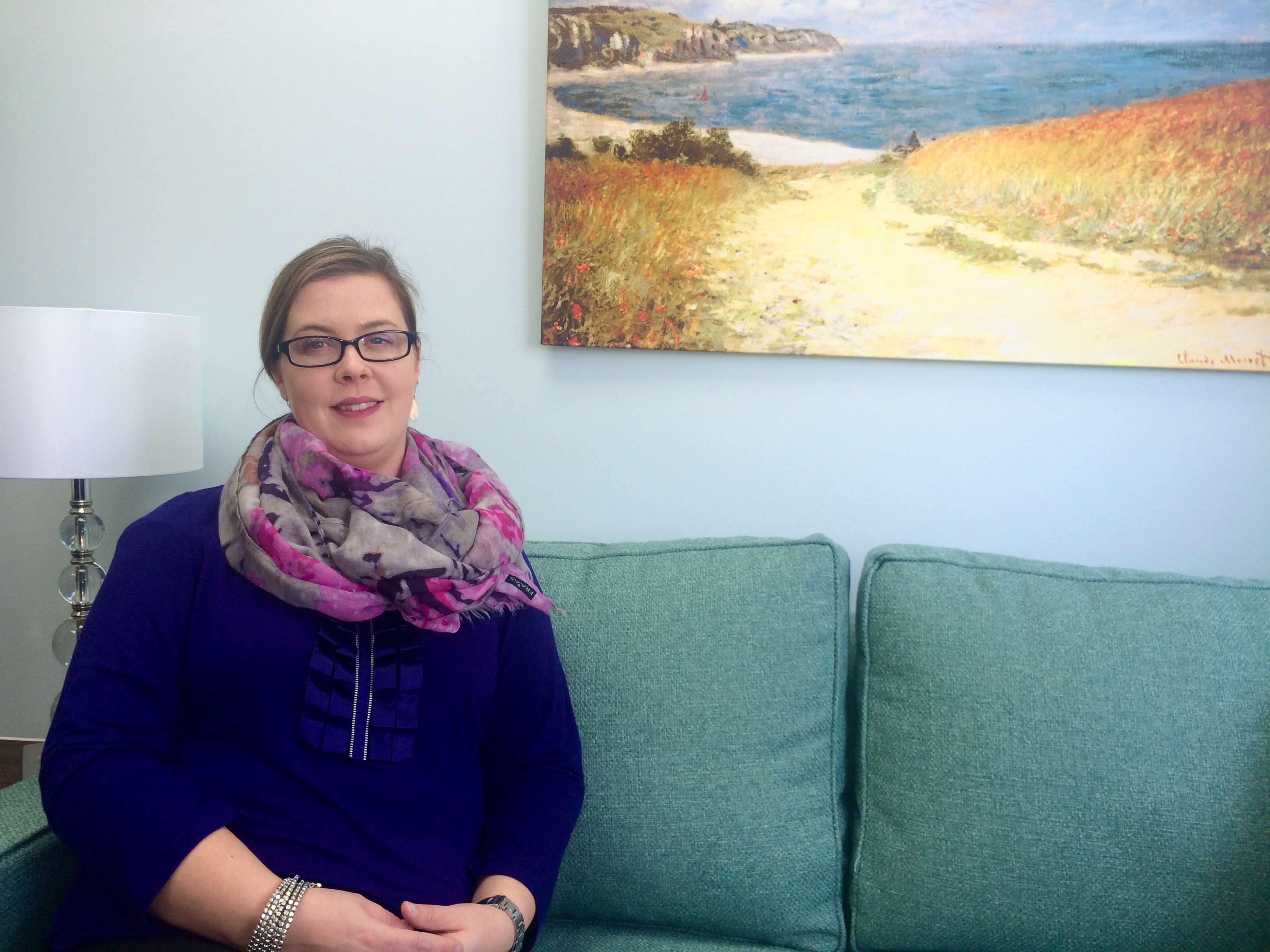
meg-neufeld-creative-arts-ladner-alongside-you

I’m Meg Neufeld, and I am the co-founder, Program Director, and Art Facilitator at Alongside You.

I am a wife of a counselor and I provide support to a husband who loves his job but can’t share the details of his day.

I am a twin to a sister who is profoundly deaf and who has a rare genetic form of dwarfism, but who has the drive and strength like nobody else I have met.  She has a Masters degree in the health field, a job that helps others every day, is a fabulous aunt and does not let her physical stature get in the way of traveling to new parts of the world every chance she gets. She has taught me about living life the best way you can, with strength in adversity.

I am a mother to two beautiful daughters who are only a year apart. Day by day I am learning how to navigate their various personalities and challenges while juggling activities, doctor’s appointments, family commitments, all while trying to provide a positive and stable home environment to our children. One smile or hug makes it all worth it.

Everyone gains strength from somewhere or something. While I work with people who come from various faith backgrounds, I am a follower of Jesus. I do all things with His strength. I strive to have a compassion for others and believe that everyone is wonderfully unique.

I am a patient. I visit local health practitioners monthly who help me manage chronic pain from a previous motor vehicle accident. I know what it is like to walk the long road of recovery and to have good pain days and bad pain days. I know what it’s like to take two steps forward and three steps back. I know how hard it is to find the strength to overcome an injury; I’m not out of the woods, but the light is at the end of the tunnel. It flickers and flickers, encouraging me to keep at it and to work at reaching it.

I am an anthropologist and educator. I study people and how people interact with each other and how they create meaning and share basic practices; I study culture. I was lucky enough to teach at a university and college level and highlight the importance of being culturally sensitive, being culturally aware, and being holistic in our thinking. Studying how people relate to each other and acknowledging that things like the role of politics, religion, psychology, and history are not separate from the individual. These are essential components to our lives and important for understanding one another.

I am a Francophile, or someone who appreciates French language and culture.  Although we only have a link to a distant French relative, our children go to a Francophone school and we try and speak French at home as well as English. It has really made us love our little community even more and has made us aware of issues of National identity.

Why am I being so open?

An Art Facilitator is Not simply an Art Instructor….

An art facilitator does not simply teach artistic skills, but is someone who encourages a healthy, open, and productive environment while creating art. It is from our experiences that we are able to relate to others in small and big ways that move us to create and to be emotional. All of these experiences and aspects of my life shape who I am. As an art facilitator, I hope to bring people together so that they can make meaningful connections with others .  With my background in Cultural Anthropology, I hope to foster cross-cultural appreciation and be a communicator between different groups of people, whether they are of different ages, social backgrounds, abilities, or interests. I hope to continue to be socially inclusive, and culturally attuned to what our local community needs and wants, and to be more effective in our policy-making and program development at Alongside You. As an art facilitator, it is important to know about what is happening in our little corner of the world, be aware of the struggles of others, and be sensitive when addressing them. It is an art facilitator’s role to provide a space where people feel at home and encouraged, and where they can gain confidence personally and creatively.

As a counsellor’s wife, and as an anthropologist who holds to holistic principles, I have learned over the years that I may only be privy to one aspect of someone’s life and that there may be so many other parts to a person’s life that we know nothing  about, so we must be gracious and kind as someone creates something new, you never really know what someone is going through.

What is an Occupational Therapist? (Part 2)

Kristin-Image

Our Occupational Therapist extraordinaire, Kristin Beare is back again answering more questions you may not even know you had!

Q: I’m still unsure as to what an Occupational Therapist (OT) does. Will he/she help me find employment?

A: One of the most common misconceptions about Occupational Therapy is that it exclusively focuses on helping people find jobs.  It is true that occupational therapy can play an important role in returning to work after injury or illness, however to an OT “occupation” refers to much more than just your chosen career. Occupation encompasses everything that you do in your day-to-day life. For example, you may have occupations as a parent or spouse, a student, a hockey player, or an amateur home cook. Our occupations are what define us and the ability to participate in them in meaningful ways is essential to our well-being.

Q: So, how can an OT help me? 

A: OTs are interested in the interactions between the person, their environments, and their occupations, across the lifespan. Our aim is to help our clients:

  • function at the highest possible level,
  • maintain or restore their independence, and
  • participate in their everyday activities of life.

Unfortunately, there are sometimes barriers that make these things difficult to do on your own.  Some of these barriers may include: an onset, progression, or relapse of illness or disability, changes in physical or cognitive functioning as a result of normal aging, environmental factors, social isolation, or economic status.

An OT can help you address these barriers, through interventions that focus on:

  • enhancing existing skills;
  • creating opportunities;
  • promoting wellness;
  • remediating or restoring skills, and
  • modifying or adapting the environment or activity (AOTA, 2013).

Occupational therapy is client-driven, meaning that you are an active participant in all aspects of therapy. Your OT will be there to collaborate, empathize, instruct, problem-solve, encourage, and advocate for you.

Q: What can I expect during my initial consultation with an OT? 

A: During the initial consultation with your OT, she will want to get to know as much about you as possible and will ask you a series of questions about your current occupational performance and areas of strengths and of concern, covering all areas of function: self-care (e.g. personal care, mobility, dressing), productivity (i.e. work, school, homemaking, volunteering), and leisure.

Therapy goals will also be set out collaboratively between you and your OT during this initial session. Based upon your goals and unique situation, an appropriate treatment plan will be determined. This may include regular or semi-regular sessions, functional assessment(s), an in-home assessment, or outings within the community.

If you are struggling engaging in any of the meaningful occupations of your daily life, I would love to hear from you and discuss how Occupational Therapy may help you live a more independent, productive, and satisfying life! Contact us today!

What is an Occupational Therapist?

We often get asked the question, “What is an Occupational Therapist?” We asked Kristin the same question, and she said she’d like to let everyone know! This is the first post in a two part series on what an OT is. Enjoy!


A day in the life of a community-based Occupational Therapist

Hi everyone, this is Kristin.  I am excited and very honoured to be part of the team at Alongside You as an Occupational Therapist. Coming on board with Alongside You is a unique opportunity for me to not only establish valuable connections and roots within the community, but also provide services that are accessible to those who may fall outside of the traditional occupational therapy umbrella  (e.g. hospital-based, Home Care, long-term care facilities etc.).  

To give you an idea of the type of services I may be able to provide, here is a glance at what a typical day might look like for me…

(these are hypothetical scenarios and do not represent current or past clients)

9:00am – Get to the office. Check work emails. Prepare for the day’s clients. Prep time may include gathering necessary assessment forms, putting together handouts, looking up directions to a client’s home, or picking up equipment from a vendor to trial with a client.

11:00am – Initial consultation with a new client. She has been in a motor vehicle accident that has left her with chronic back pain.  Because of this, she is having difficulty managing some of her daily activities, is sleeping poorly, and is discouraged because she has not been able to keep up with her gardening. After gathering information about her current daily routines and habits, I complete a brief functional screen to get a sense of her physical abilities and level of discomfort.  Together, we decide that we will focus on activity modification, positioning, and energy conservation as our goals for the next two sessions to help restore her ability to participate in her daily activities.

1:00pm – Follow-up treatment session with a client who is struggling with re-defining his roles and occupations after an injury forced him into early retirement. We complete an interest checklist together and he identifies giving back to his community as an important part of his self-identity. We discuss various ways he may be able to do this and I provide him with information on local volunteer resources. He has some anxiety around meeting new people, so we plan to meet for our next session at the rec centre to meet the volunteer coordinator together.

3:00pm – Home assessment.  An elderly couple has concerns regarding their ability to continue living in their home safely. Being in the actual home environment allows me to visualize barriers and potential hazards and provide appropriate recommendations for modifications or equipment that allow for greater safety and independence within the home.  I will return next week with some equipment for them to trial.

4:30pm – Make sure all of my paperwork and documentation is complete from today’s appointments. Write up the equipment recommendations for my home assessment earlier today and call vendors to arrange an equipment trial. Send an email to the volunteer coordinator to schedule a visit next week. Return any missed calls or emails and pack up and head home!


Stay tuned for Part Two where Kristin will answer a number of Frequently Asked Questions (FAQs)! If after reading this you think she might be able to help you, please give her a call at (604) 283-7827 or email her through our contact form. She’d love to hear from you!